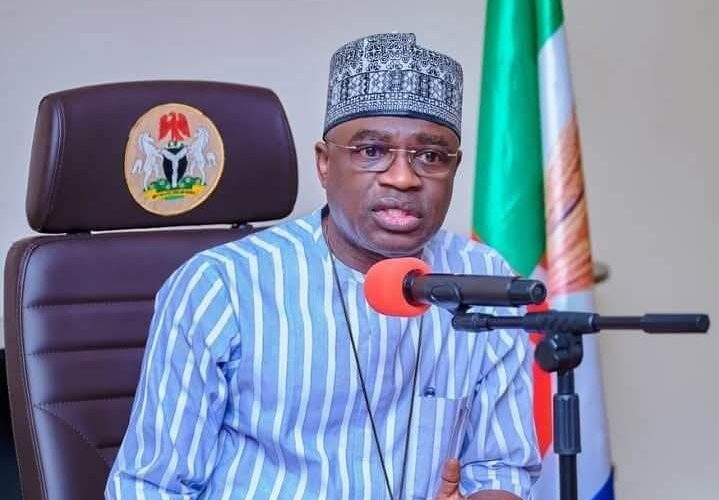
On Wednesday, Benue State governor, Hyacinth Alia, stood before journalists at the Meet-the-Press programme at the Presidential Villa, Abuja, and said something our political elite have been dancing around for years. Fear of abuse, the governor argued, should not stop Nigeria from adopting state police.
Finally, a governor speaking my language. State police is a must if we must defeat the ravaging insecurity in the country. I have made this argument on this page until I almost lost my voice, so you can imagine my delight when Governor Alia declared that he was one of the very early governors to propose that we go the way of state policing.
The governor’s reasoning is hard to fault. According to him, while the federal police are doing their bit, officers recruited from local communities understand the terrain and can more easily identify suspicious persons. In his words, “In the yesteryears, when any stranger came to your town or village, you knew the person. It was because we grew up in those areas. That generated a lot of intelligence.”
This is the crux of the matter. Intelligence is the lifeblood of any security operation, and no amount of directives from Abuja can replace the boy who grew up in Gboko and knows every footpath, every face and every stranger in his community. A police officer posted from Sokoto to Otukpo is practically a tourist for his first two years. By the time he masters the terrain, he is transferred again. We keep recycling this arrangement and wonder why the bandits are always three steps ahead of us.
Now, let me be fair to the other side of the argument. The fear of abuse is not baseless. Some of our governors behave like emperors, and the thought of handing them armed men gives many Nigerians nightmares. We have seen governors deploy thugs against political opponents, so the worry that state police could become a tool for settling political scores is a legitimate one. I will not pretend otherwise.
But Governor Alia’s response to this fear is the most sensible thing I have heard in this debate in a long while. “We should not fear abuse. If we allow fear to sink us because of abuses, we can check abuses, but we have to make up our minds that we will check abuses,” he said. He likened it to politics and social media. Politics is abused daily in this country, yet nobody has suggested we abolish elections. Social media is abused every second, yet we have not shut down the internet. Marriage is abused, too, the last time I checked, and people are still holding introduction ceremonies every Saturday.
The answer to potential abuse has never been paralysis. It is a safeguard. Increased monitoring, clear rules of engagement, independent oversight bodies and real consequences for erring officers and their principals. Alia said it himself: “When we have increased monitoring and we have the rules of the game to guide us, I’m very confident that orderliness is going to be the order of the day.” The Americans, whose federal system we copied, run state police, county police and city police, and their republic has not collapsed. What they have, which we must build, is the architecture of accountability.
Mind you, the federal police force is overstretched, and everybody knows it. The police authorities have repeatedly admitted that the force is understaffed for a population of over 200 million. Add the fact that a good chunk of the officers are busy guarding politicians, their wives and their convoys, and you understand why the average community sees a policeman only at a checkpoint. State police will not solve everything, but it will put boots and eyes where they matter most, in the communities.
What gives Alia’s advocacy weight is that he is not speaking from theory. Benue, a state that was practically a killing field a few years ago, has recorded genuine improvements in security under his watch, and credit must be given where it is due.
The state established a Civil Protection Guard, a joint task force known as Ayamyor and community vigilante groups to complement the conventional security agencies. The government also acquired 120 Hilux vehicles and more than 620 motorcycles to boost the operational capacity of security agencies, while investing in technology and intelligence gathering. The result is that displaced persons are returning to their communities and farms after years of disruption. That is no small feat in a state that has hosted some of the largest camps of displaced persons in the country.
The detail that moved me most was the special farming programme for internally displaced women. The state provided tractors, seedlings, and other farm inputs to help women cultivate cooperative farms and earn their own incomes, rather than waiting endlessly for humanitarian handouts. Security personnel accompanied the women to their farms until it became safe enough for them to farm on their own. That is governance with a human face. That is what leadership looks like when it remembers the people at the bottom of the ladder. Other governors should take notes.
The gains are not limited to security alone. The governor credited the federal government’s economic reforms with boosting allocations to states, and to his credit, Benue appears to be putting the extra money to work. The administration says it has cleared outstanding salary and pension arrears inherited from previous governments, embarked on road construction across the state, reconstructed schools in all 23 local government areas and revived primary healthcare services.
It is also breathing life back into moribund industries like Food Basket Breweries and the Bensona Juice factory, while sustaining the distribution of free and subsidised farm inputs to farmers. Whether all of these will stand the test of independent verification is a matter for another day, but a governor who ties improved revenue to visible projects is at least playing the game the right way.
The governor also spoke on local government autonomy, and here again, Benue is showing the way. Alia said local government councils in the state now declare emergencies on road infrastructure and execute projects independently, while his own role has shifted largely to supervision and accountability. “I have fewer headaches. All I do is supervision. I receive the reports, cross-check what they have done and ensure resources are properly utilised,” he said.
The local government system in Nigeria is practically dead, tied to the apron strings of governors who treat council funds as pocket money. The Supreme Court judgement on local government financial autonomy was supposed to change all that, but many governors have been dragging their feet and devising fresh schemes to keep their hands in the till. So when a governor voluntarily loosens the apron strings and reports that governance has improved for it, he deserves applause. If Benue, with all its security challenges, can comply with local government autonomy, what excuse do the other states have?
Alia also made a point that we citizens must chew on. He urged residents to volunteer credible intelligence to security agencies, warning that those who remain silent despite knowing criminals operating in their communities are accomplices. Bitter but true. Every community knows its bad boys. The kidnappers have mothers, uncles and neighbours who watch them spend money they cannot explain. When we shield them out of fear or misplaced loyalty, we are watering the tree that will one day fall on our own roof.
So where do we go from here? The constitutional amendment on state police has been passed by the National Assembly and is now being forwarded to the state assemblies. State lawmakers should fast-track it, and the amendment must come with iron-clad safeguards, including independent state police service commissions insulated from governors’ whims, guaranteed funding that cannot be strangled for political reasons, and clear rules on jurisdiction and federal intervention whenever a state force goes rogue.
Governor Alia said something at that briefing that should be framed and hung in every government house in the country: “You have to make the hard decisions because that is what leadership requires.” Insecurity has stolen enough from us already, our farmlands, our schools, our highways and our sleep. A reform this necessary should not be held hostage by fear, because fear has never policed a single village.
We’ve got the edge. Get real-time reports, breaking scoops, and exclusive angles delivered straight to your phone. Don’t settle for stale news. Join LEADERSHIP NEWS on WhatsApp for 24/7 updates →