By Doris Obinna
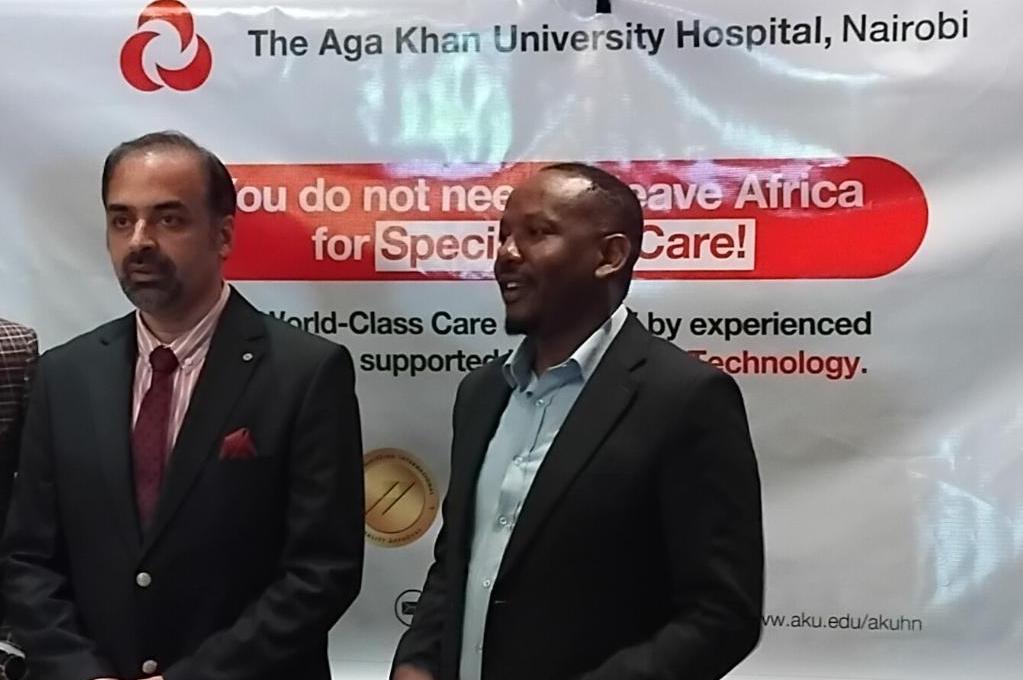
Aga Khan University Hospital (AKUH), Nairobi, Kenya, has called for African-led investments in quality healthcare, specialist training, research and regional partnerships to reduce the growing number of patients travelling outside the continent for medical treatment.
Chief Operating Officer, Khurram Jamal, said, an estimated $7 billion leaves Africa annually through outbound medical tourism, with more than 300,000 Africans travelling to India each year for treatment due to limited specialist services, inconsistent quality standards and the perception that better healthcare is available overseas.
“True shared prosperity means building health systems that Africans can trust, access and rely on right here at home. Every year, billions of dollars and hundreds of thousands of patients leave our continent in search of healthcare. Our responsibility is to change that by investing in quality, people, research and partnerships that keep both patients and healthcare investment in Africa.”
He said restoring confidence in African healthcare requires consistent delivery of internationally benchmarked quality backed by strong patient safety systems.
Jamal noted that Aga Khan University Hospital was the first in the region to achieve Joint Commission International accreditation and has maintained the certification through continuous reaccreditation. The hospital has also secured internationally recognised certifications in pathology, laboratory medicine, cardiac care and stroke care.
“We cannot expect patients to stay simply out of patriotism,” he said. “We must earn their trust by delivering internationally benchmarked quality, embedding safety into every process and proving that world-class healthcare is available right here in Africa.”
He described accreditation as more than a recognition, saying it provides a practical framework for standardising care, improving patient safety and strengthening healthcare delivery.
Jamal also highlighted the continent’s acute shortage of healthcare workers, citing World Health Organization (WHO) estimates that Africa has about 1.5 doctors, nurses and midwives per 1,000 people, well below the recommended minimum of 4.45 needed to provide adequate healthcare.
He said Africa must prioritise developing and retaining healthcare professionals alongside investments in physical infrastructure.
“A building cannot heal a patient. A state-of-the-art operating theatre is simply an expensive room without a trained specialist inside it,” he said.
“Infrastructure can be built in months, but a specialist takes more than a decade to train. If Africa is to close its healthcare gap, we must invest as heavily in people as we do in buildings.
“The hospital has developed one of East Africa’s leading teaching hospitals, offering undergraduate medical and nursing education, residency training and 16 clinical fellowship programmes across nine medical specialties. About 200 full-time specialists combine patient care with teaching and research,” he added.
He also stressed the need to strengthen clinical research on the continent, noting that while Africa is home to about 17 per cent of the world’s population and bears approximately 25 per cent of the global disease burden, it accounts for only about four per cent of global clinical trials.
“Africa should not only consume medical knowledge it must create it,” he said, adding that locally generated evidence is essential to developing solutions tailored to the continent’s health challenges.
“Since establishing its Clinical Research Unit in 2020, the hospital has participated in 17 clinical research projects and trials, three of which contributed to therapies now approved for use in Kenya. It has also invested in digital health systems, including an electronic health record platform that supports patient care, teaching and research.
“To improve access to specialist healthcare within Africa, the hospital has partnered with Kenya Airways to provide coordinated medical travel services for patients across the continent.
“The partnership links the airline’s network of 34 African destinations with the hospital’s specialist services, offering coordinated referrals, pre-travel teleconsultations, medical travel clearances, subsidised airfares, airport transfers, hospital navigation and assistance with accommodation and other logistics in Nairobi.”
“Our partnership with Kenya Airways creates a seamless, end-to-end medical travel corridor that makes healthcare safer, more affordable and more dignified,” Jamal said.
He explained that patients receive medical reviews before travelling, support throughout their stay and follow-up care after returning home through teleconsultations and coordination with their local physicians.
Jamal said reversing the trend of outbound medical tourism would require collaboration among governments, healthcare providers, airlines, regulators and policymakers.
“Africa has the talent, the patients and the opportunity. By investing in people, quality, research and regional partnerships, we can keep African patients, African talent and African healthcare investment where they belong here in Africa,” he stated.