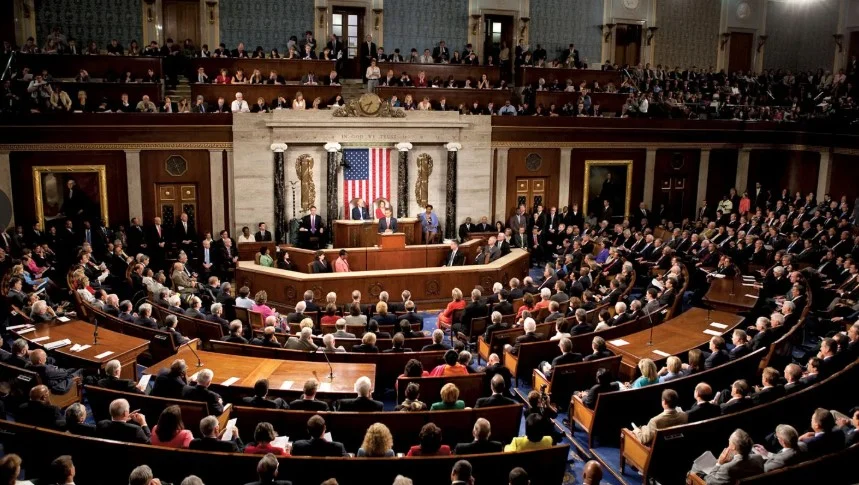

The US House of Representatives has passed a fiscal year spending bill with provisions to cut foreign assistance to Nigeria over alleged targeted violence against Christians and other vulnerable communities.
The National Security, Department of State and Related Programs Appropriations Act for the 2027 fiscal year was passed by the House on Wednesday in a 217-209 vote.
This bill contains a provision to withhold all foreign assistance to Nigeria until the US can certify that the Nigerian government is taking effective steps to protect Christians from violence.
The bill demands “holding foreign governments and bad actors accountable for persecuting people of faith.”
This measure, the bill indicates, includes “restricting assistance to Nigeria until measurable actions are taken to protect Christian communities suffering from religious violence.”

It also seeks to provide “support for religious freedom programs abroad and religious freedom protections for faith-based organisations delivering foreign aid.”
The provision was championed by Riley Moore and a host of other Republican lawmakers, including Jeff Steube, a lawmaker representing Florida. The bill was introduced to the House in April. Mr Steube also announced the bill’s passage on his official X handle, saying, “American taxpayers should NEVER bankroll governments that turn a blind eye while Christians are abducted, tortured, and murdered.”
Mr Moore, who previously accused the Nigerian government of Christian genocide, had pushed for language in the FY2027 NSRP Appropriations Act to restrict assistance to Nigeria on the ground that “not enough has been done against Fulani Islamist terrorists in the Middle Belt.”
The Republican lawmaker told the House that the provision offered assistance to the government, conditioned on improvement in the protection of the Christian population.
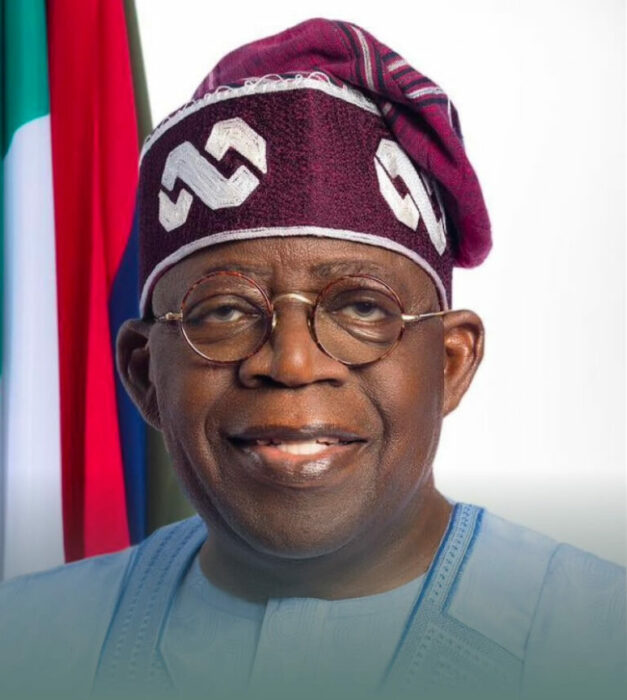
He described this as part of the Trump administration’s strategy to assist Nigeria in the defence of Christians “while holding the President Tinubu’s government accountable if they fail.”
However, while the bill had initially restricted the provision of 50 per cent of US assistance, Mr Stuebe proposed completely withholding foreign assistance to the country.
He proposed an amendment that raised withholding of assistance from 50 per cent to 100 per cent, because withholding only 50 per cent of the funds appeared to reward the Nigerian government despite its failure to protect citizens.
The House agreed to this amendment.
US relations with Nigeria
Although President Donald Trump, in the early days of his administration, paused the distribution of foreign aid and disbanded USAID, he provided limited funding to Nigeria, particularly for counter-terrorism operations and support for victims of violence.
In January, for instance, the US allocated $413.046 million for counter-insurgency operations in Nigeria and other African countries for the year.
Less than two months later, the US delivered “critical military supplies” to the country.
PREMIUM TIMES has extensively reported the joint security arrangements between Nigeria and the US that followed the designation of the former as Country of Particular Concern (CPC) and weeks of hostility from Mr Trump.
The CPC designation follows repeated accusations of Christian genocide, which have been debunked by the Nigerian government, as well as local and international rights groups, who have said the violence by armed groups in Nigeria targets people of all faiths.
Over the last months, both countries have conducted successful joint operations, including one that led to the elimination of Nigeria-based Abu-Bilal al-Minuki, also known as Abubakar Mainok, a top commander of Islamic State West Africa Province (ISWAP).
The US recently announced that it had extracted a large cache of terrorist intelligence from Nigeria, which is still under review.
Some Nigerian nationals and organisations have also been accused and sanctioned for terrorism financing. This includes Mukhtar Adamu, a Lagos-based bureau de change operator, who is said to have facilitated financial transactions for the West African faction of ISIS through his BDC firms.
The bill passed by the US House still needs to be approved by the Senate and signed by President Trump to become law.