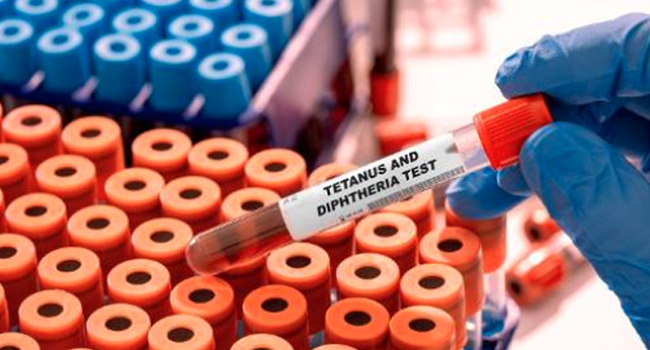
The Kano State Government has launched the second round of its Maternal and Neonatal Tetanus Elimination (MNTE) campaign, intensifying efforts to vaccinate women of reproductive age and reach communities that were missed during the first phase of the exercise.
Speaking at the official flag-off ceremony held at the Kano State Emergency Operations Centre (EOC), the Commissioner for Health, Dr. Abubakar Labaran, described maternal and neonatal tetanus as a life-threatening but entirely preventable disease, emphasizing that the campaign is aimed at protecting both mothers and newborns.
He said the exercise represents more than a routine immunisation programme, noting that it is a critical intervention to prevent avoidable deaths, improve maternal and child health outcomes, and strengthen community health systems across the state.
“Maternal and neonatal tetanus is deadly, but it is entirely preventable. By protecting a woman of reproductive age, we also give her newborn a safer start to life. This campaign is not merely about administering a vaccine; it is about preventing avoidable deaths, protecting families and strengthening the health of our communities.”
Dr. Labaran disclosed that the first phase of the campaign, conducted in May 2026 across 18 high-risk local government areas, recorded significant success.
READ ALSO: NCDC Backs Niger State As Suspected Diphtheria Outbreak Claims One Child
According to him, the state deployed 906 vaccination teams, comprising 272 fixed-post teams and 634 temporary fixed-post teams, to immunise women between the ages of 15 and 49 years.
He said 1,339,871 women were vaccinated out of the targeted 1,388,396, representing an administrative coverage rate of 96.5 per cent.
The commissioner added that vaccination teams reached 10,139 settlements, accounting for about 90 per cent of the planned coverage. However, he acknowledged that 1,191 settlements remained unreached during the first round.
“Every unreached settlement may contain women who remain unprotected, and Round Two provides us with an important opportunity to close these gaps and ensure that no eligible woman is left behind.”
Dr. Labaran noted that the second round would cover the same 18 high-risk local government areas, with renewed attention on underserved, hard-to-reach and previously missed communities.
He explained that vaccination services would be provided through health facilities and temporary vaccination posts established at markets, schools, places of worship and other strategic public locations to improve accessibility.
The commissioner assured residents that vaccines, logistics and trained healthcare personnel had been fully deployed for the exercise.
Urging residents to participate, Dr. Labaran encouraged all women between the ages of 15 and 49 years to take advantage of the free vaccination exercise.
“The vaccine is free, safe and essential for protection against maternal and neonatal tetanus. Women who received a dose during Round One should also receive the next recommended dose needed to build stronger and longer-lasting protection.”
The commissioner appealed to husbands, parents, traditional and religious leaders, civil society organisations and media organisations to support the campaign by encouraging eligible women to receive the vaccine and by helping to counter misinformation surrounding immunisation.
He reaffirmed the commitment of the Kano State Government under Governor Abba Kabir Yusuf to improving maternal and child health through sustained investment in immunisation, quality antenatal care, skilled birth attendance, clean delivery practices and strengthened primary healthcare services.
Dr. Labaran also commended development partners, including the National Primary Health Care Development Agency (NPHCDA), UNICEF, the World Health Organization (WHO), Rotary, AFENET, CORE Group, Solina, the Gates Foundation, local government authorities, traditional institutions, community leaders and frontline health workers for their continued support towards eliminating maternal and neonatal tetanus in Kano State.
He stressed that the success of the campaign depends on ensuring that no eligible woman is left behind.