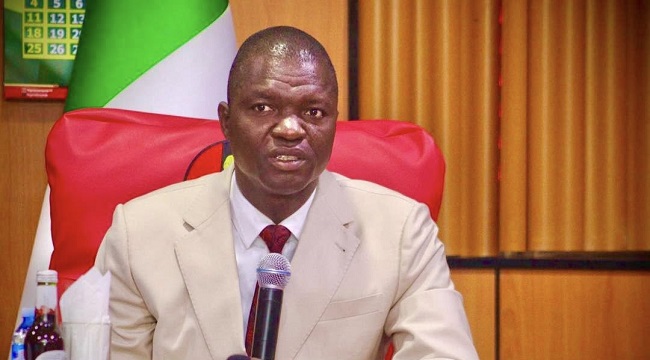
The Nigerian College of Aviation Technology (NCAT), Zaria, says it has significantly improved its infrastructure, strengthened its international standing through new accreditations, and expanded its training programmes despite ongoing financial constraints.
Speaking during a media briefing in Zaria, the Rector, Danjuma Ismaila, said the institution inherited deteriorating facilities and operational difficulties but has since implemented reforms aimed at restoring the college to globally accepted standards.
His remarks were contained in a statement issued by NCAT’s Media Consultant and Adviser, Obinna Nwachukwu.
Ismaila noted that NCAT remains Nigeria’s only institution providing comprehensive aviation training, offering more than 200 courses in areas including pilot training, air traffic control, aircraft engineering, and other aviation related fields.
He said the college has renovated students’ hostels, classrooms, and other essential facilities to improve learning conditions and meet international standards.
According to him, NCAT also retained its Platinum Membership and Centre of Excellence status while earning accreditation from the United States-based Aviation Accreditation Board International.
The rector further disclosed that the institution secured membership of the National Council for Management Development, allowing it to offer recognised management programmes.
In addition, NCAT restored its affiliation with the International Air Transport Association (IATA), enabling it to conduct globally recognised IATA-certified training.
He explained that accreditation by the National Board for Technical Education also made the college eligible for Tertiary Education Trust Fund (TETFund) support, which has enhanced infrastructure development and training activities.
Looking ahead, Ismaila said the institution is pursuing certification from the European Union Aviation Safety Agency (EASA), which would allow graduates to obtain internationally recognised licences.
He further explained that EASA approval would provide pilots, air traffic controllers, and other graduates with dual certification, improving their chances of securing employment worldwide without additional licensing requirements in many countries.
He also revealed that NCAT is close to certifying its Boeing 737 Next Generation full-flight simulator for commercial operations. Describing it as the only simulator of its type in Nigeria, he said its certification would improve pilot training while creating an additional source of revenue for the college.
Despite these achievements, Ismaila identified inadequate funding as the institution’s biggest obstacle.
Although he acknowledged support from the Federal Government, the Ministry of Aviation and Aerospace Development, TETFund, and internally generated revenue, he said available resources remain insufficient to meet the college’s expanding needs.
He disclosed that one of the college’s TBM training aircraft is currently grounded because of insufficient funds for maintenance and reactivation.
The rector also highlighted the growing gap between demand for aviation training and the institution’s available capacity. He said NCAT currently admits only about 25 pilot trainees every six months, a figure he described as inadequate for Nigeria’s population of over 200 million.
As a result, admissions are processed on a first come, first served basis, with available spaces allocated to applicants who complete their registration earliest.
According to Ismaila, the college requires more training aircraft, expanded facilities, and greater investment to increase the number of aviation professionals it produces and meet the country’s rising manpower needs.
He expressed confidence that continued government support and strategic investment would strengthen NCAT’s position as West Africa’s leading aviation training institution while boosting its contribution to the global aviation sector.
Established by Act No. 31 of 1964, NCAT is Nigeria’s premier aviation training institution, offering programmes in pilot training, air traffic control, aircraft engineering, airport operations, and other aviation disciplines.
The college was conceived after discussions at the 12th International Civil Aviation Organization Assembly held in San Diego in 1959 before its formal establishment by the Federal Government in 1964.
In recent years, the institution has focused on modernising its facilities, obtaining international certifications, and improving the competitiveness of its graduates while seeking additional funding to expand training capacity.
The funding concerns raised by the rector echo previous statements by the college. In March, Ismaila disclosed that financial limitations had slowed the expansion of NCAT’s fleet, with only nine of the 20 Diamond training aircraft ordered for the institution delivered.
Similarly, in September 2024, student pilots complained about prolonged delays in completing their Airline Transport Pilot Licence programme, which they said disrupted new admissions.
At the time, the college attributed the delays to the lingering effects of the COVID-19 pandemic and competing training commitments, while maintaining that its licences are internationally recognised, although graduates seeking employment overseas may still require additional certifications from organisations such as EASA or the United States Federal Aviation Administration.