Before the current wave of reforms at the Central Bank of Nigeria (CBN), every movement in Nigeria’s external reserves was closely watched with apprehension.
A decline in reserves often translated into renewed pressure on the naira, tighter foreign exchange liquidity and growing uncertainty for businesses dependent on imported inputs.
Today, the narrative has shifted dramatically as the country’s foreign reserves have climbed to levels not seen in nearly two decades, reinforcing confidence in the economy and signalling the impact of ongoing monetary and foreign exchange reforms.
Nigeria’s gross external reserves have risen to $51.91 billion, the highest level since January 2009, surpassing the CBN’s full year 2026 projection months ahead of schedule and strengthening the country’s external buffers.
Latest figures released by the apex bank show that gross external reserves stood at $51.916 billion as of July 16, 2026, exceeding the CBN’s projected reserve level of $51.04 billion for the year by about $870 million.
The milestone represents the strongest reserve position in more than 17 years. The last time Nigeria recorded a higher reserve level was in January 2009 when external reserves stood at $52.01 billion, before the global financial crisis triggered a prolonged decline.
The latest figures also extend a remarkable upward trajectory that has gathered momentum over the past few months. External reserves increased from $51.52 billion at the beginning of July to $51.76 billion within the first week of the month before climbing further to $51.86 billion by July 14. Between July 13 and July 14 alone, reserves grew by approximately $22.69 million.
The recent gains followed an equally impressive performance in June when reserves rose from $49.58 billion at the end of May to $51.45 billion by the close of June, representing an increase of nearly $1.9 billion within a month.
Earlier in June, reserves had advanced from $49.80 billion on June 1 to $51.04 billion by June 18, while May recorded a gain of about $1.22 billion.
The steady rise has been driven largely by stronger crude oil export earnings, improved foreign exchange inflows and renewed investor confidence, strengthening Nigeria’s capacity to meet external obligations, stabilise the exchange rate and cushion the economy against global shocks.
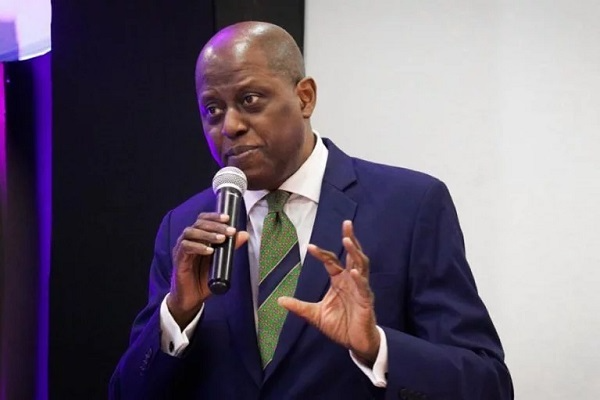
For CBN Governor, Olayemi Cardoso, however, the current reserve position tells a much bigger story than a favourable balance sheet. Speaking during an interview at the BusinessDay CEO Forum, Cardoso said the country’s improving reserve position validates the difficult reforms introduced by the current management of the apex bank since assuming office.
According to the governor, rebuilding Nigeria’s external buffers became imperative after years of distortions in the foreign exchange market created uncertainty for investors and businesses. He recalled that multiple exchange rate windows had made planning difficult while encouraging arbitrage and weakening confidence in the foreign exchange market.
“We have moved from one with considerable opacity, where it was difficult to plan, not really knowing what it was all about, to a situation where we now have a foreign exchange market where the multiplicity of exchange rates, which we were all used to for decades, has disappeared.”
For many Nigerians, the memories of a period that it was challenging to access to foreign exchange had become had begun to fade away. “Sometimes it is easy for people to forget. You forget that at one point in time you had to scamper everywhere looking for how to buy your foreign exchange, no matter how small. Even if you were just going on a trip to London, the US or Kenya, anywhere, it was a chore for you to have to find foreign exchange to buy, talk less of those who were in business and couldn’t get foreign exchange” Cardoso recalled.
He pointed to the restoration of international usability of naira payment cards as evidence that confidence in Nigeria’s financial system is gradually returning. “When you travel today, you go with your naira card. It works. It has brought back the way the outside world looks at us.”
Speaking on the state of Nigeria’s reserves, Cardoso said “when we started, the net reserves figure was in the region of about $3 billion plus. And if you remember, that was a figure that was published at the time by J.P. Morgan and created a lot of panic in the system.”
According to him, the actual position was even weaker than widely reported at the time. “Our net reserves were down to about $3 billion. Think about the implications of that for a population of over 200 million people. We were also owing about $7 billion. Confidence had gone out of the window. There was panic. The currency was depreciating every day.”
He added that the reserve position deteriorated further before the reforms began to gain traction. “That figure of about $3 billion that you quote, it actually went down even further. We can talk about it now. At the time, we couldn’t.”
The CBN governor noted that the stronger reserve position has significantly improved Nigeria’s standing with foreign investors, who closely monitor reserve adequacy before committing capital. “Today’s level of reserves is, I believe, about 10 months of import cover.
“Anybody coming to invest in Nigeria, these are the things they look at in determining whether it is worth taking a position in your currency. Doing this consistently is what is giving confidence to not just internal stakeholders, but those who also operate internationally.”
For many economists, external reserves represent much more than a headline figure. Adequate reserves strengthen a country’s ability to defend its currency during periods of volatility, meet international payment obligations, finance imports and reassure investors about macroeconomic stability.
For Nigeria, where crude oil remains the dominant source of foreign exchange earnings, reserve adequacy also provides an important safeguard against fluctuations in global commodity prices. Cardoso believes that resilience was evident during recent geopolitical tensions in the Middle East. “We had undertaken the reforms a lot earlier, so that by the time the shocks came, we were able to withstand them. We had resilience, and we were able to withstand the shocks.”
He also defended the Monetary Policy Committee’s cautious stance on interest rates despite the moderation in inflation. Believe me, we saw things that most other people didn’t see. By the time the shocks started to come out, people understood the reason why we didn’t cut.”
Beyond the reserve figures themselves, the CBN governor believes Nigeria is beginning to regain credibility in the eyes of international investors. “We sit in a particular place where we see an enormous amount of interest from outside. Enormous amount of interest.
“They’ve watched very keenly. They’ve seen the road of travel, and they are getting closer. In some cases, investments are being made. You’ll be hearing of some of these things as time goes on. You’ll hear of huge investments being made into our economy as a result of the stability that has been accomplished.”
He, however, urged Nigerian businesses to embrace the changing investment climate rather than remain influenced by memories of past instability. “I hope that our own leadership in many of these companies and many of the CEOs you have here will recognise that and will not be afraid, and will not hold on to muscle memory, thinking that things are still as they were before, or that they can’t last.”
As Nigeria’s reserves continue their upward trajectory, analysts say sustaining the momentum will depend on continued foreign exchange reforms, higher export earnings, stronger capital inflows and disciplined macroeconomic management.
For now, however, the country’s return to reserve levels last recorded before the global financial crisis underscores a remarkable turnaround that has become one of the strongest indicators of the ongoing transformation in Nigeria’s monetary and foreign exchange landscape.
We’ve got the edge. Get real-time reports, breaking scoops, and exclusive angles delivered straight to your phone. Don’t settle for stale news. Join LEADERSHIP NEWS on WhatsApp for 24/7 updates →