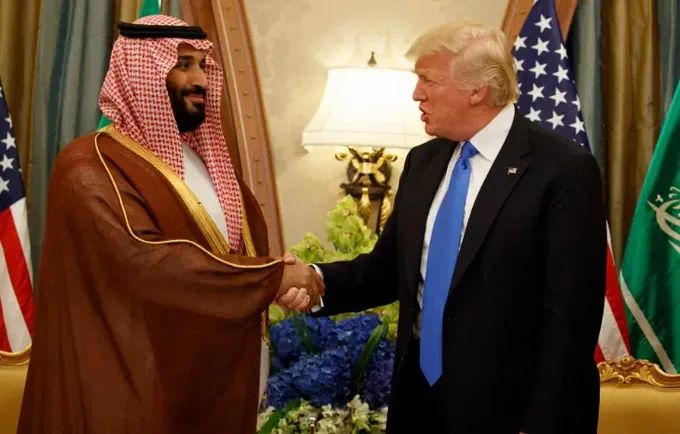
The United States is expected to announce a landmark agreement with Saudi Arabia on Wednesday to support the kingdom’s civilian nuclear programme, according to multiple media reports, in a move likely to reignite concerns over nuclear proliferation in the Middle East.
The proposed deal comes as Washington remains locked in conflict with Iran, whose nuclear ambitions have long been a source of tension with the United States and a central issue in now-stalled diplomatic negotiations between the two countries.
According to The New York Times, citing two US officials familiar with the matter, President Donald Trump’s administration plans to formally sign and unveil the agreement on Wednesday. The administration says the deal could inject billions of dollars into the US nuclear industry.
The Wall Street Journal reported that a provision in the proposed 30-year agreement could allow US companies to construct a uranium enrichment facility in Saudi Arabia — a move that has drawn criticism from some US lawmakers and Israeli officials, who fear such infrastructure could eventually be used to develop nuclear weapons.
Despite the concerns, Saudi Arabia has consistently maintained that it has the right to develop a civilian nuclear energy programme to diversify its energy sources.
The agreement is expected to be transmitted to the US Congress in the coming days. However, congressional approval is not required for the deal to take effect.
The proposed nuclear partnership also reflects Washington’s broader strategic ambitions in the region. In recent years, the United States has sought to link civilian nuclear cooperation with a wider regional framework that includes Saudi Arabia normalising diplomatic relations with Israel and entering into a formal defence agreement with Washington.
The United States reached a similar civilian nuclear cooperation agreement with the United Arab Emirates in 2009. Under that arrangement, the UAE operates nuclear power plants but does not enrich its own uranium.
Security concerns surrounding civilian nuclear infrastructure remain high in the Gulf. In May, a drone strike hit a generator near the UAE’s Barakah Nuclear Power Plant—the Arab world’s only operational nuclear facility—triggering a fire.
Analysts have long warned that any successful Iranian pursuit of nuclear weapons could trigger a regional arms race, prompting neighbouring Gulf states to accelerate their own nuclear capabilities.
Speaking in Manila on Wednesday, US Secretary of State Marco Rubio declined to confirm the reported Saudi agreement, saying the White House would provide details. However, he dismissed suggestions that the proposed deal would increase the risk of nuclear proliferation.
“Suffice it to say, the US is not going to reach any agreement with any country in the world that leads to the risk of proliferation,” Rubio told reporters on the sidelines of a meeting of Southeast Asian foreign ministers.
The expected announcement also comes against the backdrop of escalating hostilities between the United States and Iran, raising fears of broader instability across the Middle East.
Iran-backed Houthi rebels in Yemen this week threatened to expand the conflict by imposing a blockade on Saudi ports, sparking concerns over potential disruptions to global oil supplies.
The Houthis and Saudi Arabia exchanged fire last week, placing the fragile 2022 truce under renewed strain, although the rebel group has largely remained outside the direct fighting since the latest regional conflict erupted on February 28.
We’ve got the edge. Get real-time reports, breaking scoops, and exclusive angles delivered straight to your phone. Don’t settle for stale news. Join LEADERSHIP NEWS on WhatsApp for 24/7 updates →