
Residents of Unyenge, an oil-producing community in Mbo Local Government Area of Akwa Ibom State, have demanded access to ₦126.85 billion in gas flare penalty liabilities for environmental remediation. They insist that decades of pollution have destroyed their livelihoods and that the funds must be used to restore their degraded environment, as stipulated by the Petroleum Industry Act (PIA).
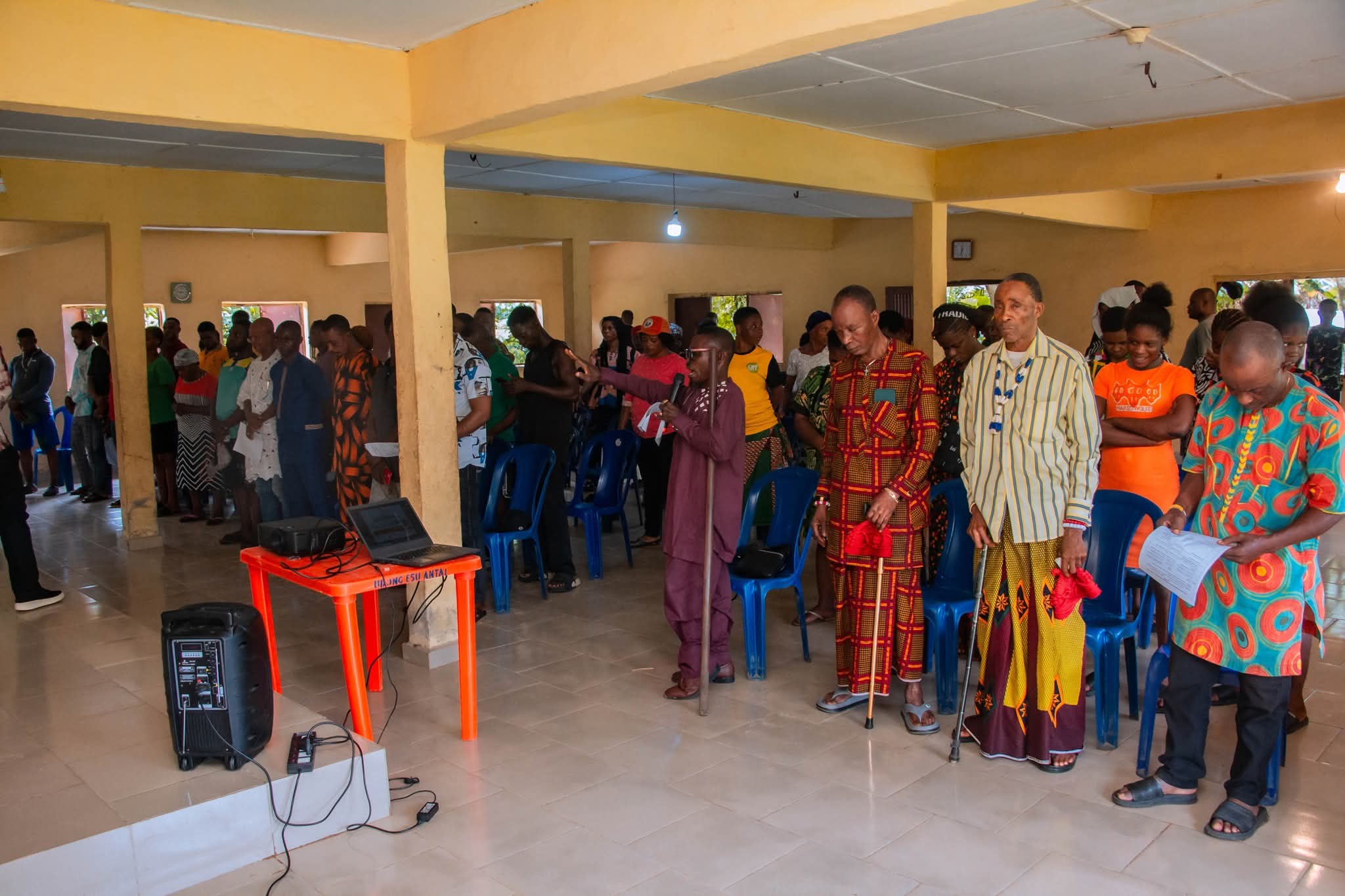
The demand was issued on 14 July during a town hall meeting organised by the Policy, Environment and Economic Rights (PEER) Foundation under its #Unlock2remediate campaign.
The event, held in Unyenge, convened traditional rulers, youth and women leaders, local government representatives, civil society organisations, and environmental experts to discuss the implementation of the Petroleum Industry Act 2021, particularly provisions concerning environmental remediation and host community rights.
This follows a similar engagement organised by the PEER Foundation in the Eastern Obolo Local Government Area, where host communities also called for transparency in the management of gas flare penalties and urged that the funds be directed towards restoring oil-polluted environments, as previously reported by PREMIUM TIMES. Communities Seek Environmental Justice
Speaking at the meeting, Mfon Gabriel, Executive Director of the PEER Foundation, stated that gas flare penalties were established by law as environmental restoration funds for affected communities and should not be treated as general government revenue.

He cited Sections 103(1) and 104(4) of the Petroleum Industry Act, asserting that these penalties are intended to address pollution from oil and gas operations.
“Gas flare penalties are environmental restoration funds belonging to host communities according to Sections 103(1) and 104(4) of the PIA 2021, not general revenue for the Federal Government or the Federation of Nigeria,” Mr Gabriel said.
According to him, official government documents indicate that ₦1.67 trillion was collected from oil and gas companies nationwide as gas flare penalties between 2021 and 2025.
He alleged that these funds have been diverted into the Federation Account through Executive Order 9. He urged host communities to petition the federal government and members of the National Assembly to ensure gas flare penalties are excluded from the revenue framework created under that order. Environmental Degradation
During a presentation on ecological restoration, Ebong Ekanem, Head of Operations at Policy Alert, noted that decades of gas flaring, acid rain, and oil spills have severely degraded mangrove forests in Mbo. This has threatened fishing and farming, which are the primary sources of livelihood for many residents.
He advocated for community-led mangrove restoration, toxic waste cleanup, the greater inclusion of women and young people in environmental governance, and support for alternative livelihoods such as aquaculture and fish processing.
Ekemini Simon, a senior reporter with PREMIUM TIMES and extractive sector analyst, also addressed the meeting, clarifying the legal provisions governing the Environmental Remediation Fund under the PIA.
Mr Simon stated that documents published by the Nigeria Extractive Industries Transparency Initiative and analysis of the National Oil Spill Detection and Response Agency’s gas flare tracker show that penalties paid by companies operating within Mbo—including Mobil, Universal Energy, Oriental Energy, Moni Pulo, Esso Exploration and Production Nigeria, and Addax Petroleum—totalled ₦126.85 billion between 2021 and 2025.
He added that this figure excludes outstanding liabilities owed by Esso E&P and Oriental Energy as of the last published date in August 2024, which amount to ₦13.92 billion.
He emphasised that these funds were not designed to be distributed across the country via the Federation Account but were intended exclusively for environmental remediation and relief for host communities bearing the brunt of oil and gas pollution. Residents Recount Hardship
Community leaders and residents described the environmental and socio-economic challenges facing Unyenge.
A traditional leader, Jesus Inwang, criticised government regulators and oil companies for their failure to address environmental degradation in the area.
The community’s youth leadership, represented by Damian Essongo, reported that despite constant gas flaring, residents have lived without electricity for three years. They are also struggling with poor school infrastructure, inadequate access to clean water, and the wider health consequences of continuous flaring.
ALSO READ: Gas Flare: Foundation trains Akwa Ibom oil community on how to demand environmental remediation
Akpan Abel, a Community Liaison Officer for a local company, noted that many residents were unaware of the existence of gas flare penalties until the recent awareness campaign.
Women representatives also highlighted issues such as unexplained illnesses, acid rain damaging roofs, and the persistent lack of potable water. Community Resolutions
At the conclusion of the meeting, participants adopted a five-point resolution aimed at securing access to the remediation funds.
The resolutions include:
- Expanding community sensitisation efforts.
- Drafting petitions to elected representatives and relevant federal authorities.
- Engaging legal counsel to seek the enforcement of relevant provisions of the PIA.
- Strengthening collaboration with the PEER Foundation and Policy Alert.
- Pursuing peaceful advocacy to demand environmental justice.
This meeting forms part of ongoing advocacy by civil society groups seeking greater accountability in the management of gas flare penalties and the robust implementation of the environmental protection provisions contained in the PIA.