
Malawi, Kenya and Madagascar are the first African countries to take a stand on deep-sea mining (DSM). At the 11th Our Ocean Conference in Mombasa in June, they joined 40 nations from across the world in endorsing a precautionary pause on DSM in international waters, which cover 64 per cent of the Earth’s ocean surface.
The international seabed area lies beyond any country’s jurisdiction and is home to ecosystems, species, biodiversity support, nutrient cycling and carbon sequestration functions critical to Earth’s climate balance.
While the ocean covers 70 per cent of the Earth’s surface, less than 30 per cent of the seafloor has been mapped, and humans have explored less than 0.001 per cent of the deep ocean floor (an area about the size of Cairo).
None of this has slowed plans by states and corporations to exploit this fragile marine environment, which the United Nations Convention on the Law of the Sea (UNCLOS) has declared the ‘common heritage of humankind.’ That means the international seabed should be managed for the benefit of all humanity, and cannot be monopolised by a few powerful states. It can be used only for peaceful purposes.
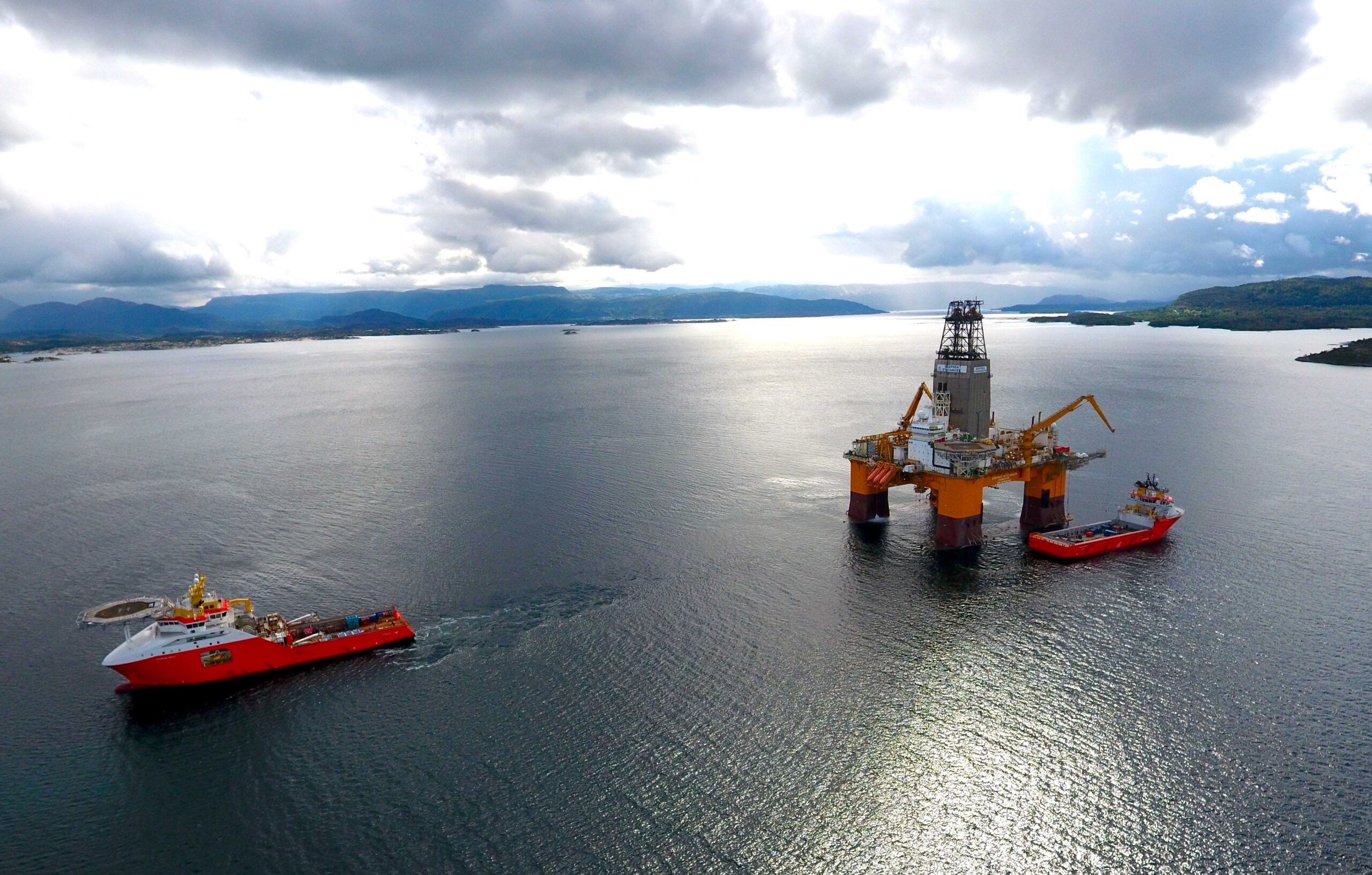
DSM has recently been proposed as key to the green energy transition. Metals like copper, cobalt, manganese and nickel used in batteries and renewables are derived from deep-sea nodules located 4,000m to 6,000m below the ocean surface. However, emerging evidence shows that a circular economy focused on recycling and material design can meet these needs without starting a new extractive race to exploit the deep seabed.

With the justifications for DSM continuously shifting, the industry is no longer only an environmental or economic issue – it is also an emerging security challenge. Africa will be affected and must help shape global governance before major powers turn the seabed into a geopolitical battleground.
Evidence shows that DSM is being used to gather military intelligence. In March, a Mongabay and CNN investigation revealed that eight Chinese state-owned vessels conducting research spent less than 10 per cent of their time in designated International Seabed Authority (ISA) exploration areas. Established by UNCLOS, the ISA regulates all mineral-related activity on the international seabed area.
Over the past five years, these ships – which have direct links to the Chinese Navy and regularly dock at military ports – navigated predominantly military-sensitive waters around Guam, Taiwan and other strategic areas with their Automatic Identification System transponders switched off. Mapping the seabed and collecting data could enable these ostensibly benign civilian vessels to gather military intelligence by identifying submarine routes and refining anti-submarine warfare capabilities.
This would help predict the location of rival submarines and critical undersea infrastructure, such as cables that carry over 95 per cent of all internet traffic and sometimes transmit classified military communications and intelligence.
These developments blur the line between DSM and military reconnaissance, reinforcing growing concerns that the race to the deep is also a race to dominate the undersea battlespace. DSM risks becoming a destructive industry enabling surveillance for both legitimate civilian and military purposes – and a primary theatre for great power competition.
In April 2025, a United States (US) executive order directed the rapid, unilateral exploitation of the seabed outside the ISA framework. The stated aim was to ‘counter China’s growing influence over seabed mineral resources’ for national security purposes, among other reasons.
DSM is becoming a maritime security issue, threatening the multilateral governance edifice Africa helped build. The continent’s sea lanes are already zones of geopolitical rivalry, with a surge in foreign naval deployments, bases and ports. Iran’s attempted ballistic missile strike on the US-United Kingdom military outpost on Diego Garcia island in March – threatening Mauritian and East African coastlines – revealed Africa’s vulnerability in global war contexts.
Neither the ISA nor the African maritime frameworks were designed to address DSM’s possible covert dimensions, creating significant regulatory gaps. While global DSM debates emphasise environmental and economic issues, the security implications remain a blind spot, giving major powers and industry players latitude with limited global oversight.
Africa has several reasons to make its voice heard on DSM, but from a security perspective, the priority is to directly confront the threat of dual-use (commercial and military) risks. The ISA Secretariat is determined to finalise the mining code of rules in 2026, so African states must act urgently while the window for change exists.
READ ALSO: Beyond Africa: Why AU needs a broader definition of reparations
First, the African Group at the ISA should submit a formal agenda item and a dedicated workstream at the 27-31 July ISA Assembly on the security implications of activities in the deep-sea area. The group should advocate for mandatory disclosure of military linkages to contractors and associated research vessels.
This should be coupled with independent research on how using DSM vessels for military activities or to find minerals for weapons manufacture conflicts with the obligation to use the seabed for peaceful purposes only. No exploitation should proceed pending such an assessment.
The African Union and African Group at the ISA must mandate a continental review of DSM’s economic risks for African terrestrial mineral exporters and coastal and island states. They should coordinate an African position in consultation with continental maritime experts that examines DSM as a legal, development, climate and security issue.
This position should be grounded in a precautionary pause as a legal measure to defer DSM until scientific certainty guarantees it won’t harm the marine environment and until equity, governance and security questions are answered.
Forty-seven African states are parties to UNCLOS, with its benefit-sharing and common-heritage principles partly emanating from the contributions made by developing states (many African). The question is no longer if Africa has influence, but whether it has the capacity to make that influence count.
David Willima is a Researcher on maritime and climate risk at the Institute for Security Studies (ISS) in Pretoria.
(This article was first published by ISS Today, a Premium Times syndication partner. We have their permission to republish).