A safer Nigeria begins with stronger institutions. In what could become one of the country’s most consequential security reforms in decades, the Federal Government has taken the next major step towards establishing state police by inaugurating a Presidential Working Group to prepare the legal framework for implementation.
Coming on the heels of the National Assembly’s approval of the constitutional amendment — the passage of the Constitution Alteration (State Police) Bill, 2026 — the move signals that Nigeria’s long-running state police debate is steadily giving way to action.
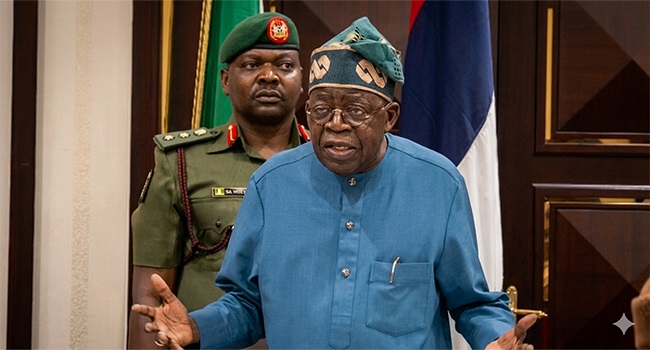
Represented by his Chief of Staff, Femi Gbajabiamila, at the inauguration in Abuja, President Tinubu said the constitutional amendment alone would not be sufficient to establish state police operations.
“The Constitution Amendment Bill establishes the framework for dual policing, but it does not operationalise it. That work is left to the National Policing Bill.”
According to the President, the proposed legislation will address the practical issues required to make the new policing structure functional.
“The proposed National Policing Bill will include provisions on minimum policing standards, state readiness certification, federal-state coordination, accountability, human rights safeguards and fiscal conditions,” said Tinubu.
He explained that the working group had been established to ensure that implementation begins immediately after the constitutional amendment process is completed.
“The Working Group has been constituted to produce a technically robust, implementation-ready draft National Policing Bill for transmission to the National Assembly,” he said.

The President also stressed the urgency of beginning work without delay.
“We must not wait until the constitutional process is concluded before beginning this important assignment,” he said.
READ ALSO: There Are Safeguards To Address Abuse Of State Police — Gov Sani
The committee is chaired by Gbajabiamila and includes the Attorney-General of the Federation, Lateef Fagbemi (SAN); the President of the Nigerian Bar Association (NBA), Afam Osigwe (SAN); the Chairman of the Nigeria Governors’ Forum (NGF) on Committee on State Police/Governor of Ogun State, Dapo Abiodun; the National Security Adviser, Nuhu Ribadu; and the Inspector-General of Police, Tunji Disu.
Broad Institutional Backing
The initiative has drawn support from governors, legal practitioners and senior government officials, who argue that the reform responds to Nigeria’s evolving security needs.
Speaking for the NGF, Abiodun pledged the governors’ commitment to accelerating the process once the constitutional amendment reaches the state legislatures.
“This bill has answered the cries of Nigerians about cascading policing and removing it from the Exclusive Legislative List.”
He also pointed to the experience of regional security outfits as evidence that locally driven policing can complement national security efforts.
“If each state deploys about 6,000 personnel, we will add nearly 200,000 officers to complement the existing federal police,” the governor said.
Commending the Presidency for beginning implementation planning before the constitutional amendment is completed, Abiodun added, “This inauguration demonstrates the proactiveness of the Executive in preparing for effective implementation.”
Attorney-General of the Federation Lateef Fagbemi (SAN) described the initiative as necessary in light of current security realities.
He also appealed to governors to ensure swift ratification of the constitutional amendment.
“There is no denying the fact that we are in a critical moment security-wise, and all hands must be on deck.
“I appeal to the governors to do their utmost to ensure the early passage of the constitutional amendment because this is a shared responsibility,” he said.
The President of the NBA, Afam Osigwe, also backed the proposal.
“Nigeria can hardly be effectively policed by one national police. We fully support the constitutional amendment providing for state police,” said Osigwe.
“We must ensure we do not create a monster. The right legal framework must guarantee accountability and prevent oppression,” he cautioned.
Senate Defends Reform, Experts Urge Safeguards
The Senate has defended the passage of the State Police Bill, describing it as a response to worsening insecurity rather than political calculations.
Senate Leader Opeyemi Bamidele said the proposal emerged from years of constitutional review, nationwide consultations and public hearings conducted across the six geopolitical zones.
“Observations have shown that Nigerians largely welcome the passage of the Bill with a conviction that it will significantly de-escalate the country’s security conditions at the sub-national level,” he said.
He added that “at each level of our consultation, nearly all stakeholders embraced the State Police Bill in the light of the stark realities Nigerians are facing today.
According to Bamidele, the bill also benefited from recommendations made by the Nigeria Police and secured support across party lines in the National Assembly.
But while momentum continues to build, security experts have stressed that implementation must prioritise professionalism over politics.
A former Inspector General of Police, Mike Okiro, believes that improved funding for the Force will strengthen policing across the country.
Retired Assistant Inspector General of Police Wilson Inalegwu warned against recruiting political loyalists, vigilante members or thugs into any future state police structure.
He argued that transparent recruitment, professional standards and effective oversight would determine whether the reform succeeds, while maintaining that the existing Nigeria Police Force remains capable despite years of inadequate funding and logistics.
“We are praying that they will not use members of vigilante, members of thugs, supporters of political parties or individuals to form the new class of this police force,” he said.
“Our institutions are very weak and are not strong enough to withstand the torment of desperate politicians.”
Highlighting the wider importance of policing, he added, “The police is a critical institution, an institution that has primacy on internal security, on public management, on crime prevention.
“This is a critical institution worldwide, and by the time we begin to have an effective police force that is catered for, the development of Nigeria will begin to rise. Nigeria will only develop with an effective police force.”
Meanwhile, Director-General of the Institute for Police and Security Policy Research, Charles Omole, rejected suggestions that state police is designed to influence the 2027 elections.
“It is not true. It is practically impossible to do it,” he told Channels Television.
He argued that the constitutional, legislative and operational requirements make it impossible for any state to establish a functional state police service before the next general election, adding that the focus should instead remain on building a workable legal framework before implementation begins.
Several states in Nigeria have come under attacks by terrorist organisations, resulting in abductions, killings and displacement of residents.
The constitutional amendment has now been transmitted to the 36 state Houses of Assembly, where it must secure approval from at least 24 legislatures before being forwarded to President Tinubu for presidential assent.
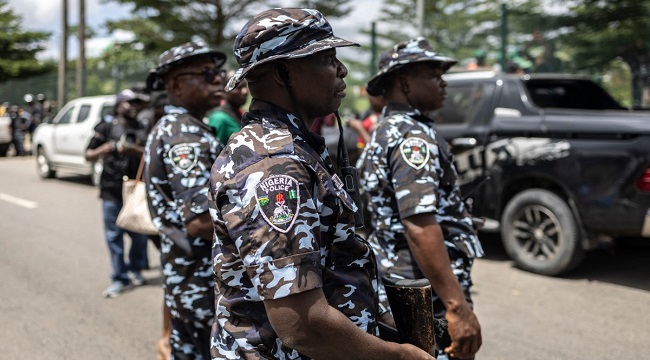
If ratified, Nigeria will establish a dual policing structure comprising the Federal Police Service and 36 State Police Services, in which the Federal Police Service will retain responsibility for national security, terrorism, cybercrime and interstate offences, while State Police Services will oversee local law enforcement under nationally prescribed standards and oversight mechanisms.