FIFA’s chief refereeing officer, Pierluigi Collina, has firmly defended the integrity of match officials at the FIFA World Cup, dismissing allegations of bias following Egypt’s controversial Round of 16 defeat to Argentina.
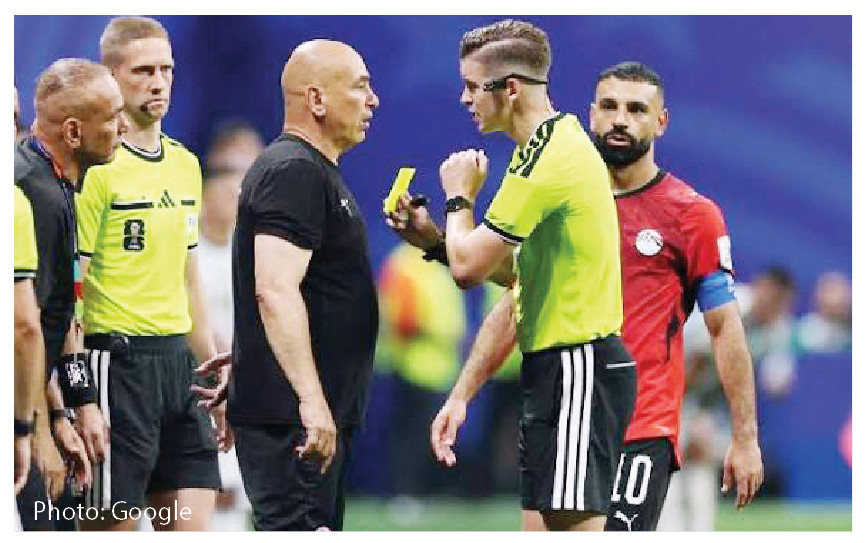
The Egyptian Football Association (EFA) demanded an investigation after Tuesday’s dramatic 3-2 defeat, accusing officials of applying “double standards” after two crucial second-half decisions went against the Pharaohs.
Egypt surrendered a two-goal lead as Argentina mounted a stunning comeback, with several refereeing decisions dominating the post-match discussion.
Head coach Hossam Hassan claimed his side had been “treated unfairly” and even suggested officials wanted to keep the reigning world champions and Lionel Messi in the tournament.
Collina rejected those claims in the strongest possible terms.
“Constructive discussion about refereeing decisions will always be part of football, but unfounded allegations have no place in our sport,” he said.
“Nobody can question the integrity of FIFA World Cup match officials. Such accusations can provoke abuse and threats against referees and even their families, which is completely unacceptable.”
The legendary Italian also dismissed suggestions that FIFA or its president, Gianni Infantino, could influence officiating decisions.
“Nobody can claim FIFA refereeing is influenced by anyone, not even the FIFA president,” Collina added.
“Gianni Infantino has always given his full support to our referees while allowing us to operate with complete independence. Match officials make honest decisions and, like players and coaches, they always strive to do their best.”
The controversy centred on two pivotal moments.
Egypt had a second-half goal disallowed after VAR identified a foul by Marwan Attia on Argentina defender Lisandro Martínez during the attacking build-up. Moments later, the Egyptians were denied a penalty after Mohamed Salah went down inside the area before Argentina launched the move that produced the winning goal.
Although FIFA rarely comments publicly on individual incidents during a tournament, Collina explained why both decisions were correct under the Laws of the Game.
He stressed that VAR reviews every goal by examining the entire attacking possession phase and will recommend an on-field review if a foul is detected, regardless of how far back in the move it occurred.
“A foul remains a foul, irrespective of where it happens in the attacking phase,” Collina explained.
“In the Argentina versus Egypt match, Marwan Attia clearly stepped on Lisandro Martínez’s foot, which constitutes a foul.
“Likewise, the incident involving Mohamed Salah and Julián Álvarez was judged by both the referee and VAR to be normal football contact rather than a foul.”
Collina acknowledged that some decisions will always involve an element of interpretation but expressed satisfaction with the overall standard of officiating throughout the tournament.
The scrutiny of FIFA’s refereeing department has intensified in recent days following criticism of the governing body’s decision to overturn Folarin Balogun’s automatic suspension after his red card against Bosnia and Herzegovina, a move that UEFA described as “unprecedented, incomprehensible and unjustifiable”.
Despite the growing controversy, FIFA has maintained full confidence in its officials as the World Cup enters its decisive quarter-final stage.
We’ve got the edge. Get real-time reports, breaking scoops, and exclusive angles delivered straight to your phone. Don’t settle for stale news. Join LEADERSHIP NEWS on WhatsApp for 24/7 updates →