Nigerian equities have overtaken South Korea’s Kospi index to deliver the highest dollar-based returns of any market in the world this year, as souring sentiment toward artificial intelligence stocks pushes the Asian nation’s once world-beating rally into bear territory.
The benchmark index in Africa’s largest oil producer has returned 68 per cent in dollar terms this year, outpacing the 66 per cent gain for the Kospi index, according to data from the 92 global stock exchanges tracked by Bloomberg.
The Kospi fell into a technical bear market this week after shedding 22 per cent since its June 19 peak, as investors pulled back on renewed doubts over whether demand for AI stocks can hold up. The South Korean won has also weakened by five per cent against the dollar this year, making it the fourth-worst-performing Asian currency.
By contrast, Nigerian stocks have rallied this year on macroeconomic reforms, higher oil prices and improved foreign exchange supply. Financial services companies listed on the Nigerian Exchange have driven much of the market’s gains, with insurer Fortis Global Insurance Plc delivering a return of about 1,400 per cent in dollar terms this year.
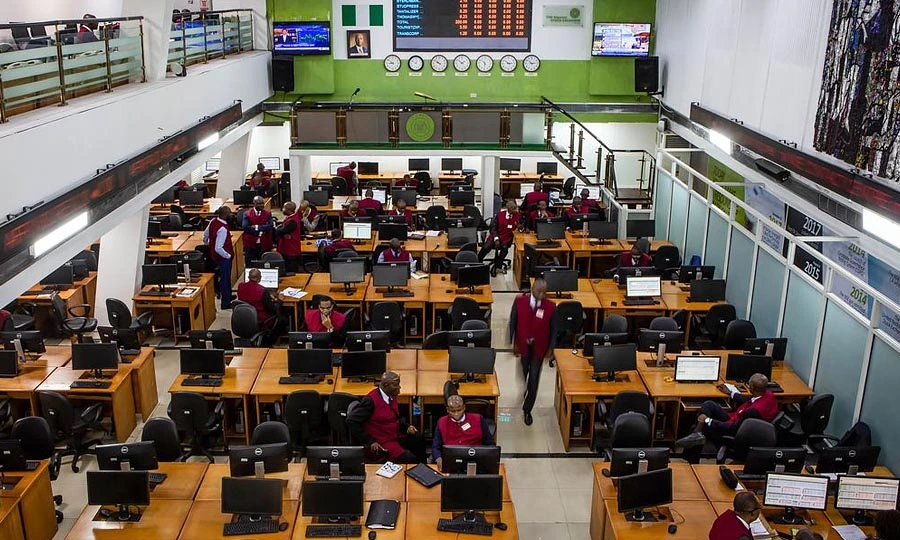
On the local trading floor, the NGX All-Share Index advanced 2.27 per cent on July 8, closing at 242,459.98 points from 237,083.28 points, while total market capitalisation increased by N3.45 trillion to N155.59 trillion.
The rally was largely driven by Airtel Africa, whose shares rose by the maximum daily limit of 10 per cent to N5,801.40.
Speaking on the drivers of the rally, Damilola Okeleye, a Lagos-based trader at Stonex Nigeria Financial Ltd, told Foreign Policy Journal, that Nigerian equities were benefiting from domestic fundamentals rather than the global technology cycle that has whipsawed Asian bourses.
Unlike South Korean firms listed on the Kospi, companies on Nigeria’s stock exchange carry no direct exposure to the volatile artificial intelligence sector that has rattled Asian markets, he noted, pointing instead to Nigeria’s economic reforms and the potential listing of Dangote Petroleum Refinery and Petrochemicals Fze, the continent’s largest crude processor, as a strong driving force behind the gains recorded so far this year.
Adding to the momentum, S&P Dow Jones Indices has placed Nigeria on its 2027 watchlist for potential reclassification from “Standalone” to “Frontier” market status, citing regulatory reforms aimed at improving transparency, market integrity and accessibility in Nigeria’s capital market.
The index provider said it would monitor developments through the rest of 2026 before deciding whether to proceed with the upgrade during its 2027 review, stressing that consistent policy implementation and stronger operational resilience will be necessary before any reclassification is approved.
Analysts say a frontier market designation would mark a symbolic milestone for Nigeria’s capital market and could broaden the pool of global funds eligible to invest in Nigerian equities, since many frontier-focused funds cannot invest in markets still classified as standalone markets.
Meanwhile, the naira has gained four per cent since January, adding to the returns already recorded by dollar-based investors on top of the equity gains themselves — a shift from previous years when currency volatility often eroded foreign investors’ returns even when local share prices rose.
We’ve got the edge. Get real-time reports, breaking scoops, and exclusive angles delivered straight to your phone. Don’t settle for stale news. Join LEADERSHIP NEWS on WhatsApp for 24/7 updates →