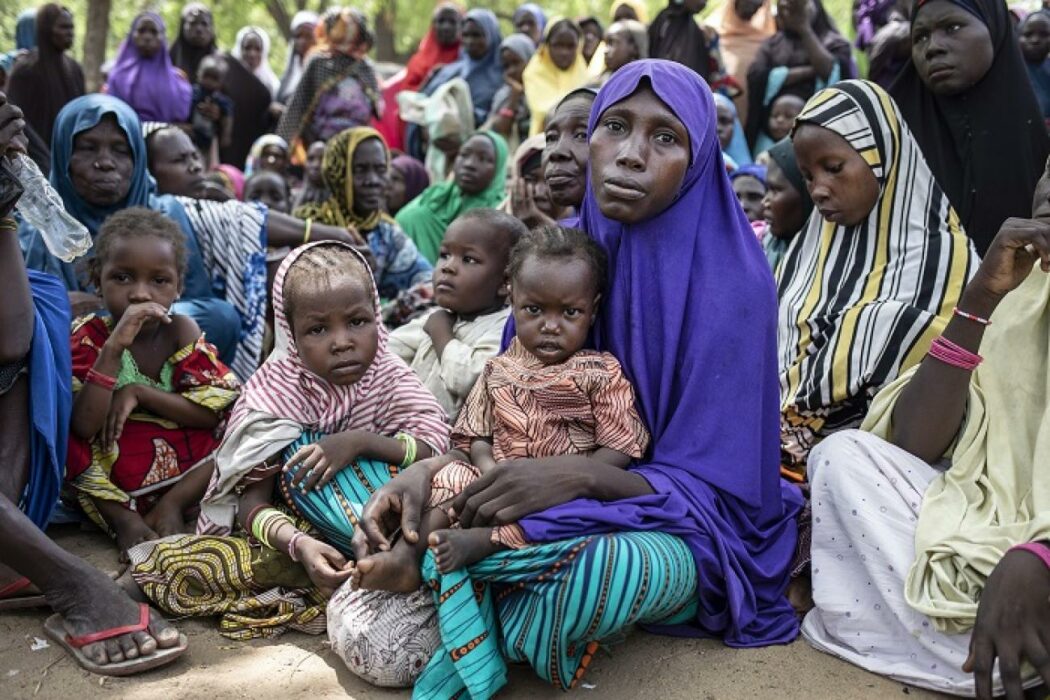
The United Nations World Food Programme (WFP) has warned that Northern Nigeria is grappling with its worst hunger crisis in almost a decade, with more than 17 million people across conflict-affected states facing acute food insecurity amid worsening insecurity, displacement and dwindling humanitarian funding.
The latest WFP assessment shows that the number of people experiencing crisis, emergency or catastrophic levels of hunger has risen by nearly two million compared to earlier projections, underscoring the growing humanitarian burden across the region.
According to the agency, the crisis is being fuelled by persistent attacks by insurgent groups in the North-East and armed gangs operating in other parts of northern Nigeria, forcing thousands of families from their homes, disrupting farming activities and restricting humanitarian access at the peak of the lean season, when household food stocks are traditionally at their lowest.
Borno State remains the epicentre of the crisis, with more than three million people facing acute food insecurity, including over 750,000 experiencing severe hunger and more than 10,000 already in catastrophic conditions, according to the WFP.
The agency also warned that shrinking international funding has significantly reduced its operations, leaving millions without life-saving food and nutrition assistance. It said it now requires about 89 million dollars over the next six months to sustain emergency food, nutrition and logistics support across northern Nigeria.
The recent multidimensional poverty assessments have consistently shown that many northern states record the country’s highest deprivation levels across education, healthcare, living standards and employment, making millions of households particularly vulnerable to food shocks and conflict.
The WFP cautioned that unless urgent humanitarian support is mobilised, worsening hunger could trigger further displacement, expose vulnerable families to exploitation and deepen insecurity across the region, with far-reaching consequences for livelihoods and national stability.
Muhammadu Inuwa Yahaya, the chairman of the Northern States Governors’ Forum (NSGF), during the inaugural meeting of the board of trustees for the Northern Security Trust Fund held on Wednesday, in Kaduna, attributed the worsening hunger crisis in Northern Nigeria to persistent insecurity, poverty and other socio-economic challenges, saying they continue to undermine agricultural production and livelihoods across the region.
Governor Yahaya, who is also the Gombe State governor, said insecurity remained the biggest obstacle to efforts to tackle hunger because it had displaced farming communities, weakened agriculture, discouraged investment and prevented many farmers from accessing their farmlands.
He said banditry, terrorism, kidnapping, drug abuse and other forms of criminality had disrupted peaceful coexistence and slowed development across the region, stressing that poverty, illiteracy, unemployment and the growing number of out-of-school children were also contributing to conditions that allow insecurity and food insecurity to thrive.
“The insecurity confronting Northern Nigeria is destroying communities, weakening agriculture, discouraging investment, displacing families and threatening the future of our people,” Yahaya said.
The NSGF chairman, however, maintained that security operations alone would not be sufficient to address the challenge, saying the region must simultaneously invest in education, agriculture, livelihoods, youth empowerment and skills development to tackle the root causes of insecurity and hunger, stressing that the established security trust fund will mobilise sustainable resources for security interventions, with each northern state to contribute N1 billion monthly for one year to finance the initiative.
Yahaya further disclosed that the governors were working proactively with traditional rulers, local governments, security agencies and community leaders to prevent communal conflicts that often disrupt farming activities, particularly during the rainy season.
He added that the forum was also promoting livestock transformation initiatives, modernising agricultural production and processing, and supporting measures aimed at protecting farmers, improving peaceful coexistence and boosting food production across the region.
We’ve got the edge. Get real-time reports, breaking scoops, and exclusive angles delivered straight to your phone. Don’t settle for stale news. Join LEADERSHIP NEWS on WhatsApp for 24/7 updates →