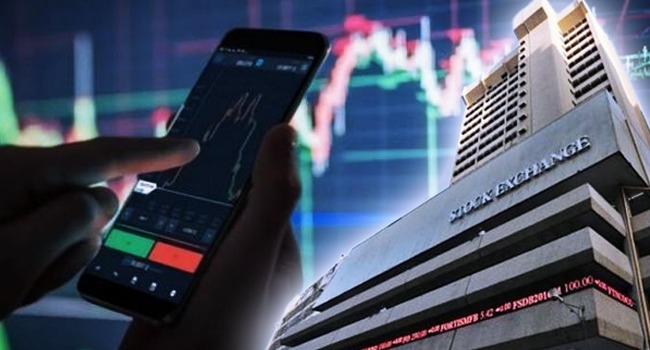
Nigerian equities have overtaken the South Korean stock market to emerge as the best-performing stock market in the world in dollar terms this year. The development was buoyed by macroeconomic reforms, renewed investor confidence, and improvements in foreign exchange liquidity.
A report by Bloomberg showed that Nigeria’s benchmark stock index has returned 67 per cent in dollar terms since the start of the year, outperforming the South Korean KOSPI index, which gained 66 per cent. Bloomberg tracked 92 stock exchanges globally to arrive at the figures.
South Korea lost its lead following the slipping of the KOSPI into a technical bear market this week, slumping by 22 per cent from its June 19 peak. This downturn was driven by weakened investor sentiment as market participants re-evaluate the outlook for artificial intelligence (AI)-related and technology stocks, dragging the Asian market into bear territory. According to Bloomberg, the South Korean won also weakened by 5 per cent in 2026, making it the fourth-worst-performing currency in Asia.
READ ALSO: Tinubu, Afreximbank Discuss Strengthening Economic Cooperation Across Africa
Conversely, the Nigerian market appreciated about four per cent against the dollar since the first month of the year on the back of firmer oil prices, improved foreign exchange supply, and the country’s economic reforms. Nigeria’s rally, unlike that of the South Korean equity market, where tech stocks held sway, was driven mostly by domestic macroeconomic factors.
Bloomberg noted that financial services companies listed on the Nigerian Exchange (NGX) propelled the vast majority of the market’s gains. Notably, Fortis Global Insurance Plc delivered a return of about 1,400 per cent in dollar terms in 2026.
The report also referenced S&P Dow Jones Indices’ decision on Wednesday to place Nigeria on its 2027 watchlist for a possible return to frontier market status, a move expected to strengthen investor appetite for Nigerian assets. While S&P stated that Nigeria’s regulatory environment has improved, it noted that consistency in policy implementation and operational resilience are required before considering a full reclassification.
Meanwhile, FTSE Russell has delayed its decision on Nigeria’s return to its Frontier Market Index, stating the delay is borne out of the need to examine the long-term effects of Nigeria’s transition to a T+1 settlement cycle for international investors.