
We compelled our governments to fund ANC’s activities within and outside Nigeria. Scholarships were provided for Black South African students to study in our universities and polytechnics… We, students, ensured that Nigeria became a home away from home for South African students by personally hosting them at our own expenses. We contributed parts of our pocket money and scholarship stipends to support the ANC by producing, reproducing, and circulating ANC documents, posters and materials throughout Nigeria.
There is every ground for me to charge the African National Congress (ANC) to the International Court of Human Conscience and the African Court of Ubuntu for the ongoing afrophobia and xenophobia in South Africa. That, I will do.
ANC did not enlighten me about apartheid. Nor the liberation struggles in South Africa. My secondary British teacher, “Titomthy”, did. He read the abridged editions of EA Ritter’s Shaka Zulu and Alan Paton’s Cry, The Beloved Country to us.
Ritter’s Shaka Zulu introduced me to pre-colonial Southern Africa. I greatly admired Shaka Zulu’s personality; his wisdom, audacity, unshakable confidence, war strategies, and heroism. But I was unhappy with the unnecessary wars he waged, the political upheaval he caused, and the mass migration that Mfecane ignited.
Paton’s Cry, The Beloved Country introduced me to White settler colonialism, racism, apartheid and the dehumanisation and depersonalisation of Black Africans. Miserable and agonising as these were, Paton, in 1948, foresaw and even warned the South African Black not to be too hopeful and “moved when the birds of his land are singing.”

His warning: “Cry, the beloved country, for the unborn child that is the inheritor of our fear. Let him not love the earth too deeply. Let him not laugh too gladly when the water runs through his fingers, nor stand too silent when the setting sun makes red the veld with fire. Let him not be too moved when the birds of his land are singing, nor give too much of his heart to a mountain or valley. For fear will rob him of all if he gives too much.”
The children of Soweto, who militantly and heroically rose against apartheid in 1976, conscientised me about the struggles of Black South Africans. The torture and murder of Steve Biko further made me realise how deadly apartheid was. I got to know these by listening to the discussions of my seniors about apartheid and the liberation struggles in Southern Africa.
The pictures of the Soweto Uprising and Biko’s murder published in the print media of the era, especially Drum and Trust magazines, also helped.
The Highlife, Afrobeat and Reggae songs of the era, especially late Sonny Okosun’s, “Papa’s Land” (PL) and “Fire in Soweto” (FIS) made me stand with the freedom fighters.
So too was Kenneth Kaunda’s Zambia Shall Be Free, Peters’ Abrahams’ Mine Boy and Tell Freedom, and many of the Onitsha market literature.
The lyrics of Okosun’s “Papa’s Land”, released in 1977, goes thus: “We want to know-we want to know o/Who owns Papa’s Land…/Africans want to know who owns the land…/Africa is my father’s land/Yes-Africa is my papa’s land/Will you let my people go/We want to rule from Cape to Cairo/Will you free my people’s hand/We want to rule from Cape to Cairo/Britain is ruled by the English men/Japan is ruled by Japanese/Africa should be ruled by Africans.”
The Movement for a Progressive Nigeria (MPN) and the Youth Solidarity on Southern Africa (YUSSA), to which I belonged and held leadership positions, saw the struggle against apartheid as Nigerian and, indeed, an African one.
While that of “Fire in Soweto” goes thus: “Fire in Soweto/Burning all my people/That was fire in Angola/A burning all my people/Riot in Mozambique/Affecting all my people/Fighting in Namibia/Crushing all my people/A shooting in Soweto hey/A killing all my people/A rebel in Zimbabwe/Victimising all my people/I look at them a burning/My people are crying/I look at them a shooting/My people are dying/I look at them a robbing/My people are sighing… The colour of God/Neither black nor white… Africa is our home – freedom is our goal/…Freedom is our hope freedom is our goal.”
Nigerians did not just dance to these songs, they also reflected critically, asked critical questions and demanded what should be done to liberate Africa as a whole from White settler colonialism and apartheid.
It was, however, in my undergraduate days in the Ahmadu Bello University, Zaria, that I took a conscious, calculated and concrete decision to take the liberation struggle in South Africa and Namibia as my struggle.
The Movement for a Progressive Nigeria (MPN) and the Youth Solidarity on Southern Africa (YUSSA), to which I belonged and held leadership positions, saw the struggle against apartheid as Nigerian and, indeed, an African one.
The National Association of Nigerian Students (NANS) specifically demanded consistent and concrete moral, material, financial, diplomatic, political and military support for the ANC from its cadres.
YUSSA, MPN and NANS, and the Patriotic Youth Movement of Nigeria (PYMN), which coordinated their activities, saw the struggle for the liberation of Southern Africa as organically linked with, and dialectically tied to, the struggle for democracy, development and social justice in Nigeria. Three major reasons were commonly advanced.
First, that Nigerians and Black South Africans have a common enemy – IMPERIALISM. This exploits, oppresses and dehumanises Black South Africans by masquerading as APARTHEID. In Nigeria, on the other hand, that imperialism exploits, oppresses and dehumanise us by masquerading as NEO-COLONIALISM.
Secondly, that our solidarity with Black South Africans is not an act of charity, but of mutual aid between forces fighting for the same objectives and goals.
Thirdly, that, it is only through our mutual solidarity, support, and struggles can Africa be liberated, democratised and developed.
Besides, it was also argued that until all of Africa is free and independent, Africans in Africa and the Diaspora will never be free and respected.
We also paid for the liberation struggles of South Africa. Anti-apartheid students’ activists were considered “security threats”; constantly harassed by security agents; and suspended, rusticated and expelled from schools.
As students, we did not merely voice opposition against apartheid, we insisted, stubbornly demanded, and fiercely struggled that Nigerian governments must recognise the ANC as the sole and authentic representative of South Africans. And we succeeded greatly.
We similarly collected signatures for the release of Nelson Mandala and other political prisoners incarcerated by the apartheid regime. We commemorated the historic days of, and personalities in the resistance.
We compelled our governments to fund ANC’s activities within and outside Nigeria. Scholarships were provided for Black South African students to study in our universities and polytechnics.
We, students, ensured that Nigeria became a home away from home for South African students by personally hosting them at our own expenses. We contributed parts of our pocket money and scholarship stipends to support the ANC by producing, reproducing, and circulating ANC documents, posters and materials throughout Nigeria.
We regularly held exhibitions, as well as organised public lectures, symposia, seminars on apartheid and liberation struggles in Southern Africa. ANC representatives were regularly invited to speak to us at these events.
The national students’ uprisings organised by NANS, from 1982 to 1992, raised issues, struggles and demands of the ANC. Students brought pressure to bear on Nigerian governments to nationalise multinational companies in Nigeria operating in South Africa.
Virtually everything Nigerian governments did against apartheid were, to a great extent, done to get the support of the students’ movement. So popular were anti-apartheid sentiments that Nigerian governments dared not do anything that would negatively affect the liberation movements.
We also paid for the liberation struggles of South Africa. Anti-apartheid students’ activists were considered “security threats”; constantly harassed by security agents; and suspended, rusticated and expelled from schools.
YUSSA’s patron, Dr Francis Patrick Wilmot, was kidnapped, criminally detained and illegally deported by General Ibrahim Babangida’s administration on the grounds that he posed “a security threat” to the nation!
I therefore have the locus standi to charge the ANC in the International Court of Human Conscience and the African Court of Ubuntu for the ongoing Afrophobia and xenophobia in South Africa.
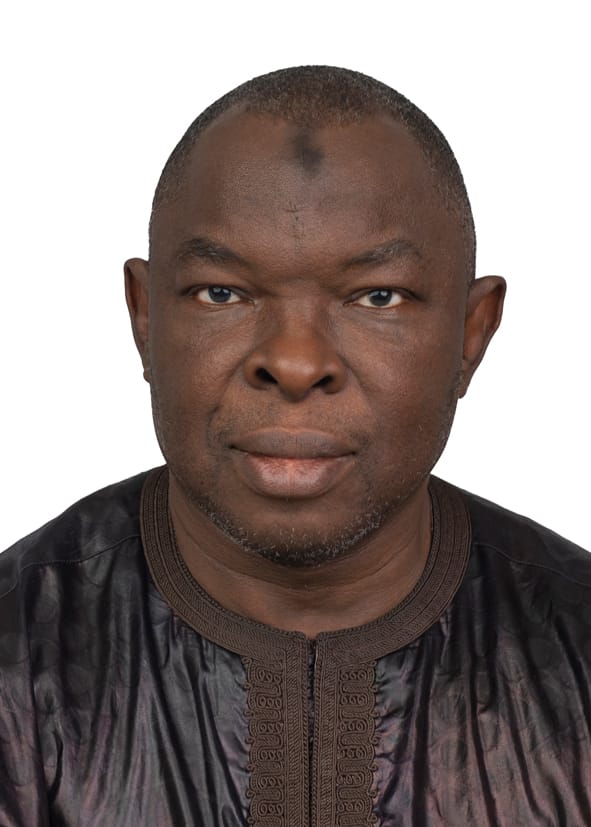
Ahmed Aminu-Ramatu Yusuf worked as deputy director, Cabinet Affairs Office, The Presidency, and retired as General Manager (Administration), Nigerian Meteorological Agency, (NiMet). Email: [email protected]