
I find the tribalism at the heart of modern football’s fanbase sickening. The droll chit chat that masquerades as conversation between supporters of rival teams would not survive in any other emulous environment. It is small wonder that this banter is not the cause of a lot more violent episodes on match days. Ironic then, that this partisanship feeds football’s financial success.
The layers of irony do not end there, though. About 70 per cent of player fees in the world’s most successful football franchise (the English Premier League — EPL) comes from television rights. And a significant portion of this is from outside the United Kingdom. In other words, football fans pay the salaries of footballers in the EPL — in Africa’s case, largely through MultiChoice. Put differently, all the footballers in the EPL are employees of the hosts of couch potatoes and armchair football analysts.
Why then would a fan (an employer) suffer conniptions of anger and pain when one employee fails to pass muster on a gloomy weekend? After all, there is a bewildering array of such employees’ performance to choose from every weekend that the football season is on. My preference, therefore, is for good football — it doesn’t matter which team is playing it.
Every four years, however, this logic turns on its head. Football’s World Cup is without doubt one of the world’s top cultural and sporting events. And in a sense, it is more than this. Much of Brazil’s soft power globally is due to the breath-taking ease with which its footballers play the beautiful game. Unsurprisingly, part of FIFA World Cup’s appeal is that it proxies for national vitality. Rinus Michels’ philosophy of “Total Football” was no less important in this sense than was Germany’s reported use of advanced data analytics, video‑based performance tools, and custom software (notably SAP Match Insights) to optimise team tactics, and opponent analysis during the 2014 World Cup.
From the comfort of my couch, Nigeria’s failure to qualify for the World Cup this year meant that Africa and its salience moved to the fore. Did it matter that in the new expanded format Africa had ten teams at this year’s finals — second only to Europe’s 16? Yes. How significant was Cape Verde’s Cinderella run for any appraisal of the continent’s performance? For Cape Verde, and huge swathes of Africa it was exhilarating.

But we’ve been here before. The “Disgrace of Gijón” was one such cliff-hanger. West Germany and Austria contrived in their final group match on June 25, 1982, to eliminate Algeria by goal difference — this led to the rule change that now has all group stage final matches played at the same time. Cameroon’s 1990 World Cup run, the one that saw the Indomitable Lions lose 3-2 to England in the quarterfinals is still considered one of the continent’s greatest World Cup performances.
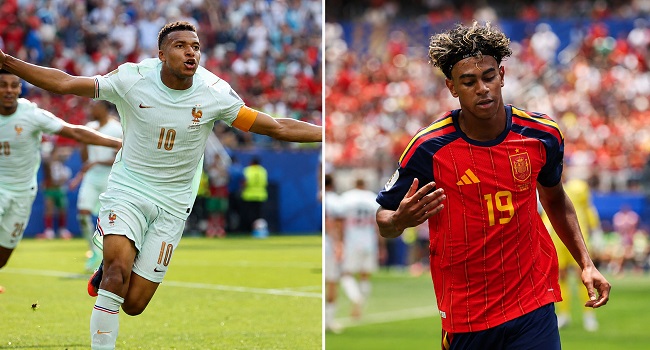
Beyond heroics from underdogs, the 2026 FIFA World Cup has a more intriguing and subtle subtext. The Williams, Brobbey, and Doué siblings are this subtext’s main metaphors. Two siblings. Two countries. Ethos? As mutual as shared can be. Same parents. Same banlieue. Same school. Same football academy. Same football league — if dissimilar club sides. Ought there to be a marked difference in outcomes were one to play under a European flag and the other under an African one?
Yes, is the answer if the outcomes of the Senegal versus Belgium, and Egypt versus Argentina matches provide any clues. In a way, both encounters reprise the Group B men’s football match between Nigeria and Brazil at the 1968 Olympics. Playing at the Estadio Cuauhtémoc in Puebla, Mexico, goals from Kenneth Olayombo (a brace) and Peter Anieke saw Nigeria head into the break three goals up against Brazil. The game ended in a draw. According to one wisecracking commentator, the Nigerians got into the dressing room, reminded themselves that they were up against the mighty Brazilians and duly fell apart in the second half. At the 2026 FIFA World Cup, Senegal and Egypt went through the same motions.
Why? Discipline, I thought. An abundance of it was obviously required for both teams to have retained both their chemistry and shape over the ninety minutes that was needed to win. Mentality, I am told, is what was lacking. Neither team could muster the smarts to remain on message for ninety minutes. Their opponents, on the other hand, found it a lot easier to do.
A few years back, poor sporting infrastructure was the bane of African teams at the World Cup. Today, with Europeans playing on both sides of the Africa versus the rest of the world divide, that argument won’t wash. Discipline and mentality, however? Now, these are a different kettle of fish. What is it about African flags that robs European footballers of these?
Uddin Ifeanyi, a journalist manqué and retired civil servant, can be reached @IfeanyiUddin.