
Nigeria and the African Development Bank (AfDB) have called for greater African ownership and control of the continent’s vast mineral resources, urging mineral-rich countries to embrace local value addition, regional collaboration and strategic financing to unlock sustainable economic growth.
The call was made at the Ministerial Forum on Critical Minerals, Value Chain and Beneficiation: Pathways for African Transformation, organised by the African Development Bank in Abidjan, Côte d’Ivoire.
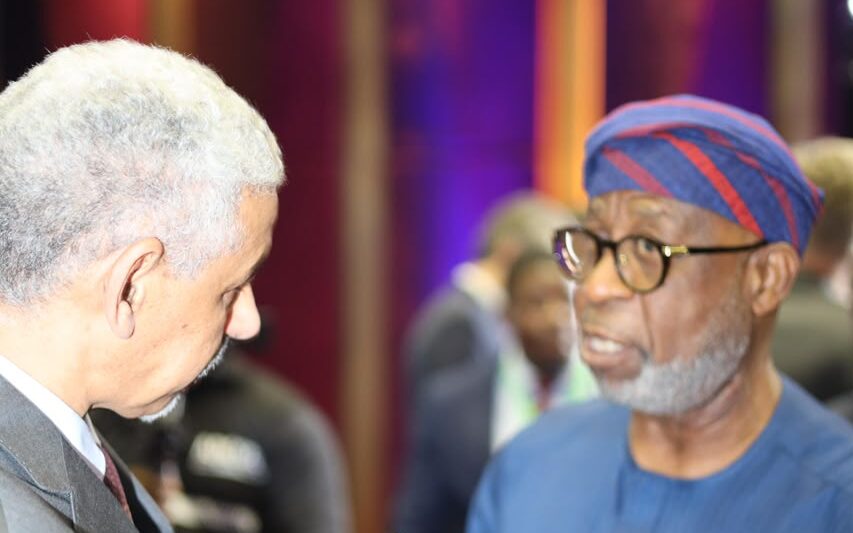
Speaking at the forum, Nigeria’s Minister of Solid Minerals Development, Dele Alake, urged African nations to adopt a collective approach to mineral development rather than pursuing isolated national strategies, stressing that stronger regional cooperation would enable the continent to derive greater value from its abundant mineral resources.
Mr Alake, who chairs the Africa Mineral Strategy Group (AMSG), said Africa must move beyond exporting raw minerals and focus instead on value addition, local processing, and industrialisation to achieve economic independence.
“While the mantra of value addition has ushered in an era of economic independence for mineral-producing nations, we need concrete, actionable strategies to take charge and be in full control of our natural assets to ensure total economic freedom,” he said.

The minister also advocated data sovereignty, describing Africa’s continued reliance on the Australia-based Joint Ore Reserves Committee (JORC) reporting standard as outdated.
He called for the adoption of the Pan African Resource Reporting Code (PARC), developed by the Africa Minerals Development Centre (AMDC), saying the framework would provide a transparent, Africa-focused system for reporting on mineral and energy resources while reflecting the continent’s unique geological and environmental realities.
Mr Alake further proposed establishing a West African minerals-processing corridor, modelled after the Lobito Corridor, stretching from Lagos to Dakar to enable participating countries to specialise in processing specific minerals, reduce infrastructure costs, and share investment risks and rewards.
He noted that the initiative would strengthen Nigeria’s ambition to become a regional hub for mineral processing and industrial development.
The minister also expressed concern over Africa’s low level of intra-continental trade, which he said stands at about 16 per cent, compared with roughly 60 per cent in Asia and 70 per cent in Europe.
Earlier, President of the African Development Bank, Sidi Ould Tah, lamented what he described as the paradox of Africa’s enormous mineral wealth and limited economic returns.
According to him, despite possessing significant deposits of critical minerals, Africa has yet to translate these resources into commensurate growth in Gross Domestic Product (GDP), while inadequate financing continues to constrain the sector’s development.
The forum concluded with the adoption of the Abidjan Declaration, which commits African countries to coordinated policies on critical minerals, integrated regional infrastructure, value chain development, and capital mobilisation.
READ ALSO: Nigeria, AfDB sign agreement to operationalise $7bn aviation transformation programme
Under the declaration, the African Development Bank pledged to deploy its financial instruments, capital-structuring capabilities and technical expertise to support mineral-producing countries, reduce investment risks and attract both public and private financing for strategic mineral projects.
The declaration also called on African governments to strengthen national and regional capacities to develop bankable projects, create sustainable employment, and expand local value addition across the mining sector.
Participants at the forum reaffirmed that stronger African cooperation, improved governance, strategic financing and greater control over mineral resources are essential to ensuring that the continent’s vast mineral wealth delivers broad-based and sustainable economic transformation.
The meeting brought together more than 20 African ministers responsible for mining, energy, industry, natural resources, and the green economy, as well as representatives of the African Development Bank, the African Export-Import Bank (Afreximbank), the US Export-Import Bank, and mining companies from Germany, Canada, and the United States.