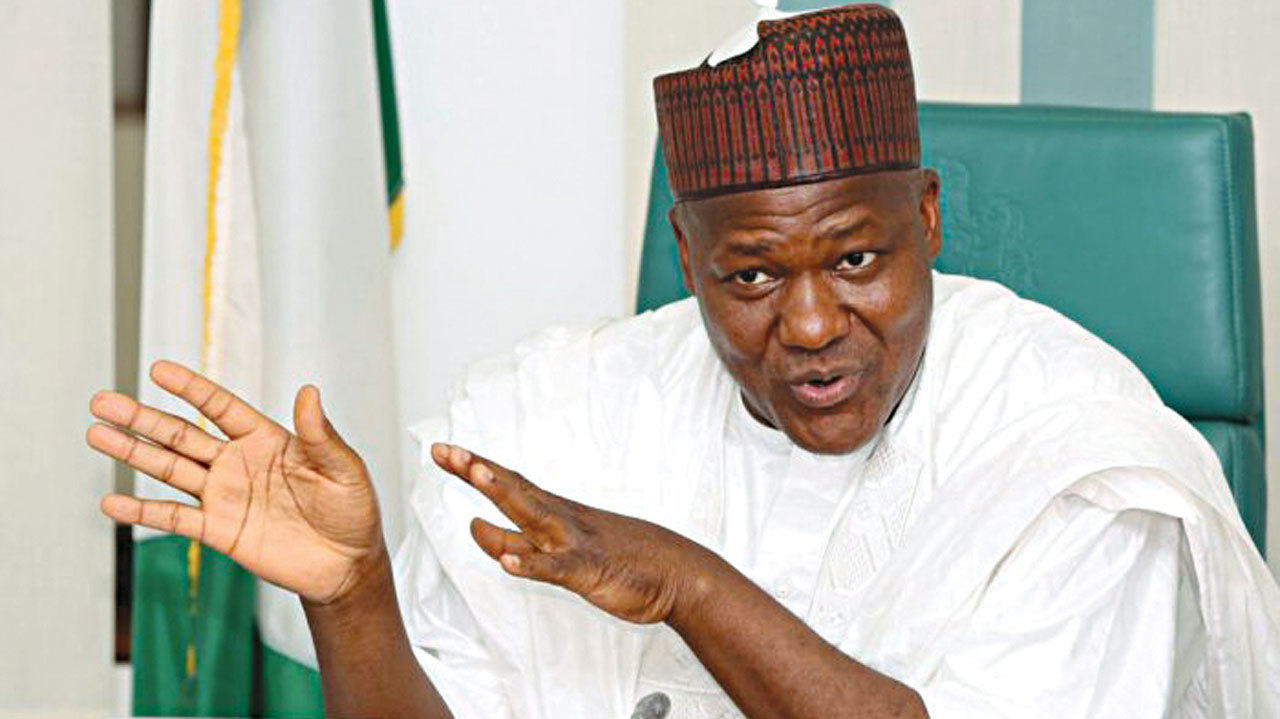
A former Speaker of the House of Representatives, Hon. Yakubu Dogara, has called for stronger collaboration between the National Assembly and civil society organisations (CSOs) to enhance effective legislative oversight of the Executive arm of government.
He stressed that oversight remains critical to ensuring that government policies, budgetary allocations and approved projects translate into tangible benefits for Nigerians.
Dogara spoke at the National Assembly Open Week session, organised by the House of Representatives in Abuja, where lawmakers, civil society groups, development partners, and the media gathered to discuss strategies to strengthen transparency, accountability, and citizen participation in governance.
He said many Nigerians were yet to experience the full dividends of democracy despite the enormous resources appropriated by the National Assembly over the past 25 years of uninterrupted democratic rule.
Dogara questioned why there remained a major disconnect between what the legislature approves and what eventually reaches the people, describing the gap as one of the country’s most pressing governance challenges.
According to him, the constitutional responsibility of legislative oversight extends far beyond routine committee visits and official reports, insisting that it should serve as a powerful instrument for exposing corruption, inefficiency, waste and poor governance.
“The essence of oversight is to ensure that every kobo appropriated by the National Assembly is spent for the purpose for which it was approved and that Nigerians receive value for public funds,” he said.
Dogara commended the leadership of the House of Representatives, under the speaker, Rt. Hon. Abbas Tajudeen and the deputy speaker, Rt. Hon. Benjamin Kalu, for creating a platform that promotes openness and direct engagement between lawmakers and citizens through the National Assembly Open Week.
He described the initiative as a bold and commendable step towards deepening democratic accountability, noting that it gives citizens, civil society organisations, and the media an opportunity to engage lawmakers directly, ask difficult questions, and contribute meaningfully to legislative processes.
According to him, democratic institutions become stronger when they willingly subject themselves to public scrutiny rather than operating behind closed doors.
The former speaker cautioned that legislative oversight loses its essence when reduced to a ceremonial exercise rather than serving as an effective mechanism for safeguarding Nigerians’ interests and ensuring the faithful implementation of government programmes.
Dogara argued that civil society organisations should not be viewed as external critics of government but as indispensable partners in strengthening democratic governance. He noted that many CSOs possess community-based information, technical expertise and field evidence that are often unavailable to lawmakers.
He described civil society organisations as the “eyes and ears” of the legislature, explaining that they play a crucial role in monitoring constituency projects, tracking public expenditure and providing credible evidence of implementation failures and service delivery gaps.
Recalling his tenure as speaker, Dogara said he deliberately encouraged the participation of civil society organisations during budget defence sessions despite opposition from some lawmakers who were uncomfortable with public scrutiny.
According to him, institutions that resist transparency ultimately weaken public trust and confidence in democratic governance.
We’ve got the edge. Get real-time reports, breaking scoops, and exclusive angles delivered straight to your phone. Don’t settle for stale news. Join LEADERSHIP NEWS on WhatsApp for 24/7 updates →