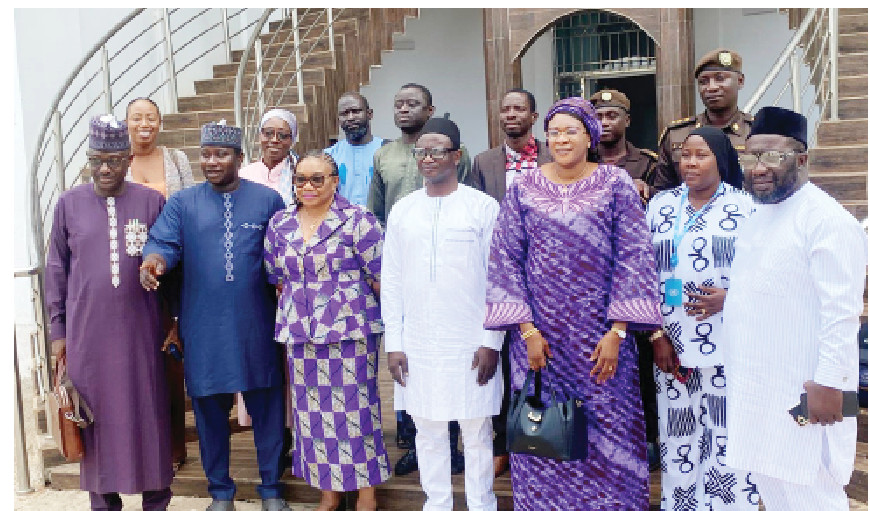
Members of the ECOWAS Parliament and other officials at the outreach programme on Irregular Migration in Banjul, The Gambia. Photo: ECOWAS Parliament
The bugbear of irregular migration, the menace of human trafficking that has beset West Africa in recent times, and the concomitant dangers have jolted critical segments of the region as the ECOWAS Parliament has intensified efforts to combat the scourges.
These lingering crises are at the heart of the regional parliamentary-citizen engagement campaign, officially launched in Banjul, The Gambia, marking the first phase of a two-country outreach programme that began in The Gambia from July 6 to 10 and is now moving to Dakar, Senegal, from 13 July to 17.
The campaign is geared towards engaging directly with the rural communities in the two countries, which is essential to developing more effective regional policies to address the growing crises across West Africa.
This programme was the brainchild of The Gambia’s Delegation to the ECOWAS Parliament with support from the Parliament’s General Secretariat, and it was a platform for lawmakers, ECOWAS officials, government agencies, development partners, youth organisations, returnees, traditional leaders and the media to brainstorm on better ways to promote safer migration and strengthen the fight against human trafficking and modern slavery.
Fourth Deputy Speaker of the Parliament, Billay Tunkara, who is also the Head of The Gambia’s Delegation to the regional assembly, said it has become incumbent on stakeholders to make more commitments and investment by going beyond legislative deliberations to engage directly with communities affected by irregular migration.
The Gambian lawmaker noted that the engagement complements the Gambian government’s efforts to address irregular migration, human trafficking and the socio-economic challenges facing young people, stressing that sustainable solutions can only be achieved through active community participation.
Contributing, ECOWAS Resident Representative in The Gambia, Miatta Lily French, said irregular migration and human trafficking are transnational challenges that require stronger collaboration among member states, even as she urged sustained public awareness campaigns and coordinated regional action to protect vulnerable people from exploitation by trafficking networks.
Director of Parliamentary Affairs at the ECOWAS Parliament, Dr. Kabeer Garba, commended the Gambian delegation for initiating the outreach, noting that direct interaction with citizens would provide lawmakers with firsthand knowledge of the realities driving irregular migration across the sub-region.
The choice of The Gambia as the country for this outreach became necessary following the reports from the International Organisation for Migration (IOM) that the country is increasingly being used as a transit point along the West African Atlantic Route, citing overcrowded boats, changing coastal departure points and the growing involvement of women and children in dangerous migration journeys.
The irregular migration crisis escalated in the West following successive years of economic downturns occasioned by dwindling opportunities for young people, who embark on perilous journeys to Western Europe, North America, and other parts of the world in search of greener pastures. Because of desperation, these young Africans usually cross borders without legal documents, relying on smugglers, or taking hazardous routes across the Sahara Desert and Atlantic Ocean.
Prospective migrants face all kinds of exploitation, physical abuse, violence, torture, forced labour, from smugglers and merchants of trafficking and sometimes cruel treatment in the hands of immigration officers in the countries of immigration. Thousands have perished this way, and many young women have been forced into prostitution, even those as young as 14 years.
Many have faced imprisonment and deportation because they lack legal status. In the worst-case scenario, irregular migration has contributed to political and social tensions within the region, much as hosting transit migrants and managing returnees have posed a major problem for local communities and international organisations.
West African countries, especially Nigeria, have an uncomfortable record of irregular migration. In March this year, more than 60,000 Nigerians stranded on migration routes across West and Central Africa safely returned home with the support of the IOM since 2017, many of whom are now rebuilding their lives with targeted reintegration support.
It must be stated, however, that migration, when properly managed, presents opportunities for national development. Regular migration can lead to skill development, technological advancement, expertise, and technical competencies, as well as remittances from West Africans in the Diaspora that could be invested in the region’s economy.
Therefore, West Africa must strengthen institutions, expand livelihood opportunities and ensure returning migrants are empowered to rebuild their lives with dignity. There must also be serious penalties for human traffickers and their backers.
The task ahead is clear: West Africa must continue to invest in stronger institutions, better protection, sustainable reintegration, and safe migration pathways, and build a migration system that is humane, inclusive, and leaves no one behind.
Above all, West African leaders must work to grow their economies to reduce poverty and economic deprivation, which push young West Africans into this dangerous route. There should also be massive efforts to support survivors and prevent others from falling into the hands of traffickers, and strengthen collaboration with the IOM.
We’ve got the edge. Get real-time reports, breaking scoops, and exclusive angles delivered straight to your phone. Don’t settle for stale news. Join LEADERSHIP NEWS on WhatsApp for 24/7 updates →