
Every general election has a legal framework that underpins its successful conduct. The Electoral Act 2026 exemplifies this for the 2027 polls. Nigeria has had to amend extant Electoral Acts to improve the integrity of its electoral process. This is why the 2022 Electoral Act was subjected to a review early in the year, which gave birth to the Electoral Act 2026.
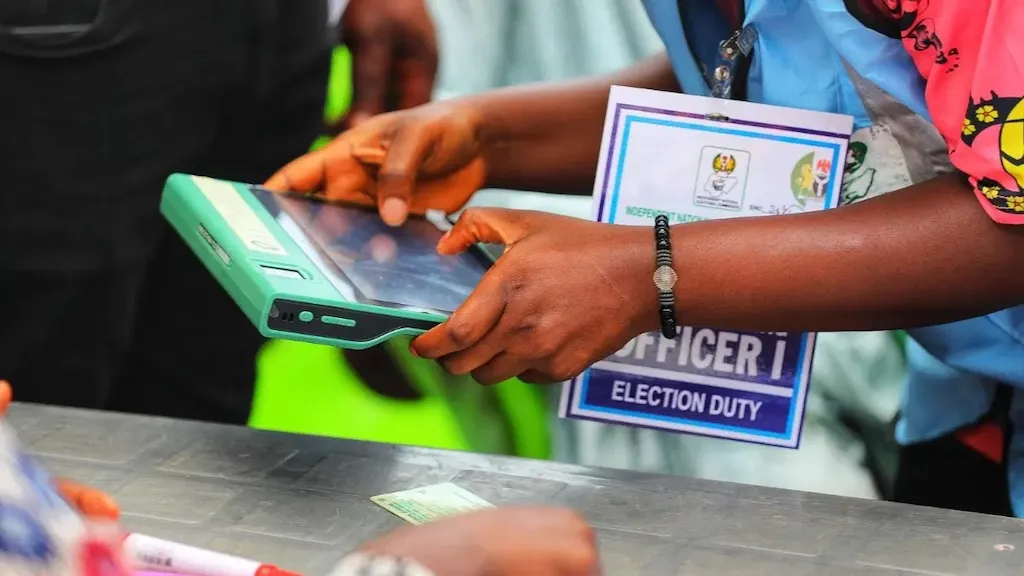
Yet, its ill-defined provisions on the electronic transmission of votes, from polling units to INEC’s IreV portal in real time, had sparked considerable ruckus in the parliament in February and broadsides from other stakeholders, until the legislature willy-nilly acceded to popular demand.
However, many stakeholders, including Independent National Electoral Commission’s former Chairman, Attahiru Jega, and former Akwa Ibom State Resident Electoral Commissioner, Mike Igini, have continued to point out lingering booby-traps in the Electoral Act, which require further amendments. Mr Igini is categorical that the oncoming elections have already “been sabotaged” at the level of balloting, with Section 137 of the Act, if not amended. Messrs Jega and Igini’s counsels carry heavy weight on electoral matters, given their experience in the administration of elections in the country. Both men served INEC creditably for years. As such, when they speak, objective-minded Nigerians listen.
As the 2027 elections build up, Mr Jega is deeply concerned about the ambivalence in Section 63 (3) of the Electoral Act on the electronic transmission of results, due to another provision that allows for reliance on the Form EC8A whenever electronic transmission fails. Pointedly, he warned that this is a landmine that should be avoided. He said, “Given what we know about the Nigerian environment and the desperation for do-or-die position, there shouldn’t be such a vague provision, which would be used to truncate the electoral transmission in favour of manual transmission of results, which is easier to fraudulently manipulate and exploit.”
The former INEC boss is also uncomfortable with Section 138 of the Act, which rules out certificate forgery as an offence. Until now, this had been one of the grounds for filing pre-election petitions against those found culpable. Neutering such a crucial act of criminality will have a corrosive effect on the moral fabric of our society and Nigeria’s leadership selection process.

Our federal lawmakers deserve a strong rebuke for these bizarre contrivances to the legislation taking us into the next general elections. Intriguingly, it didn’t matter to them that Section 138 of the Electoral Act violates Section 131 (3) of the 1999 Constitution, as amended, which deals with the disqualification of candidates who present forged certificates to INEC. And, in any conflict of laws, the Constitution always supersedes.
Forgery is a criminal offence in Nigeria, which has never been tolerated for electoral contests. So, why change this now? PREMIUM TIMES advises the National Assembly to save itself from what would ultimately become an embarrassment to it by quickly repealing this provision, which otherwise would still be ruled against by the courts. This needs to be done also for the sake of our collective moral psyche in the country.
This fraud was what nailed Salisu Buhari, whose tenure as the Speaker of the House of Representatives lasted for only 49 days in 1999, over his forgery of a University of Toronto, Canada, degree certificate. In a recent case, David Lyon’s election as governor of Bayelsa State was annulled by the Supreme Court in 2019, on account of the certificate forgery of his deputy, Biobarakuma Degi-Eremienyo, which rendered their joint ticket a nullity.
Legitimising certificate forgery for elections offends public sensibilities. It is a national scandal that, unfortunately, has not received the kind of vehement castigation and rejection it deserves. This roguish provision brings to the fore questions of Nigeria’s national values. Certainly, this appears to be of little concern to the end-justifies-means logic of our lawmakers, whose legislative businesses seem conducted towards base, selfish and blinkered purposes.
Quite irreconcilable are Sections 63 (1) and Section 63 (2) of the Electoral Act 2026 on the sanctity of ballot papers. In 63, subsection 1, it is expressly stated that “the ballot paper, which does not bear the official mark prescribed by the Commission, shall not be counted.” But subsection 2 negates the section preceding it.
The obnoxious subsection goes thus: “Where the returning officer is satisfied that a ballot paper which does not bear the official mark was from a book of ballot papers which was furnished to the Presiding Officer of the polling unit in which the vote was cast for use at the election in question, he or she shall, notwithstanding the absence of the official mark, count that ballot.” Apparently, this evolves from deliberate mischief and partisan overreach
These contradictions were in the 2022 Electoral Act, which the 2026 Act is supposed to resolve. The inherent confusion from the foregoing was evident in the 2023 election results of Governor Abba Yusuf of Kano State, which had 165,616 ballot papers not stamped, signed or dated. These results were rejected by the Election Tribunal and Court of Appeal. But the apex court overturned the decision, citing Section 63 (2) of the then Electoral Act as reason.
An Electoral Act is amended to improve on the one preceding it, exemplified in the differences in the provisions on the Smart Card Reader, Permanent Voter Cards (PVCs), Election Results Viewing (IReV) portals, etc., between the 2015 and 2020 versions of the document, respectively.
We don’t believe that the 2026 Act achieved this objective on the basis of the grey areas itemised by those whose expertise and credibility cannot be faulted. Mr Igini, as a REC in Akwa Ibom, ensured the prosecution and conviction of two professors involved in the rigging of elections. He has described Section 137 of the Electoral Act as “one of the rigging provisions,” which he and other like-minded people have been advocating for their repeal in the interest of credible polls and outcomes.
This provision makes INEC the sole defendant in a petition in court, whereas presiding and electoral officers – the field officers – who should be held to account for the manipulation of election results or mutilation of results sheets, are shielded from the law. In such a case, the plaintiff can NEVER prove his or her petition.
READ ALSO: INEC Portal: APC mocks opposition over deadline extension for uploading candidates’ names
If Section 137 remains so, Mr Igini claims, the security features of ballot papers would easily be given out to politicians by unscrupulous members of INEC to print their own ballot papers for ballot-box stuffing, as it happened in Bayelsa and Imo states in 2019.
As Section 138 (2) stands, “an act or omission which may be contrary to the instruction or directive of the Commission, or officer appointed by the purpose of the election” can be executed, and it would not in itself be grounds to question a result. This is highly disturbing.
The above-highlighted flaws of the Electoral Act 2026 are subversive through and through. And, it is difficult to believe that opposition lawmakers were actively involved in the making of this legislation. They all appear complicit in the apparent plot to subvert Nigerian democracy.
Going into the general elections in 2027 with a flawed framework for their administration would no doubt lead us into another notorious cycle of governance that does nothing but build castles in the air.