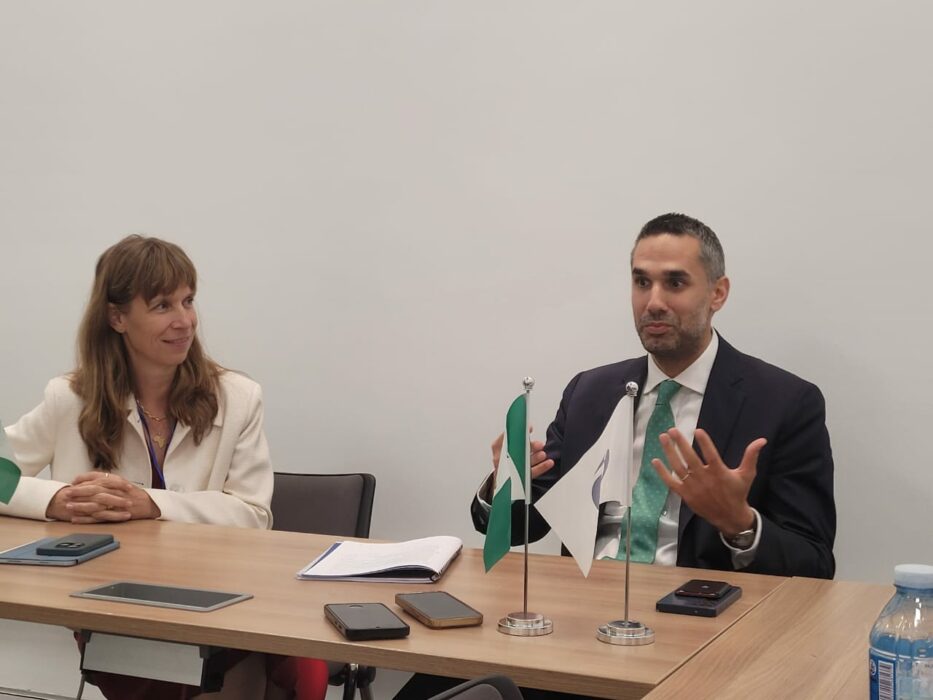
The European Bank for Reconstruction and Development (EBRD) has identified Nigeria’s banking industry as key pillars of its investment strategy, saying it is already engaging most Tier 1 and selected Tier 2 lenders while positioning itself to support reforms aimed at improving the country’s investment climate.
The multilateral lender said although it has no fixed sector allocation for Nigeria, infrastructure, energy, agribusiness, manufacturing, digital infrastructure and financial institutions remain priority areas with strong investment prospects as it expands operations in the country.
Speaking during a media chat following the opening of the EBRD’s Lagos office, the bank’s first in Sub Saharan Africa, Country Head for Nigeria, Hamza Al Asaad, said the institution was pursuing a demand driven investment model and had already begun discussions with leading Nigerian banks on trade finance and senior debt opportunities.
He disclosed that Access Bank had emerged as the EBRD’s first financial institution client not only in Nigeria but across Sub Saharan Africa through a $100 million trade finance facility. According to him, “Indeed, Access Bank is our first financial institutions client, not only in Nigeria, but on the continent, or in Sub Saharan Africa, to be more accurate, and we are speaking to a large number of banks.
“I think initially our focus is more on the trade-like products, or trade facilitation, or some senior debt opportunities with the bank. I can say we’re speaking to the vast majority of the banking universe here, with a focus initially on Tier One and some Tier Two banks. As we grow our teams and grow our presence, we expect to work with a much larger subset of the banking universe in Nigeria”, he said.
Beyond financing, Asaad said the lender was also supporting efforts to deepen Nigeria’s financial markets through policy reforms. He disclosed that the EBRD had worked with the Central Bank of Nigeria and other stakeholders over the past year to develop the Nigerian Overnight Financing Rate, which has since been launched by the apex bank as part of efforts to strengthen the country’s financial market infrastructure.
The bank also singled out Nigeria’s electricity deficit as one of the biggest constraints to economic growth, arguing that resolving the power challenge would unlock greater productivity and attract more private capital into the economy.
We’ve got the edge. Get real-time reports, breaking scoops, and exclusive angles delivered straight to your phone. Don’t settle for stale news. Join LEADERSHIP NEWS on WhatsApp for 24/7 updates →