•Reforms restore investor confidence
•Bigger banks will drive growth – Cardoso
By Babajide Komolafe
Governor of the Central Bank of Nigeria, CBN, Mr. Olayemi Cardoso, yesterday, said Nigeria’s external reserves have risen to about $52 billion, while net external reserves have exceeded $40 billion.
He attributed the improvements to reforms that have restored investor confidence and also expressed confidence that the ongoing banking recapitalisation would position lenders to drive the country’s next phase of economic growth by increasing lending to the private sector.
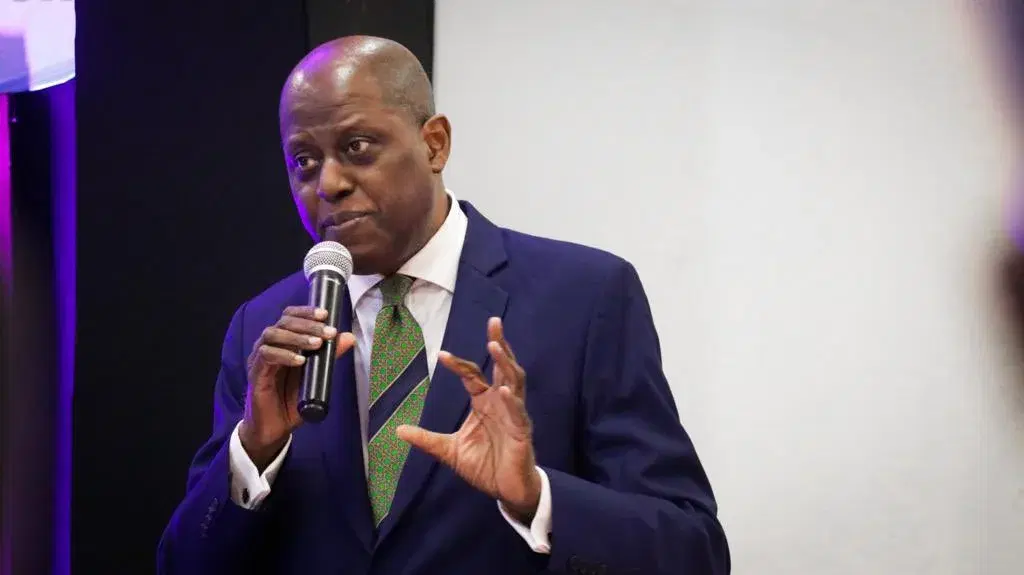
Speaking during a fireside chat with BusinessDay Chief Executive Officer, Mr. Frank Aigbogun, Cardoso urged Nigerian business leaders to seize emerging investment opportunities, saying: “One of the most significant outcomes of our policies is the foreign exchange market. We have moved from a market characterised by uncertainty and multiple exchange rates to one where those distortions have disappeared. Today, the multiple exchange windows have been collapsed.”
Highlighting the gains from the reforms, he stated: “The numbers speak for themselves. As of yesterday, we were hovering at about $52 billion in reserves. When we started, net reserves were in the region of about $3 billion. Today, our net reserves are in the $40 billion range. It has been a long and difficult journey, but there has been a regime change at the Central Bank, and that is what has produced these outcomes.”
On investor confidence, Cardoso said: “We are seeing enormous interest from outside Nigeria. Investors are watching very closely. There has been a lot of engagement, and in some cases investments are already being made. You will hear more about these developments because of the stability that has been achieved.”
He challenged local investors to respond quickly, saying: “My hope is that our own business leaders and CEOs will recognise this. They should not be afraid or assume things are still the way they used to be. That would be the biggest mistake they could make. It should not be that by the time they wake up to the opportunity, the horse has already bolted.”
Speaking on the banking sector, Cardoso dismissed concerns that banks were concentrating on government securities at the expense of businesses, saying: “Short term, maybe it’s not wrong. But long term, I’m confident that will change.”
He explained: “Our belief at the time was that we needed to build resilience in our banking system. Initially there was resistance, but in time there was clarity, and people could see that it was in their best interest. We are very happy and very proud of the outcome. Our banks more or less dominate the African continent, and with that come the responsibility to maintain adequate capital. The outcome of this exercise has ensured that they are more resilient and better able to withstand shocks.”
Cardoso stressed that stronger capital would be complemented by close supervision, saying: “Our oversight of banks does not stop because they have raised capital. It is going to be continuous because we need a strong and resilient banking sector to take us where we want to go. When these different actions begin to settle, inflation will come down, interest rates will come down, and it will be a different business environment. Banks will then be much better positioned. The environment has changed. I can already see many banks building the capacity needed to serve SMEs and other borrowers in the future.”