The Federal Capital Territory Internal Revenue Service (FCT-IRS) has launched Taxporta, a digital tax management platform that allows taxpayers to register, file returns, make payments and obtain Tax Clearance Certificates online, as part of efforts to modernise tax administration and improve compliance under Nigeria’s 2025 tax reforms.
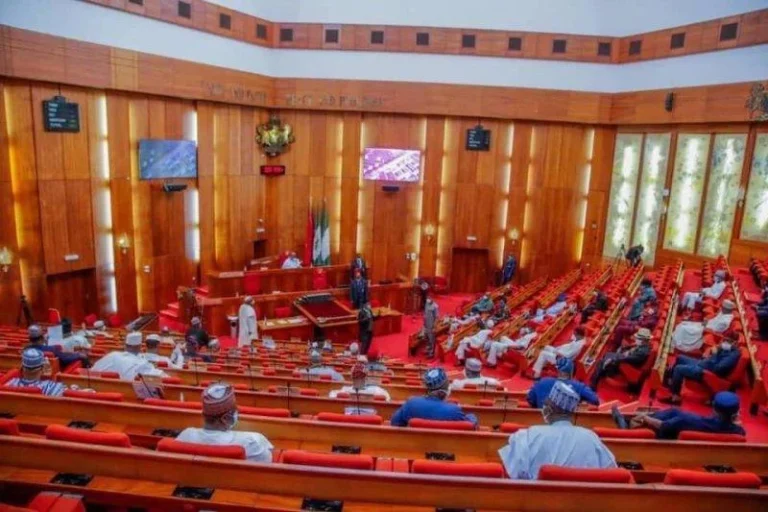
The platform was unveiled during a stakeholders’ engagement with Ministries, Departments and Agencies (MDAs) at the National Assembly Library Trust Fund Complex in Abuja.
Speaking at the launch, Executive Chairman of FCT-IRS, Michael Ango, described Taxporta as a major milestone in the Service’s digital transformation, saying it would make tax administration faster, more transparent and more convenient for individuals and businesses.
According to him, the fully integrated self-service platform enables taxpayers to complete virtually all tax-related transactions remotely without visiting FCT-IRS offices.
“Any serious institution, whether in the public or private sector, must move with the times. This is a continuation of our digital innovation process to ensure taxpayers can access our services from the comfort of their homes or offices without having to visit our offices physically,” Ango said.
He explained that the portal allows users to register, file tax returns, calculate tax liabilities, make payments, generate receipts and obtain Tax Clearance Certificates without third-party assistance.
Ango added that Taxporta has been configured to comply with the provisions of the 2025 tax laws by automatically applying statutory reliefs and allowances once taxpayers input their income details.
“All the allowances provided under the law have already been embedded into the system. Taxpayers simply provide their income information, while the platform computes their tax liabilities, processes payments and generates Tax Clearance Certificates,” he said.
The FCT-IRS boss expressed optimism that the platform would strengthen tax administration and significantly boost internally generated revenue for the Federal Capital Territory.
“Our objective is to maximise tax collection. We are not fixated on a specific figure. If our target is ₦400 billion or ₦500 billion and we eventually collect ₦600 billion, that would be a welcome outcome,” he stated.
Ango stressed that although the new tax laws prescribe penalties for defaulters, the Service would continue to prioritise voluntary compliance through taxpayer education and engagement.
“The law provides for penalties, but our first approach is always voluntary compliance. Where taxpayers have genuine reasons for delay, we are willing to grant extensions. Penalties only become necessary when there is deliberate refusal to comply,” he said.
He described the FCT-IRS as uniquely positioned as both a Federal Government agency and an institution of the Federal Capital Territory Administration, noting that collaboration with MDAs remains critical to effective tax administration.
According to him, the engagement was organised to sensitise government institutions on the implementation of the 2025 tax reforms, obtain stakeholder feedback and ensure a seamless migration from the previous digital platform while eliminating the risk of multiple taxation.
Ango also highlighted the importance of internally generated revenue to the development of the nation’s capital.
“The FCT receives only one per cent of the Federal Government’s allocation from the Federation Account. Consequently, the bulk of resources available for infrastructure and development projects comes from internally generated revenue,” he said.
Executive Secretary of the National Assembly Library Trust Fund, Henry Nwauna, described the engagement as a strategic step towards strengthening collaboration between government institutions and tax authorities.
“This engagement reflects the commitment of government institutions to deepen collaboration, improve mutual understanding and promote compliance with tax obligations in support of sustainable national development,” he said.
Earlier, Director of Tax Operations (Corporate, MDAs and International Organisations), Salome Adeyemi, urged taxpayers and government agencies to embrace Taxporta for seamless tax registration, filing, payment and issuance of Tax Clearance Certificates.
She said the platform would deepen collaboration between the Service and taxpayers while improving revenue generation for sustainable development in the FCT.
Presenting an overview of the 2025 tax reforms, Tax Controller, MDA Tax Office, Fatima Abubakar, urged MDAs, businesses and individuals to comply fully with the Nigerian Tax Administration Act (NTAA) 2025 and other newly enacted tax laws.
She explained that all taxable persons and organisations must obtain a Taxpayer Identification Number (TIN), noting that tax authorities can now automatically generate TINs using taxpayers’ National Identification Numbers (NINs).
Abubakar further stated that the new tax regime expands taxable income beyond salaries to include allowances and other employment benefits.
“All benefits, whether in cash or kind, are taxable because they constitute perks of office. For example, five per cent of the value of an official vehicle is taxable. Failure to file complete tax returns attracts a fine of ₦100,000 in the first month and ₦50,000 for every subsequent month of default,” she said.
She also warned that MDAs must demand valid Tax Clearance Certificates from contractors before awarding contracts or face a ₦5 million penalty.
A Tax Manager with the Nigerian National Petroleum Company (NNPC), Mohammed Ali, commended the initiative, saying it would improve transparency, accountability and public confidence in the tax administration system.
“I think it is worthwhile and very important. It will boost stakeholders’ confidence and demonstrates transparency in the discharge of the Service’s responsibilities,” he said.
The event also featured a live demonstration of Taxporta’s integrated payment solutions by the Director of ICT, Ayokanmi Ogunwumiju, who showcased the platform’s security architecture, efficiency and user-friendly interface.
The stakeholders’ engagement forms part of the FCT-IRS’ broader strategy to deepen stakeholder participation, encourage voluntary tax compliance and leverage digital technology to deliver a more efficient and taxpayer-focused tax administration system across the Federal Capital Territory.
We’ve got the edge. Get real-time reports, breaking scoops, and exclusive angles delivered straight to your phone. Don’t settle for stale news. Join LEADERSHIP NEWS on WhatsApp for 24/7 updates →