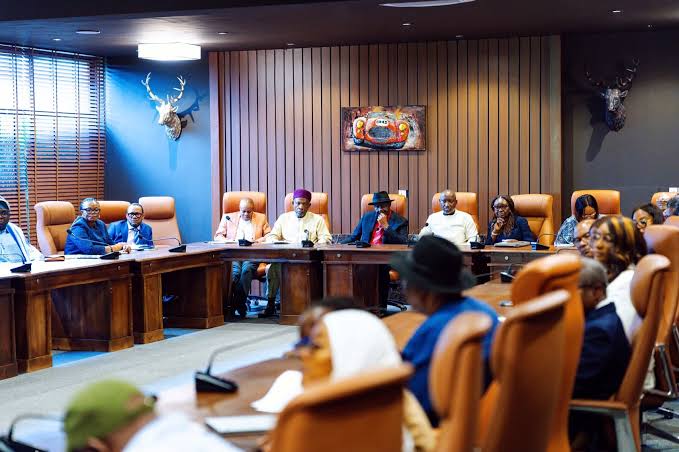
The federal government on Tuesday inaugurated a Joint Decarbonisation Working Group for the Oil and Gas Sector, pointing to the issuance of Nigeria’s first sovereign carbon credit project as evidence that its national carbon market framework is already yielding results.
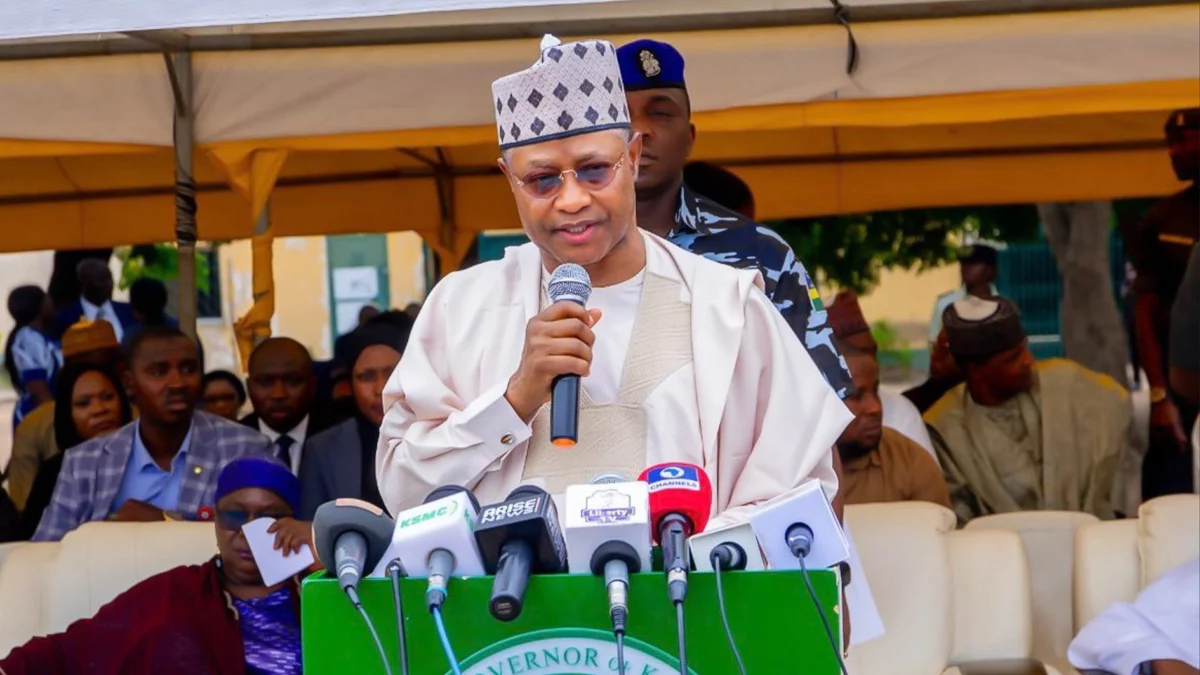
Speaking at the inauguration in Abuja, minister of state for Petroleum Resources (Gas), Ekperikpe Ekpo, and director-general of the National Council on Climate Change, Dr Tenioye Majekodunmi, said the new committee would bring together regulators, industry operators, financial institutions and development partners to coordinate emissions reduction efforts, mobilise climate finance and develop bankable decarbonisation projects, as Nigeria works toward its target of net-zero emissions by 2060.
The Federal Government has reaffirmed that Nigeria is among the world’s largest gas-endowed nations, declaring that the country’s abundant natural gas resources will remain the cornerstone of its energy transition strategy and a key driver of economic growth, industrialisation and sustainable development.
Minister of State for Petroleum Resources (Gas), Hon. Ekperikpe Ekpo, stated this on Tuesday in Abuja during the inauguration of the Joint Decarbonisation Working Group for the Oil and Gas Sector, themed “Accelerating Decarbonisation in the Nigerian Oil and Gas Sector.”
Ekpo said the Tinubu administration remains committed to harnessing Nigeria’s vast gas reserves under the Decade of Gas Agenda to stimulate industrial growth, expand energy access, create jobs, promote cleaner cooking solutions and improve the country’s overall prosperity.
“Nigeria is blessed with significant volumes of natural gas reserves, making us one of the largest gas-endowed nations in the world,” the minister said.
“Natural gas remains Nigeria’s transition fuel. Our objective under the Decade of Gas Agenda remains clear. We have committed ourselves to transforming these abundant resources into industrial growth, expanded energy access, employment opportunities, cleaner cooking solutions, increased domestic utilisation and greater prosperity for our people.”
He said the inauguration of the Joint Energy Sector Decarbonisation Working Group marks another step in strengthening Nigeria’s position as a competitive global energy producer while meeting its climate commitments and advancing sustainable economic development.
According to the minister, decarbonisation has evolved beyond an environmental obligation to become an economic, investment and competitiveness imperative.
“Today, decarbonisation has become far more than an environmental obligation. It is now an economic, investment, and competitiveness imperative. If we are to remain a preferred destination for responsible energy investment, we must continue building institutions, policies and regulatory systems that inspire confidence while preserving our sovereign right to utilise our natural resources for national development,” he said.
Ekpo stressed that Nigeria remains committed to pursuing climate action without compromising economic development, insisting that no nation should be forced to choose between reducing poverty and protecting the environment.
He disclosed that Nigeria recently endorsed the United Kingdom-led Global Statement on Reducing Methane Emissions from Fossil Fuel Operations, describing methane reduction as one of the quickest and most cost-effective ways to lower greenhouse gas emissions while sustaining energy production.
The minister said the country would continue to support practical climate policies that reduce emissions while safeguarding energy security, affordability and economic growth.
He commended President Bola Ahmed Tinubu for implementing reforms aimed at repositioning the petroleum industry to attract investment, strengthen energy security and promote innovation and sustainability.
Ekpo also praised the National Council on Climate Change (NCCC), regulatory agencies and industry stakeholders for working with the Ministry of Petroleum Resources to develop a coordinated national approach to decarbonisation.
He explained that the newly inaugurated working group would bring together government institutions, regulators, industry operators and development partners to coordinate decarbonisation efforts across Nigeria’s oil and gas sector.
According to him, the committee will facilitate policy alignment, strengthen emissions measurement, monitoring, reporting and verification systems, promote methane reduction technologies, improve access to climate finance and carbon markets, and support the implementation of existing environmental regulations.
Charging members of the committee to focus on tangible outcomes, Ekpo said, “You have not been assembled merely to hold meetings or produce reports. You have been entrusted with helping to shape the future of Nigeria’s oil and gas sector. I urge you to work with transparency, integrity, innovation and professionalism.”
He formally inaugurated the committee on behalf of President Tinubu, expressing confidence that its work would reinforce Nigeria’s position as a responsible global energy producer while supporting the country’s sustainable development goals.
Also speaking, the director-general of the National Council on Climate Change, Dr Tenioye Majekodunmi, described the inauguration as a major milestone in Nigeria’s transition towards a low-carbon economy that balances economic development with environmental sustainability.
She said the working group demonstrates Nigeria’s determination to remain a leading energy producer despite the rapidly changing global energy landscape.
“As global markets evolve, competitiveness will increasingly depend not only on how much energy we produce, but also on how responsibly we produce it. This working group is about protecting Nigeria’s economic future while advancing our climate commitments,” she said.
Majekodunmi noted that President Tinubu’s administration is committed to translating climate policies into investments, employment opportunities and measurable economic benefits.
She said the global energy transition presents both opportunities and challenges for Nigeria, stressing that the country’s oil and gas sector must reduce the carbon intensity of its operations to remain competitive internationally.
“The conversation is not about choosing between economic growth and climate action. It is about ensuring that our oil and gas sector remains competitive, investment-ready and relevant for decades to come,” she said.
Reaffirming Nigeria’s commitment to achieving net-zero emissions by 2060, she said the country’s energy transition would be guided by the principles of industrialisation, job creation, energy security and economic growth.
Majekodunmi identified reducing emissions, expanding energy access, and accelerating methane reduction across oil and gas operations as key priorities of the national transition agenda.
She said programmes such as the Nigerian Gas Flare Commercialisation Programme remain central to government’s strategy to eliminate routine gas flaring while converting wasted gas into economic value through electricity generation, industrial development, job creation and improved public health.
She also highlighted reforms to strengthen Nigeria’s decarbonisation framework, including improvements in regulatory institutions, implementation of the national carbon market framework and development of investment-ready climate projects.
According to her, the working group will coordinate policymakers, regulators, industry operators, financial institutions, technical experts and development partners to improve emissions measurement and reporting systems, mobilise climate finance, attract private investment and develop bankable decarbonisation projects.
She disclosed that Nigeria has begun implementing its national carbon market framework, citing the issuance of the country’s first sovereign carbon credit project as evidence of progress.
Majekodunmi further stressed the importance of developing local technical expertise, noting that industrial decarbonisation offers significant opportunities for high-quality employment and skills development in the emerging clean energy economy.
She urged members of the working group to collaborate across institutions, eliminate duplication and focus on measurable outcomes.
“We must work collaboratively, break down institutional silos and ensure Nigeria’s energy remains competitive, resilient and respected—not only because of the resources we possess, but because they are produced more cleanly, more efficiently and in line with the highest international standards,” she said.
She added that industrial growth, energy security and climate leadership are complementary objectives that will shape Nigeria’s future prosperity.
Majekodunmi also appreciated government agencies, industry stakeholders and international partners, including the Clean Air Task Force and other development organisations, for supporting Nigeria’s decarbonisation agenda, assuring investors of a stable and predictable policy environment.
Meanwhile, chairman of the House of Representatives Committee on Climate Change and Security, Hon. Kama Nkemkanma, described the inauguration as a timely response to the rapidly evolving global energy landscape.
He said Nigeria possesses the technical expertise, skilled workforce, infrastructure and investment potential required to lead Africa’s energy transition while maintaining energy security.
According to Nkemkanma, investments in natural gas development, carbon capture and storage, energy efficiency and digital innovation will be critical to ensuring that Nigeria’s oil and gas industry remains globally competitive in a low-carbon future.
He called for stronger collaboration among policymakers, industry operators, investors, researchers and development partners to accelerate innovation and build a resilient and sustainable energy sector
We’ve got the edge. Get real-time reports, breaking scoops, and exclusive angles delivered straight to your phone. Don’t settle for stale news. Join LEADERSHIP NEWS on WhatsApp for 24/7 updates →