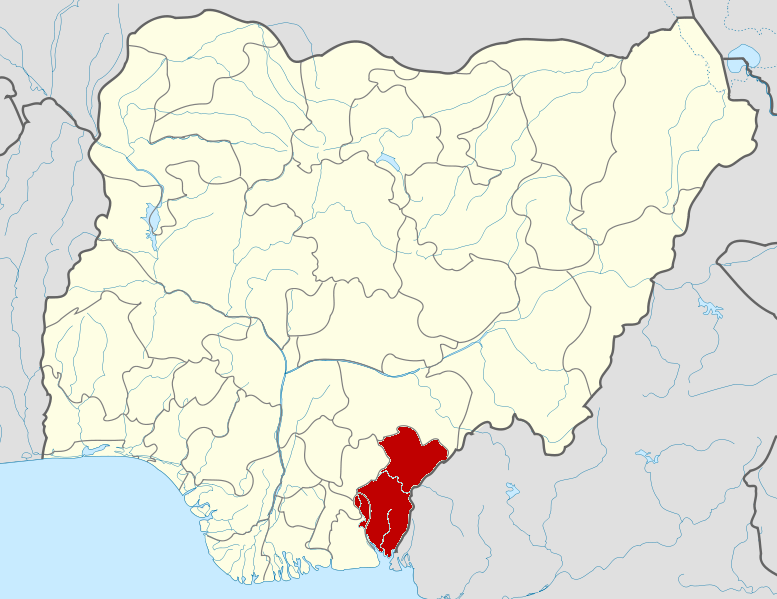

Five people, including four children, have died following a landslide triggered by days of heavy rainfall in Cross River State as emergency agencies intensify disaster response amid a growing wave of floods and rainstorms affecting communities across Nigeria.
The landslide occurred on Saturday at Ikot Anwatim Community in Calabar Municipality, while flooding simultaneously inundated parts of Calabar South Local Government Area.
According to the National Emergency Management Agency (NEMA), two other persons—an adult and a child were injured, while the total number of affected residents is yet to be determined.
The incident is among the deadliest rain-related disasters recorded in Cross River this rainy season.
Emergency response
In a statement posted on Facebook on Sunday, the Cross River State Emergency Management Agency (CR-SEMA) said it immediately conducted an on-the-spot assessment with the Nigerian Red Cross Society to assess the extent of the disaster and provide support to affected families.

The assessment team, led by CR-SEMA Director General Efa Nyong, visited the scene and assured victims that humanitarian assistance was being processed.
In the statement, the agency said: “Five lives lost. Two were hospitalised. One community in mourning.”
It added: “This heartbreaking incident is a reminder that disasters can happen without warning. Let’s all stay alert, report signs of erosion or unstable land early, and avoid high-risk areas, especially during this rainy season.”
In another update, CR-SEMA said: “It was a sad event yesterday at Ikot Anwatim with 5 casualties recorded. We have now recorded every necessary data and will do our best to support the affected families.”
NEMA said its officials joined other emergency responders in intensive search-and-rescue operations at the landslide site until about 4 p.m. on Sunday.
According to the agency, its official, David Effanga, remained at the scene throughout the operation, coordinating with other responders until rescue efforts ended.
Governor visits victims
Cross River Governor Bassey Otu visited the affected communities on Sunday alongside officials of CR-SEMA, NEMA, the Ministry of Works and the Nigerian Red Cross Society.
According to CR-SEMA, the governor inspected flood and landslide-hit communities, including Elijah Henshaw Street, Webber Street, Atu Street, Ibesikpo Street and Mayne Avenue.
He also visited the family of a woman who lost her one-year-old child to the flooding and assured victims that the government would begin evacuating displaced persons from Monday.
NEMA similarly quoted the governor as assuring residents that “arrangements have been concluded to commence the relocation of victims of the landslide and flooding to designated temporary accommodation centres from Monday, 13 July 2026.”
The governor commended emergency responders for their efforts during the rescue operation.
Flooding had already raised concerns
The landslide occurred barely a day after NEMA and CR-SEMA conducted a joint flood impact assessment across several flood-hit communities in Calabar Municipality and Calabar South.
The assessment covered Ibom Close, Atu Street, Elijah Henshaw Street, Gibson by Morey, White House, Nyong Edem Street and Close, William George Street, Hart Street and Cross River State University of Science and Technology Quarters.
READ ALSO: Governor Otu visits family of toddler killed in flood, orders victims’ relocation
The agencies reported that floodwaters submerged homes, businesses and major roads, destroying household property, electrical appliances, food items, clothing and other belongings.
Residents blamed recurring flooding on poor drainage infrastructure, blocked drainage channels caused by indiscriminate refuse disposal and the intensity of the rainfall.
The agencies said the findings would guide humanitarian interventions for affected communities.
Nationwide emergency
The Cross River disaster comes as NEMA responds to multiple weather-related emergencies across the country, underscoring the growing scale of climate-related disasters during the rainy season.
In Yobe State, NEMA and the Yobe State Emergency Management Agency have assessed rainstorm and windstorm damage across five local government areas, where 2,635 households—comprising 15,840 people—were affected and 58 people sustained injuries.
In Taraba State, the agency has distributed food and relief materials to households affected by a recent windstorm.
Similar joint assessments have also been conducted in Gombe State following flood and windstorm damage, while relief materials have been distributed to affected communities in Rivers State.
The series of interventions highlights what is increasingly becoming a nationwide emergency, with heavy rains, flooding, landslides and windstorms affecting communities across several states and stretching the capacity of emergency management agencies.