By Luminous Jannamike
ABUJA — The Federal Government and the House of Representatives has said government alone cannot solve Nigeria’s growing social and humanitarian challenges, urging faith-based organisations, the private sector and civil society to play a bigger role as economic hardship continues to push more Nigerians into poverty.
The appeal comes as rising prices and deepening poverty leave more Nigerians depending on churches, mosques and charities for support, stretching the ability of both government and voluntary organisations to keep up with growing humanitarian needs.
The call came at the unveiling of the Knights of St. Mulumba (KSM) Nigeria’s N2 billion Endowment Fund and Integrated Charity Programme in Abuja.
The initiative is designed to create a sustainable source of funding for humanitarian interventions, education, healthcare, legal aid, support for widows and orphans, correctional services and emergency relief.
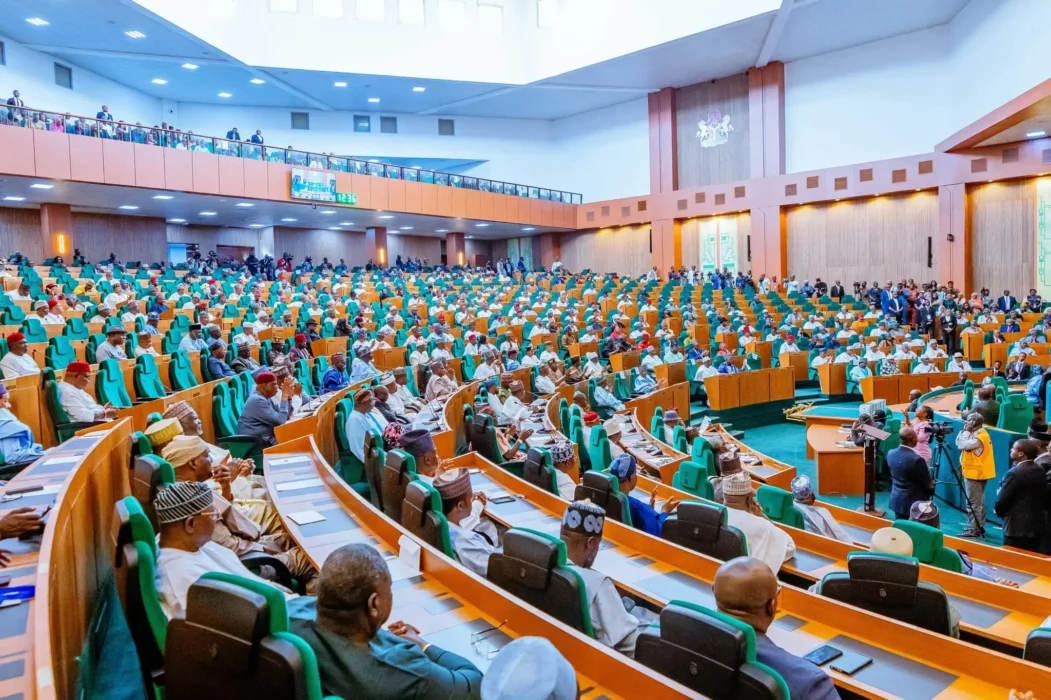
The Speaker of the House of Representatives, the Secretary to the Government of the Federation (SGF), KSM leadership and Kogi State Governor Ahmed Usman Ododo all agreed that tackling the country’s social challenges now requires a broader partnership beyond government.
Represented by the Chairman of the House Committee on Christian Pilgrimage Affairs, Hon. Festus Adefiranye, Speaker of the House of Representatives, Rt. Hon. Tajudeen Abbas, said faith-based organisations remain indispensable to nation-building because they command public trust, promote social cohesion and often reach communities where government institutions struggle to make an impact.
He said: “Government alone cannot solve every social challenge confronting our nation. Sustainable national development requires a genuine partnership among public institutions, faith-based organisations, the private sector and civil society.
“Today’s event goes beyond the unveiling of an endowment fund. It is a reaffirmation of the enduring values of compassion, sacrifice, true worship and solidarity upon which every prosperous society is built.”
Abbas also commended the Knights of St. Mulumba for what he described as more than seven decades of service in education, healthcare, youth development, justice and humanitarian work.
He added: “I am particularly encouraged that the endowment fund adopts a sustainable financial model, preserving capital while disbursing investment returns to support humanitarian causes year after year. This is a model of prudent stewardship and institutional resilience that deserves emulation by many charitable organisations.”
Speaking through his Special Assistant, Simon Tyungu, the SGF, Senator George Akume, said Nigeria’s development challenges demand innovative responses from every sector of society.
According to him: “Government alone cannot address every developmental challenge. Lasting progress can only be achieved through strong partnerships involving faith-based organisations, the private sector, civil society and patriotic citizens committed to the common good.”
Describing the launch as more than the creation of a financial vehicle, Akume added: “It represents the institutionalisation of compassion, the sustainability of charity and the deliberate investment in humanity. It is a bold declaration that genuine service to God must find practical expression in service to mankind.”
He urged philanthropists, corporate organisations and well-meaning Nigerians to support the initiative, saying every contribution would amount to “an investment in hope, dignity and a more compassionate society.”
Also speaking, Kogi State Governor Ahmed Usman Ododo, represented by the Secretary to the State Government, Mrs Folashade Ayoade, pledged his administration’s support for the initiative, saying Kogi State would partner with the Knights of St. Mulumba wherever the charity programme operates within the state.
He also urged Christian, Muslim and traditional faith organisations across the country to establish similar programmes for widows, orphans, displaced persons and other vulnerable Nigerians.
Ododo said: “Government cannot do this alone. Nor should it.”
For the Knights of St. Mulumba, however, the decision to establish the fund was driven by changing realities.
Earlier, Worthy Supreme Knight of KSM Nigeria, Sir Steve Adehi (SAN), said worsening economic conditions have increased the number of Nigerians needing assistance while the Order’s traditional funding model, built largely on members’ dues and levies, has become increasingly difficult to sustain.
Adehi explained: “Our Order was founded in 1953. In its 73 years of existence, the Order has impacted communities through education, healthcare, humanitarian services, legal assistance and women empowerment programmes.
“As our society is advancing and our economic situation deteriorating, the need for these interventions has increased. These interventions have mostly been funded through dues and levies from members.
“Our membership strength is dwindling owing to death, age and economic decline. In order to respond to these increasing demands, we have to look for alternative ways of funding our charitable works.”
He said the endowment would permanently change how the Order finances its charity programmes by preserving the principal and funding interventions entirely from investment income.
He continued: “We are building a permanent, professionally managed fund. We will keep its baseline capital entirely intact forever. Going forward, we will finance our charity programmes exclusively with the investment income generated by this fund, ensuring we never use the fund’s core capital. Instead, we will continue to grow the capital.”
The Order has set an initial target of N2 billion, he said, adding that the fund was designed to continue growing through contributions from members, corporate organisations and other partners.
According to Adehi, the arrangement will provide a dependable source of funding for national charity operations, ease the burden of repeated levies on members and enable the organisation to plan humanitarian interventions over the long term.
To safeguard the fund, he disclosed that the Order would amend its Constitution to prevent both present and future leadership from accessing the principal sum.
The proceeds, he said, will finance healthcare outreach in underserved communities, scholarships and educational support, humanitarian relief for victims of violence, welfare programmes for widows and orphans, correctional centre interventions, pro bono legal services, social justice advocacy and emergency support for communities facing ecological or economic hardship.
Adehi said: “What we build today will serve the Church, strengthen communities and speak for us long after our time on earth has passed.”