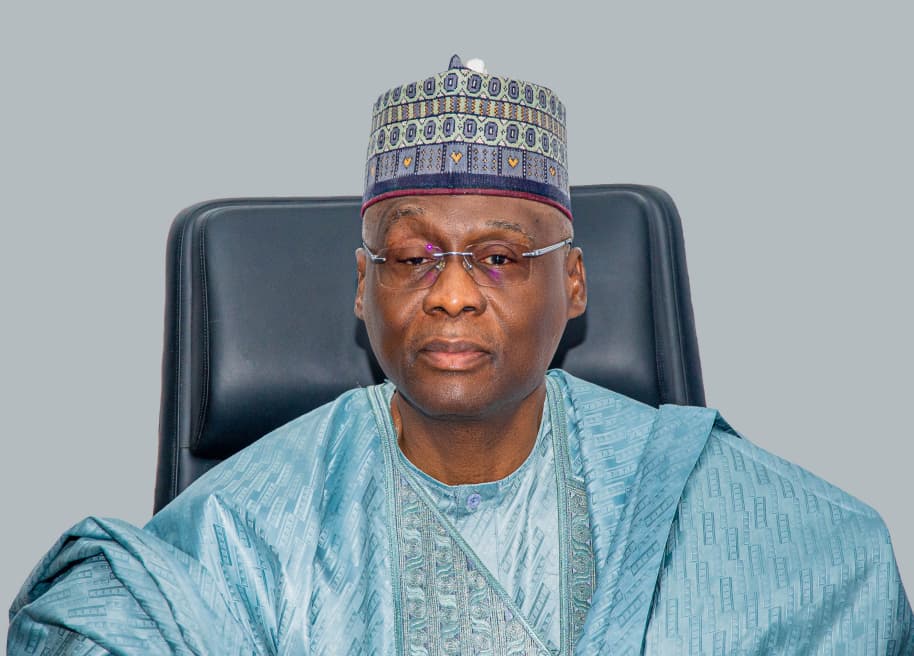

The Chairman and Chief Executive Officer of the National Hajj Commission of Nigeria (NAHCON), Ismail Yusuf, has unveiled a comprehensive reform agenda aimed at repositioning Nigeria’s Hajj administration through greater accountability, digital innovation and improved services for pilgrims.
Speaking on Wednesday at a stakeholders’ summit on the Post-2026 Hajj Review and NAHCON Reform Agenda in Abuja, as monitored by PREMIUM TIMES, Mr Yusuf said the event was convened to assess the 2026 Hajj operations critically and lay a solid foundation for preparations for the 1448AH/2027 pilgrimage.
He described the summit as a forum for honest reflection rather than celebration, saying every success should be strengthened while shortcomings must be openly acknowledged and addressed.
“We have brought together the entire Hajj family regulators, State Pilgrims Welfare Boards, private tour operators, airlines, medical teams, legislators and our Saudi partners to reflect honestly on the 2026 Hajj and chart a better course for the future,” he said.
The NAHCON chairman thanked President Bola Tinubu for providing the political support that enabled a successful Hajj operation and commended Vice President Kashim Shettima for his sustained commitment to Hajj affairs.

He also acknowledged the support of the Sultan of Sokoto, King Salman bin Abdulaziz Al Saud, Crown Prince Mohammed bin Salman, and the Saudi Ministry of Hajj and Umrah.
Achievements, challenges
Mr Yusuf said the 2026 Hajj recorded several milestones, including an orderly airlift of pilgrims, improved visa processing through the Nusuk platform, enhanced medical services, better coordination among stakeholders and the safe return of Nigerian pilgrims.
However, he admitted that the exercise also exposed weaknesses that require urgent attention.
According to him, the commission recorded the circumvention of mandatory medical screening by 109 pilgrims, lapses in catering services at the Masha’er holy sites, weak compliance by some service providers, operational challenges in accommodation and transportation, and shortcomings in monitoring and enforcement.
He disclosed that NAHCON has begun post-Hajj reconciliation with Saudi service providers, warning that poor performance would no longer go without consequences.
“The era in which contractual failure carried no consequences is over. Pilgrims must receive compensation where services fall below agreed standards, and future patronage will be based strictly on performance,” he said.
Reforms for 2027 Hajj
The chairman said Nigeria must align its Hajj operations with Saudi Arabia’s Vision 2030, which has transformed pilgrimage management through digital platforms such as Nusuk and Masar.
He warned that countries unwilling to modernise risk losing opportunities for better quotas, premium services and priority scheduling.
“As one of the world’s largest Hajj-participating nations, Nigeria cannot afford to remain a spectator. We must become a strategic partner in this transformation,” he said.
To achieve this, NAHCON plans to institutionalise early planning, develop a National Pilgrimage Digital Platform for Hajj and Umrah services, strengthen financial transparency, enforce professional standards and accountability, decentralise operations while retaining regulatory oversight, improve Umrah regulation, strengthen the Hajj Institute of Nigeria, and introduce a standard national curriculum for pilgrim education.
Mr Yusuf noted that Hajj has become one of the world’s largest recurring mass-travel and crowd-management exercises, requiring scientific planning, real-time data, and measurable service standards.
He said NAHCON will prioritise professional certification for Hajj officials, data-driven pilgrim registration, strict compliance with Tafweej and Jamarat movement schedules, performance-based evaluation of officials and service providers, and year-round planning.
He disclosed that all State Pilgrims Welfare Boards and licensed tour operators have already been directed to commence preparations for the 2027 Hajj.
Calling for frank discussions during the summit, Mr Yusuf urged participants to focus on practical solutions rather than praise.
“The Nigerian pilgrim is not asking for luxury. They are asking for order, dignity, and efficient service. Under this reform agenda, that is a promise we intend to keep,” he said.
Stakeholders applaud initiative
Participants who later spoke with PREMIUM TIMES praised the summit, describing it as a significant step towards improving Nigeria’s Hajj administration.
READ ALSO: NAHCON concludes 2026 Hajj returnee airlift, begins Hajj 2027 preparations
A stateholder in Nigeria’s hajj operation, Bello Imam, who attended the summit, said the event demonstrated the new leadership’s commitment to transparency and accountability by openly reviewing both achievements and shortcomings.
A licensed tour operator, Hassan Abdallah, said the chairman’s reform agenda reflects a determination to modernise Hajj operations through professionalism, digital innovation and stronger regulation.
Others welcomed the proposed National Pilgrimage Digital Platform, improved training, early planning and performance-based monitoring, expressing confidence that the reforms would enhance service delivery and improve the experience of Nigerian pilgrims.
They agreed that if the summit’s resolutions are fully implemented, Nigeria’s Hajj administration would become more efficient, transparent, and globally competitive while providing better value and services to pilgrims.