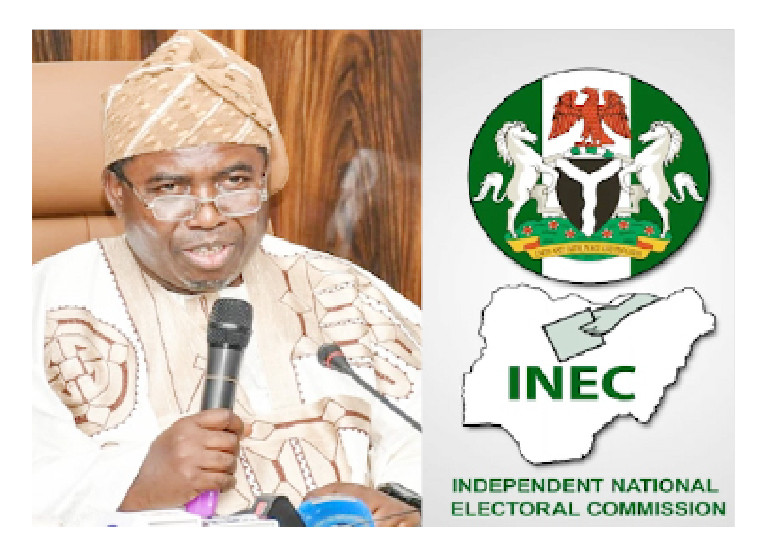
Appeal Court okays INEC’s guidelines, sets aside FHC judgement
By Ademu Idakwo and Olakunle Olasanmi, Abuja
The Independent National Electoral Commission (INEC) is considering conducting a mock presidential election and a comprehensive audit of its electoral technology systems as part of efforts to strengthen preparations for the 2027 general election.
INEC Chairman, Prof. Joash Amupitan (SAN), disclosed this on Thursday while receiving the British High Commissioner to Nigeria, Dr Richard Montgomery, during a courtesy visit to the Commission’s headquarters in Abuja.
Amupitan said the proposals, which were under consideration by the Commission, were informed by concerns arising from the 2023 general election, particularly over the reliability of election technology.
He said the Commission was considering a full audit of its electoral systems and a mock presidential election to test the readiness of its processes and technology ahead of the 2027 polls.
According to him, although the proposed exercises were not included in INEC’s budget, the Commission would explore ways to implement them because of their potential to enhance the credibility of the elections.
The INEC chairman said the initiatives were part of broader efforts to improve technological reliability, including the continued deployment of the Bimodal Voter Accreditation System (BVAS) and the INEC Result Viewing Portal (IReV), as well as an ongoing review of the Commission’s cybersecurity architecture covering system redundancy, penetration testing, and disaster recovery mechanisms.
He noted that public confidence in the electoral process depended largely on the reliability of the Commission’s technology and operational processes, adding that INEC remained committed to addressing shortcomings identified in previous elections ahead of the 2027 general election.
Amupitan also identified election technology and cybersecurity as key areas of collaboration between INEC and the United Kingdom, noting that the Commission had benefited from technical support provided by the UK and other development partners, including the International Foundation for Electoral Systems (IFES).
He reaffirmed the Commission’s commitment to conducting credible and transparent elections that reflect the will of Nigerians, stressing that electoral integrity required the cooperation of political parties, security agencies, civil society organisations, development partners, and citizens.
Earlier, the British High Commissioner said the UK had been closely monitoring INEC’s preparations for the 2027 general election, including the conduct of recent off-cycle elections in Ekiti, the Federal Capital Territory (FCT), and Anambra, as well as preparations for the forthcoming Osun State governorship election.
Montgomery described the UK’s engagement with Nigeria’s electoral process as part of the strategic partnership between both countries, which was formalised in 2024 and strengthened by President Bola Ahmed Tinubu’s state visit to the United Kingdom in March.
The envoy, who said he would conclude his tenure in about six weeks, assured INEC of the UK’s continued support under his successor and expressed confidence that bilateral cooperation would continue in the build-up to the 2027 general election.
Appeal Court Okays INEC’s Guidelines for 2027 Elections, Sets Aside FHC Judgment
The Abuja Division of the Court of Appeal has set aside the judgment of the Federal High Court, Abuja, which nullified part of the electoral guidelines put in place by the Independent National Electoral Commission (INEC) for the conduct of the 2027 general elections.
Justice Okon Abang, who delivered the lead judgment, faulted the trial court for invalidating INEC’s administrative discretion, saying: “The law gives INEC powers to conduct elections in the country.”
He further stated: “There was no deposition or threat that the respondent was prevented from conducting its primaries.
“The respondent can only invoke the powers of the court where there are real threats to its participation in the election.
“Where INEC acts within its powers, the courts cannot get involved. The trial court’s declaratory relief was erroneously granted. “The declaratory reliefs granted by the trial court were wrongly granted, and they are hereby set aside.”
Justice Muhammed Umar of the Federal High Court, Abuja, had nullified INEC’s guideline directing political parties to submit their membership registers and databases by 10 May as a condition for participation in the 2027 general elections.
The Youth Party had filed the suit challenging the electoral body’s directive.
The Federal High Court held that INEC could not lawfully shorten the timeline already set out in Section 29(1) of the Electoral Act 2026 for the submission of party membership records and candidates’ particulars.
However, in an appeal dated 25 May 2026, filed through its counsel, Alex Izinyon, SAN, INEC urged the appellate court to set aside the judgment.
INEC argued that the High Court erred in law by failing to determine its objection that the suit was hypothetical and academic, thereby denying the appellant a fair hearing.
In the appeal, the electoral body challenged the lower court’s finding.
It said: “It is clear from the wording of Sections 29(1), 82 and 84 of the Electoral Act, 2026, that the following can be understood. Section 29(1) of the Electoral Act, 2026, mandates political parties to submit the names of candidates, in the prescribed forms, of those who emerged from valid primaries and whom such political parties intend to sponsor in the elections, not later than 120 days before the date of the general election.
“What is required of political parties under the Electoral Act, 2026, is to notify the Independent National Electoral Commission (INEC) 21 days before the holding of their primaries, congresses, conventions, conferences or meetings convened for the election of executive committees, other governing bodies or the nomination of candidates.
“The defendant is not mandated to impose a timeframe for political parties to conduct their primaries, provided they are conducted and submitted not later than the 120 days stipulated under the Electoral Act, 2026. See Section 82(1) of the Electoral Act, 2026.”
INEC further argued that the judgement was against the weight of evidence before the court and urged the appellate court to allow the appeal and set aside the judgment of the Federal High Court sitting in Abuja.
The Commission also asked the court to strike out the suit on the grounds that the respondent lacked the locus standi to institute and maintain it, arguing that the action was merely academic.
We’ve got the edge. Get real-time reports, breaking scoops, and exclusive angles delivered straight to your phone. Don’t settle for stale news. Join LEADERSHIP NEWS on WhatsApp for 24/7 updates →