By Baba Dantiye, MON, mni, FNGE
In politics, few decisions carry as much significance and symbolism as the choice of a presidential running mate. It is not merely an electoral arrangement; it represents a statement of confidence, trust, shared vision and the ability of two leaders to work together in pursuit of national objectives.
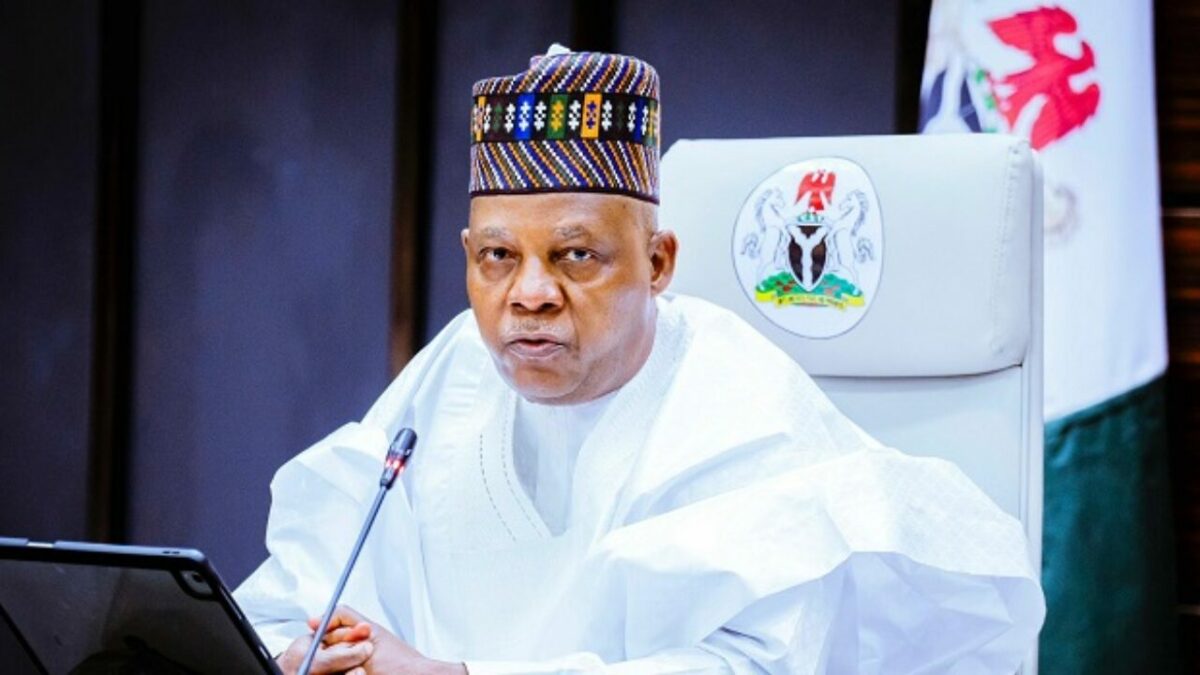
The decision by President Bola Ahmed Tinubu to retain Vice President Kashim Shettima as his running mate for the 2027 presidential election is therefore a significant affirmation of confidence in a partnership that has defined the direction of the current administration. It reflects the President’s assessment that Shettima has demonstrated the loyalty, competence, experience and commitment required to continue serving as his partner in the next phase of governance.
Since the inception of the administration in May 2023, the Tinubu-Shettima partnership has attracted attention because of its stability and cooperation. Nigeria’s democratic experience has witnessed occasions where relationships between presidents and their deputies became strained, resulting in distractions that affected governance. Against this background, the working relationship between President Tinubu and Vice President Shettima has stood out for its mutual respect, coordination and understanding of constitutional responsibilities.
A Vice President’s role requires a delicate balance. The office demands the ability to contribute meaningfully to governance while respecting the authority and leadership of the President. It requires competence without rivalry, visibility without distraction and independence of thought while remaining committed to a shared vision.
Vice President Shettima has consistently demonstrated this balance. Since assuming office, he has carried out responsibilities assigned to him by the President, represented the government at important national and international engagements, chaired strategic meetings and contributed to the implementation and communication of government policies.
The decision to retain him suggests that President Tinubu values continuity, institutional experience and a trusted partnership as the administration prepares for another electoral contest.
One of Shettima’s greatest strengths is the depth of his experience across different levels of governance. Before becoming Vice President, he served as Governor of Borno State and later as a senator representing Borno Central. These experiences exposed him to the realities of state administration, legislative processes and national policy-making.
His tenure as Governor of Borno State remains an important part of his public record. He governed during one of the most difficult periods in Nigeria’s recent history, when the Boko Haram insurgency created unprecedented security and humanitarian challenges.
Leadership during such circumstances required resilience, courage and the ability to coordinate with security agencies, traditional institutions, humanitarian organisations and development partners. Beyond addressing immediate security concerns, his administration had to sustain government services, support affected communities and maintain public confidence during a period of uncertainty.
That experience shaped Shettima’s understanding of the connection between security, stability and development. It also gave him valuable insight into the challenges faced by communities affected by conflict and the importance of cooperation between different levels of government.
His transition from governor to senator and subsequently Vice President has given him a broad perspective on Nigeria’s governance structure. Few political leaders have had the opportunity to serve at these different levels and develop such a comprehensive understanding of the country’s administrative and political realities.
As Chairman of the National Economic Council, Vice President Shettima has also played an important role in strengthening cooperation between the Federal Government and state governments. The Council provides a platform for addressing issues relating to economic development, infrastructure, agriculture, energy and other national priorities.
Chairing such a body requires political maturity and consensus-building skills. Nigeria’s governors represent different political parties, regions and perspectives. Bringing them together to discuss national challenges requires patience, consultation and the ability to manage diverse interests.
Shettima’s background as a former governor gives him a practical understanding of the concerns of state leaders. He appreciates the realities of implementing policies beyond Abuja and the importance of collaboration between the Federal Government and the states.
In governance, loyalty is an important leadership quality when combined with competence and capacity. Loyalty should not be understood as the absence of independent thinking; rather, it reflects commitment to shared objectives, respect for institutional authority and dedication to the success of an administration.
Throughout his political career, Shettima has demonstrated consistency and discipline. As Vice President, he has focused on supporting the President’s agenda and contributing his experience towards achieving government objectives.
President Tinubu’s decision to retain him indicates that the President considers this combination of loyalty, experience and competence valuable to the continued success of the administration.
The Vice President has also played a visible role in explaining government policies and engaging Nigerians on national issues. The Tinubu administration introduced significant economic reforms that have generated widespread discussion and debate. In such circumstances, communication and public engagement are essential aspects of effective governance.
Shettima has consistently used public platforms to explain the administration’s position, engage stakeholders and emphasise the long-term objectives of government policies. His approach has focused on presenting the government’s perspective while acknowledging the concerns and expectations of Nigerians.
Another important consideration in the Tinubu-Shettima ticket is the issue of national balance and inclusion. Nigeria’s diversity requires leadership arrangements that recognise the importance of broad representation and cooperation among different regions and communities.
As a prominent leader from the North-East, Shettima brings valuable experience and understanding of a region that has faced significant challenges while remaining an important part of Nigeria’s national story. His engagements with traditional institutions, business communities, professional groups and other stakeholders have contributed to his national profile.
The 2027 election will naturally generate debates about performance, policies, political strategy and public expectations. Such discussions are a normal part of democracy. Citizens have the right to assess leaders and determine the direction they believe best serves the country.
However, leadership decisions must also be considered within the context of stability, experience and the ability to sustain ongoing programmes. By retaining Kashim Shettima as his running mate, President Tinubu has chosen to continue a partnership that has already been tested through the demands of governance.
– Baba Dantiye, MON, mni, FNGE, is a former Commissioner for Information and Internal Affairs, Kano State, and former President of the Nigerian Guild of Editors (2003–2008).
We’ve got the edge. Get real-time reports, breaking scoops, and exclusive angles delivered straight to your phone. Don’t settle for stale news. Join LEADERSHIP NEWS on WhatsApp for 24/7 updates →