By Nehru Odeh
Lagos State Governor, Babajide Sanwo-Olu, on Monday reflected on the defining moments of his administration, saying his years in office have been guided by a simple covenant with the people of Lagos: to build a city that works for everyone, regardless of social status, and to remain steadfast even in the face of unprecedented adversity.
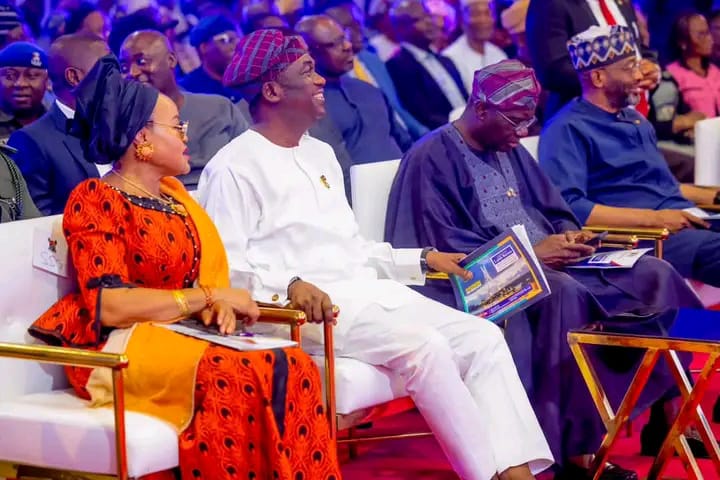
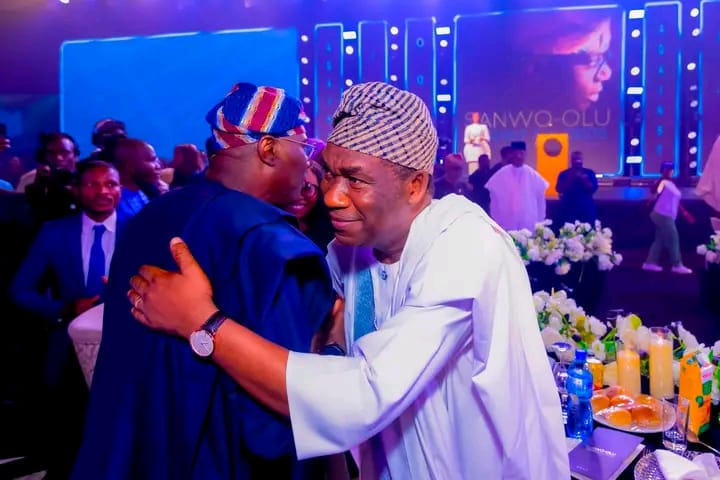
The governor spoke at the public presentation of “Sanwo-Olu: Against All Odds, A Photo Story of Resilience in the Face of Adversity”, a coffee-table book documenting his years in office through the lens of his official photographer, Ademola Olaniran. The event was held at Eko Hotel and Suites, Victoria Island, Lagos.
Describing the occasion as an unusual moment in his public life, Sanwo-Olu noted that books about political leaders are traditionally written after they have left office, when history has rendered its verdict. This one, however, was deliberately different.
“Tonight, I find myself in an unusual position. As a serving governor, I have become the subject of a book. Books about leaders are usually written when the story has ended, when the man has left the stage and history has had time to render its verdict. This one is different, and deliberately so. It was written not in ink first, but in photographs,” he noted.
The governor also pointed out that the thousands of photographs spanning his first term and the beginning of his second term were more than personal portraits. Rather, they chronicled the resilience, determination and enduring spirit of Lagos and its people.
“The camera does not flatter. It does not exaggerate, and it cannot be persuaded. It simply bears witness,” he said.
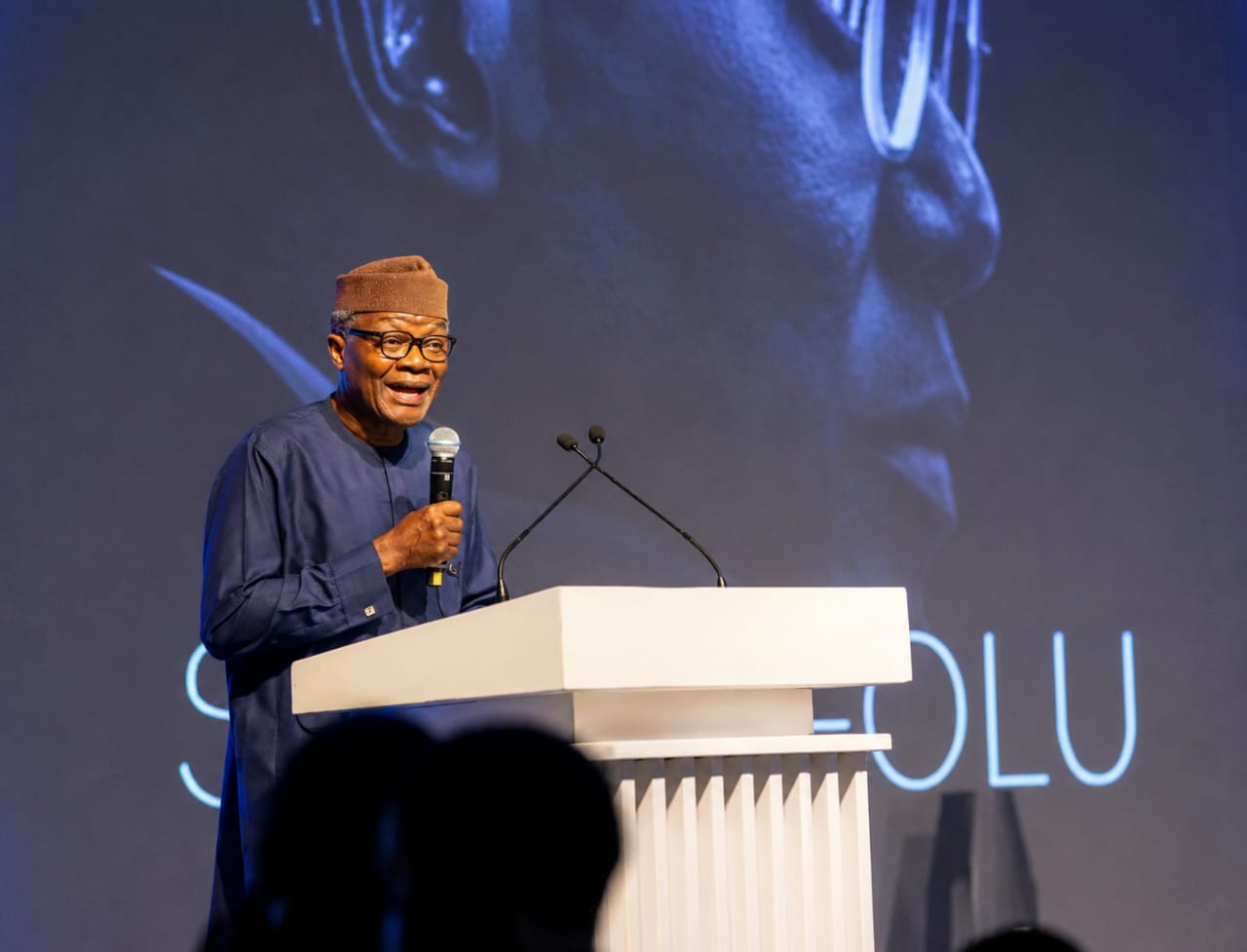
According to him, although he appears in many of the photographs, he is not the real subject of the publication. “You will find me in many of these frames. But look closer, and you will find the true subject of this book: Lagos herself.
“The market woman rebuilding her stall. The nurse in protective gear who has not seen her family in weeks. The young person holding up a placard demanding to be heard. The engineer on a bridge at dawn. The schoolchild walking into a classroom that did not exist a year before.
“The more than 22 million Lagosians striving, breathing, laughing, insisting and building. They are the story. I am simply the man who happened to stand at the centre of the frame.”
Reflecting on his journey to public office, Sanwo-Olu recalled that before becoming governor, he had spent decades working quietly in banking, the oil and gas sector, and public service, believing that true meaningful service is often rendered away from the spotlight, without fanfare.
“But Lagos called,” he said. “And when leadership is thrust upon a man, he must find a way to wear it well.”
He also recalled the scepticism that greeted his emergence as governor in 2019, when critics dismissed him as an “appointed governor.”
“In 2019, the people of this state gave me an overwhelming mandate for a man many barely knew. They even called me the appointed governor. I made them a simple covenant—that I would spend every day of my tenure building a city that works for the trader in Mushin just as it works for the banker in Marina.”
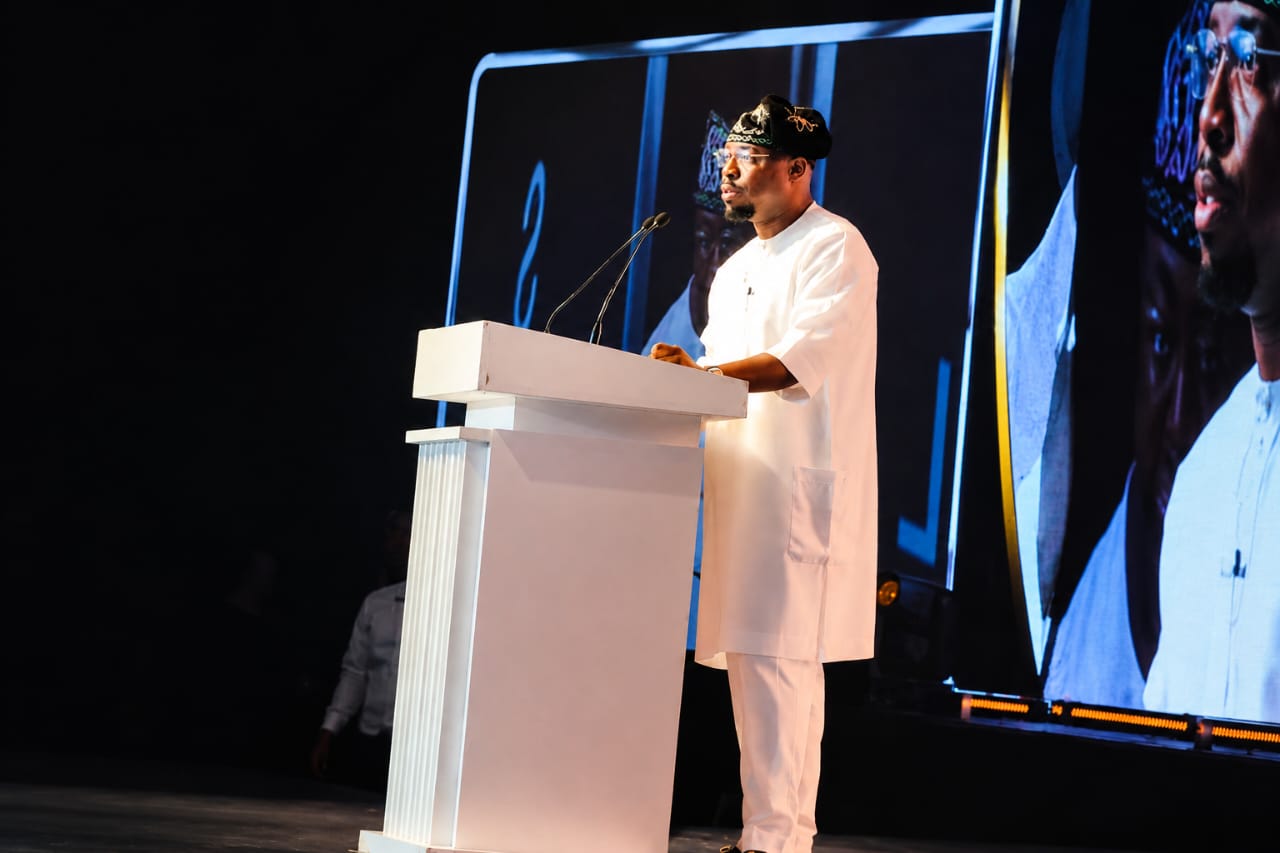
The governor recalled that barely weeks after assuming office, events beyond anyone’s imagination began to test that covenant. “No leader chooses the time in which he serves,” he remarked.
He listed the COVID-19 pandemic, which turned Lagos into Nigeria’s epicentre of the global health crisis; the Abule-Ado explosion that claimed lives and destroyed homes; the #EndSARS protests that culminated in violence and destruction; and repeated incidents of building collapses as defining moments that tested both his administration and the resilience of Lagosians.
Despite the tragedies, he maintained that Lagos never surrendered to despair. Instead, every crisis became another chapter in the city’s remarkable story of resilience, courage and renewal—a recurring theme reflected throughout the photographic collection.
One of the governor’s most emotional reflections centred on what he described as the philosophy that has sustained Lagos since the return to democratic rule in 1999: continuity in governance.
Among the photographs in the book, he singled out one image as his favourite. It depicts four successive governors of Lagos State—Asiwaju Bola Ahmed Tinubu, Babatunde Raji Fashola, Akinwunmi Ambode and himself—jointly holding a model of the Lagos Rail Mass Transit project.
“Four administrations. One dream. Eight hands. That image is the deepest secret of the Lagos success story. It is called continuity.
“In this state, we do not tear down what our predecessors built; we build upon it. I inherited dreams, and I have laboured to hand over foundations.”
He added that while infrastructure projects such as rail lines, roads, schools and housing would remain visible legacies, his greatest aspiration was to leave behind stronger institutions and deeper trust between government and citizens. “Projects age. Trust and institutions compound,” he noted.
The governor also used the occasion to publicly acknowledge the role played by Deputy Governor Dr. Obafemi Hamzat throughout his administration.
Describing Hamzat as a loyal partner who stood by him “through every season,” Sanwo-Olu expressed confidence in his deputy’s leadership qualities. “The relay continues with you, and I can think of no surer hands for the baton,” he said.
Earlier in his welcome address, Hamzat described the publication as much more than a pictorial collection. According to him, the volume captures the difficult realities of governing Africa’s largest city during one of the most turbulent periods in its history.
He said the book documents resilience in leadership during the COVID-19 pandemic, the #EndSARS crisis and other emergencies, while presenting what he called “a compendium of passion and compassion” in public service.
“I can say categorically that today’s event is more than just a presentation. It is a celebration of remarkable resilience, strong leadership, clear vision and the power of detailed documentation. It is a reminder that this history is not only written in words but also captured in a camera lens,” Hamzat stated
Reviewing the book, Mr. Kunle Ajibade, Executive Director of TheNews/PMNEWS, offered a scholarly appraisal, drawing on the works of Mary Golon, Paul Theroux, and Salman Rushdie in an essay titled “An Intimate Portrait of Babajide Sanwo-Olu as Governor”. He described the publication as an important historical document that elevates photography beyond aesthetics into a medium of historical memory.
“As a front-row witness, he (Ademola Olaniran) has documented the first term in office of the Sanwo-Olu administration carefully, diligently and extensively in this book, using the medium of photography. His lenses were never out of focus as he took hundreds of shots. He went the extra mile to get candid pictures, or what Robert Draper describes in his essay, “The Power of Photography,” as ‘the epic shot.’ This visually powerful and consistently engaging photobook is the result of his passion and forbearance,” Ajibade noted.
Ajibade also went down memory lane, narrating how the Sanwo-Olu administration showed resilience, leadership and courage in the face of the string of adversities and challenges it encountered. “Those tragic incidents did not overwhelm Governor Sanwo-Olu. Instead, they instilled in him a stronger determination to succeed as he quickly came to grips with the problems,” he maintained.
Ajibade observed that while written history often relies on interpretation, photography captures moments with an immediacy that allows future generations to engage directly with the past.
According to him, the book gives “history a human face” by documenting not only official events but also the emotions, struggles, and resilience of ordinary Lagosians who lived through some of the state’s most challenging moments.
For many guests at the presentation, the evening was not simply about the launch of another coffee-table publication. It was an opportunity to reflect on a turbulent chapter in Lagos’ history—years marked by a global pandemic, civil unrest, tragic disasters and remarkable recovery.
In many ways, the photographs tell a story that transcends politics. They chronicle a city that refused to be defined by crisis, a people who continued to rebuild after every setback, and a governor who insists that whatever history eventually says about his administration, its enduring legacy will be found not only in roads, rail lines and bridges, but in the covenant he believes he kept with the people of Lagos—to keep building, even against all odds.