
Nigeria has emerged as sub-Saharan Africa’s fastest-growing market for small-scale solar systems, but weak investment in utility-scale renewable energy projects is preventing the country from translating the boom into large-scale improvements in electricity supply.
These are the central findings of a new report published by BloombergNEF (BNEF) on Wednesday. The report, titled “Sub-Saharan Africa Renewable Energy Market Outlook”, projects that Nigeria will dominate the region’s small-scale solar additions through 2035, while South Africa will remain the continent’s leader in utility-scale renewable energy deployment.
The findings underscore the contrasting paths African countries are taking in the energy transition, with Nigeria’s growth driven largely by households and businesses abandoning the unreliable national grid in favour of rooftop solar and battery systems.
The report drew its findings after profiling 16 sub-Saharan African markets, selected based on BNEF’s bottom-up view of utility-scale project pipelines and import data to estimate small-scale demand.
It said of the region’s five largest clean energy technology importers since 2025 – South Africa, Nigeria, Democratic Republic of the Congo (DRC), Zambia and Kenya – only South Africa, DRC and Zambia have meaningful utility-scale project pipelines.

Nigeria and Kenya are currently driven by small-scale demand, though Kenya’s utility-scale investment could recover if government auction plans progress.
The report explained that utility-scale investment is maturing: in the past year, national utilities and corporates have signed Power Purchase Agreements (PPAs) in 14 out of 16 profiled markets.
The African countries’ markets profiled include South Africa, Nigeria, DRC, Zambia, Kenya, Mozambique, Senegal, Ghana, Namibia, Ivory Coast, Botswana, Ethiopia, Madagascar, Uganda, Angola and Malawi
Nigeria leads off-grid solar growth
According to BloombergNEF, Nigeria already has about 20 gigawatts (GW) of installed electricity capacity, mostly gas-fired, but solar expansion is occurring almost entirely outside the national grid.
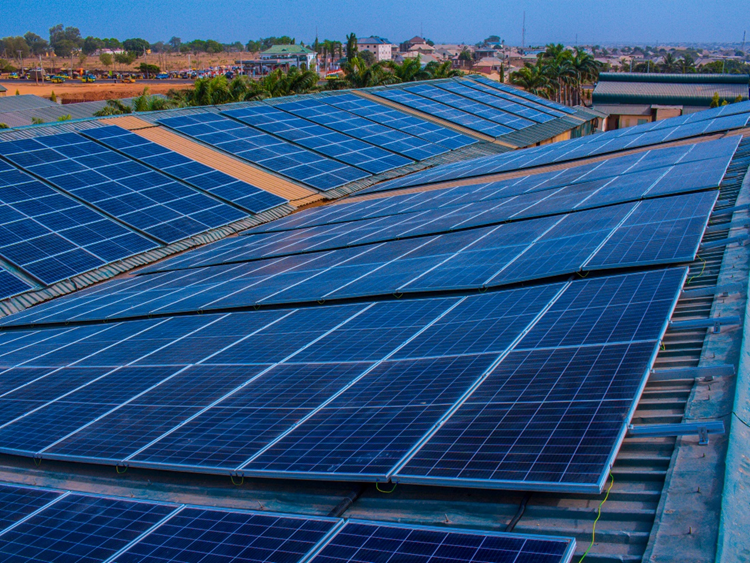
The report estimates that Nigeria added 3.1 GW of small-scale solar capacity in 2024 and 2025, bringing the cumulative installed capacity to about 6 GW.
BloombergNEF forecasts cumulative solar capacity could reach 87GW by 2035, rising from annual additions of 2.4GW in 2026 to 7.8GW in 2030 and 16.2GW in 2035.
The research attributes the rapid growth to worsening electricity shortages, rising diesel and petrol costs and increasing demand for reliable power among homes and businesses.
“Small-scale solar and storage additions are a key driver of growth across sub-Saharan Africa,” the report stated, noting that the trend is “particularly concentrated in Nigeria, where there is an ongoing shift away from backup petrol generators to solar-plus-storage.”
BloombergNEF observed that Nigeria’s experience mirrors that of Pakistan, where consumers have increasingly turned to rooftop solar to compensate for inadequate grid supply.
The report findings seem to corroborate the ongoing trends across both rural and urban hubs in Nigeria. In recent years, the rate of adoption of solar technologies by many households and businesses across Nigeria has been significantly pronounced.
This is against the backdrop of epileptic power supply due to the persistent collapse of the national grid and the skyrocketing cost of fuel.
Given this, many households and businesses have been forced to adopt solar systems to keep their homes and businesses afloat.
Grid-scale projects remain limited
Despite the rapid expansion in distributed solar, BloombergNEF said Nigeria’s utility-scale renewable energy market remains largely stagnant.
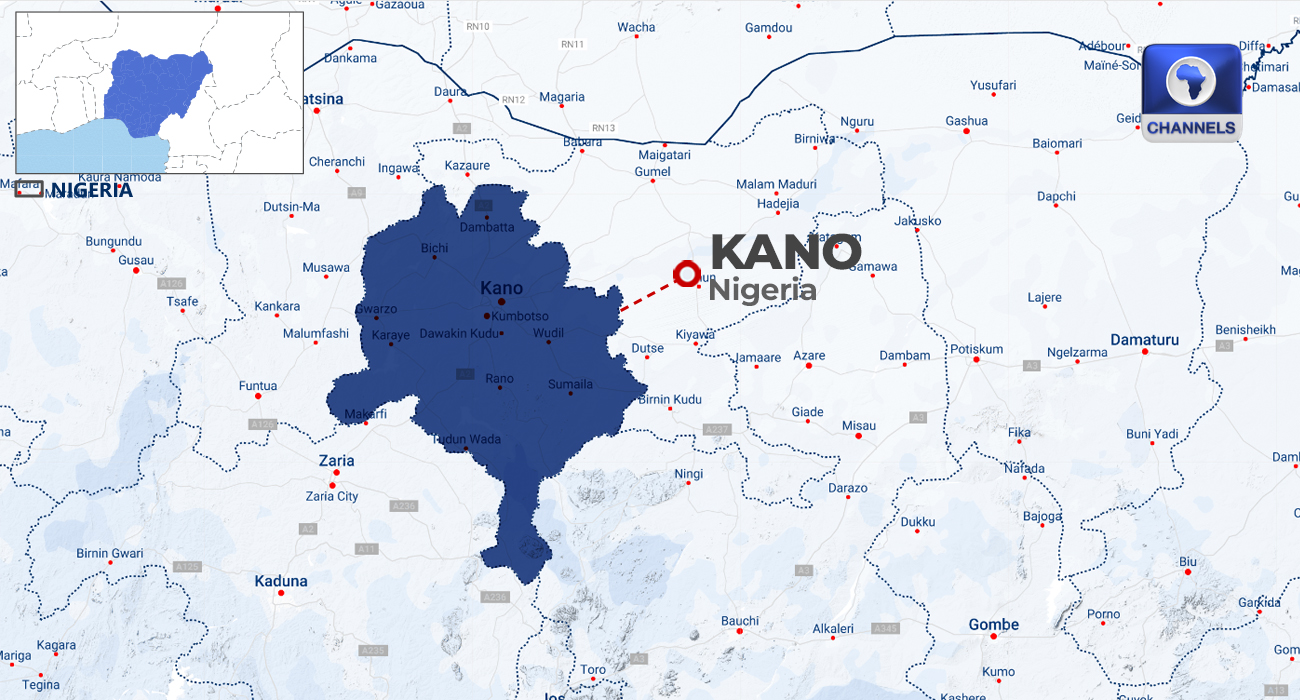
The report noted that only two major grid-connected solar projects were commissioned between 2020 and 2025: the 70MW Zungeru hydropower-linked solar project and the 10MW Kumbotso solar plant, Nigeria’s first grid-connected solar facility.
Unlike South Africa, where renewable energy projects are awarded through competitive procurement programmes, Nigeria has relied on isolated projects rather than predictable auction mechanisms capable of attracting large private investments.
BloombergNEF said there is little clarity on future utility-scale procurement, making it difficult for developers to plan long-term investments.
“These projects were developed sporadically rather than through scalable auction schemes, and there is little clarity on the timing of future tenders,” the report said.
South Africa widens the gap
While Nigeria dominates small-scale deployment, South Africa continues to lead the region in large renewable energy investments.
BloombergNEF estimates South Africa had 67GW of installed electricity capacity in 2025 and expects cumulative renewable energy additions to accelerate through a combination of government procurement and rapidly growing corporate power purchase agreements.
The report projects South Africa will add an average of 2GW of renewable energy annually between 2020 and 2025, increasing to 4.67GW annually between 2025 and 2030.
Notably, around 1.7 GW of South Africa’s expected 2.3 GW of utility-scale renewable additions in 2026 are projected to come from corporate electricity buyers rather than government auctions.
BloombergNEF argues that Nigeria’s biggest challenge is no longer consumer demand for solar technology but the absence of a robust procurement framework for grid-scale renewable energy.
The report noted that utility-scale investment across sub-Saharan Africa is concentrated in countries operating competitive auctions or transparent power purchase agreement frameworks.
ALSO READ: Nigeria’s local content reforms trigger mining boom
It warned that without reforms to Nigeria’s electricity procurement system, investment will continue flowing primarily into off-grid and mini-grid solutions instead of large renewable plants capable of strengthening the national grid.
Imports highlight growing demand
The report also ranked Nigeria among sub-Saharan Africa’s largest clean energy equipment importers.
Between 2025 and April 2026, Nigeria imported approximately 2,370MW worth of clean energy equipment, second only to South Africa’s 5,416MW, reflecting the country’s rapidly expanding demand for solar panels, batteries and related technologies.
However, despite the strong import figures, BloombergNEF found that Nigeria recorded virtually no utility-scale renewable energy capacity financed during the same period, highlighting the disconnect between booming consumer demand and investment in large electricity infrastructure.
Across sub-Saharan Africa, BloombergNEF estimates that 13GW of solar, wind and battery capacity was installed in 2025. The market is expected to more than double to 29GW by 2030.
The report found that economics, rather than climate policy, are driving renewable energy adoption, as households and businesses increasingly replace expensive diesel and petrol generators with solar systems and battery storage.
For Nigeria, BloombergNEF concludes that the country’s clean energy transition is well underway—but unless policymakers create a transparent pipeline for utility-scale renewable projects, the solar boom may continue to bypass the national grid, limiting its impact on overall electricity supply.