• Centre LSD trains over 11,700 male feminist advocates nationwide
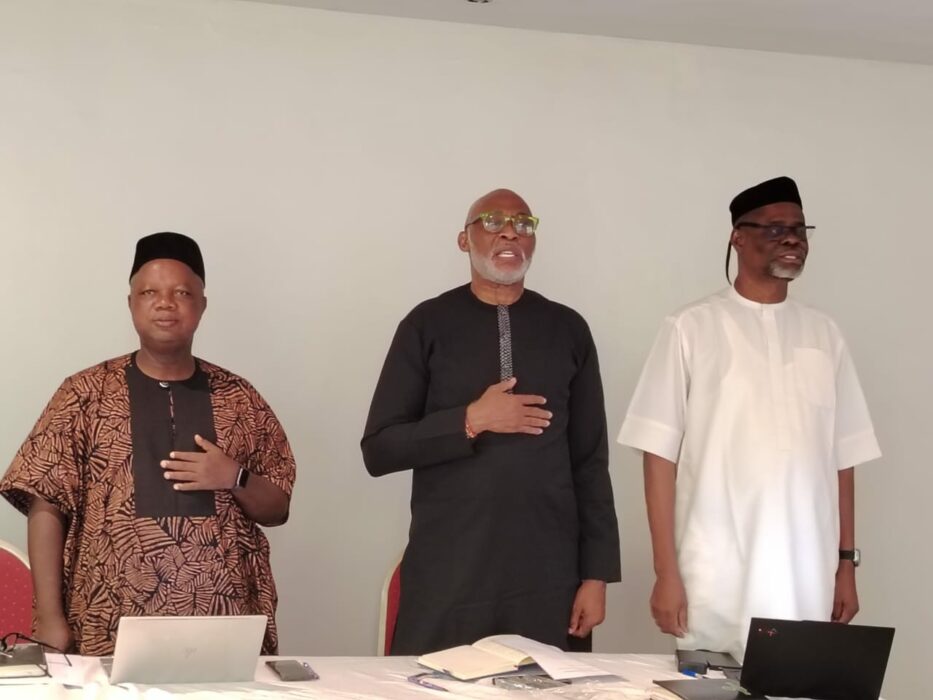
Popular Nigerian actor, writer and producer, Chief Richard Evans Mofe-Damijo (RMD), has been appointed as a Male Feminists Network (MFN) Ambassador for the Prevention of Gender-Based Violence (GBV) by the African Centre for Leadership, Strategy and Development (Centre LSD).
RMD, alongside other ambassadors, will spearhead a nationwide campaign against gender-based violence in Nigeria.
Speaking to journalists after his inauguration on Friday in Abuja, the 65-year-old veteran actor called for greater inclusion of women, particularly in government, saying experience has shown that women deliver results when given leadership responsibilities.
He said, “Personally, when I produced a film two years ago, about 80 per cent of my crew were women. I always tell people in my profession that if you want things done in government, put a woman in charge, and you can sleep with both eyes closed,” he said.
While urging men to stop objectifying women and instead treat them with dignity and respect, he said women should be respected and treated as human beings. “Treat them the way you would treat your daughter or your wife—with respect and dignity. Don’t objectify them or perpetrate violence against them. Correcting someone does not mean hitting or beating them. It is far better to talk than to use your fists,” he said.
On the fight against GBV, RMD stressed that men must take responsibility for changing harmful attitudes and behaviours, insisting that ending violence against women cannot be left to women alone.
“There are institutionalised and systemic ways women’s rights are violated in Nigeria, and this is not a battle women should fight alone. Men must also lend their voices to organisations working to protect women’s rights and end gender-based violence,” he said.
The actor dismissed attempts to equate violence against men with the widespread abuse suffered by women, arguing that the scale and prevalence of the two situations are not comparable.
According to him, meaningful change begins at home through the example men set for their families.”It is the way you treat your wife, daughter or children that others will see and emulate,” he said.
Reflecting on changing social attitudes, RMD noted that many practices once considered acceptable were rooted in ignorance rather than deliberate cruelty.
He cited examples of inappropriate behaviour towards women that were once normalised in many communities, adding that sustained public education is helping to change such attitudes.
He commended the Male Feminists Network initiative of Centre LSD for taking advocacy beyond conferences into communities by engaging commercial motorcyclists, taxi drivers, mechanics, vulcanisers, students and other grassroots groups.
He said, “If you can get the Okada rider, taxi driver, mechanic, vulcaniser and students on campuses involved, then the real work has begun. If this is sustained, we will see a reduction in gender-based violence. ”
Speaking earlier, the founding executive director of the African Centre for Leadership, Strategy and Development (Centre LSD), Dr Otive Igbuzor, said the organisation’s experience has shown that traditional and religious leaders can become powerful allies in preventing gender-based violence.
He cited interventions in communities in Cross River and Benue states where harmful practices, including discriminatory inheritance traditions and widowhood rites, were successfully challenged through dialogue with community leaders.
“Our work has shown that many traditional rulers can become champions in preventing gender-based violence. We engage them to change the social norms that perpetuate violence against women, and the response has been encouraging,” Igbuzor said.
He added that culture evolves through enlightenment, citing the declining acceptance of female genital mutilation as evidence that harmful cultural practices can be abandoned.
“When I was growing up, many people believed female genital mutilation was necessary during childbirth. Today, we know that it is a myth, and the practice is now a crime. That shows culture can change,” he said.
Presenting an overview of the project, the director of Monitoring, Evaluation and Learning at Centre LSD, Dr Victoria Oseyande Udoh, said the initiative has grown into a national movement with active structures across Nigeria’s six geopolitical zones through six implementing partners.
Udoh said the project, titled Core Support for Building a Network of Male Feminists to Prevent Gender-Based Violence in Nigeria, commenced in April 2025 with a target of training at least 1,000 male leaders and grassroots influencers. Within one year, however, it had directly reached 11,721 participants nationwide.
She said 52 master trainers were trained across the six geopolitical zones and subsequently equipped more than 500 community leaders, traditional rulers and professionals with the skills to champion gender equality and prevent GBV.
According to her, implementing partners also directly trained 3,169 men and boys drawn from traditional and religious institutions, transport unions, schools, youth organisations, farmers’ associations, traders’ groups, civil society organisations and community leadership structures.
Udoh added that the network’s online certification platform further expanded its reach, attracting 8,552 participants, with 3,200 Nigerians successfully completing certification as male allies committed to advancing gender justice in their communities.
She said the combination of community engagement and digital learning enabled the project to achieve both scale and depth, creating one of Nigeria’s largest organised networks of male advocates against gender-based violence.
Beyond the numbers, Udoh said the initiative established and strengthened Male Feminists Networks in several states while securing stronger commitments from traditional, religious and community leaders to challenge harmful gender norms and promote gender-sensitive practices.
She added that sustained engagement with traditional and digital media significantly increased public awareness of positive masculinity and GBV prevention, helping to reshape public discourse on men’s role in advancing gender equality.
The project also strengthened the leadership capacity of male champions through mentorship and advocacy programmes, enabling them to lead campaigns in schools, workplaces, faith communities and local governance structures.
According to her, another major achievement was the strengthened collaboration between male allies, women’s rights organisations and government institutions, ensuring that men’s participation complements rather than competes with women’s leadership in advancing gender equality.
While acknowledging variations in performance among implementing partners, Udoh said several organisations exceeded their targets, contributing significantly to the project’s nationwide impact.
We’ve got the edge. Get real-time reports, breaking scoops, and exclusive angles delivered straight to your phone. Don’t settle for stale news. Join LEADERSHIP NEWS on WhatsApp for 24/7 updates →