Shell, has predicted that global demand for liquefied natural gas (LNG) will continue to grow over the long term despite recent market disruptions.
In its annual LNG Outlook 2026 report, the energy major forecasts global LNG demand will reach nearly 700 million metric tons a year by 2050, up from 422 million metric tons in 2025, an increase of about 65 per cent.
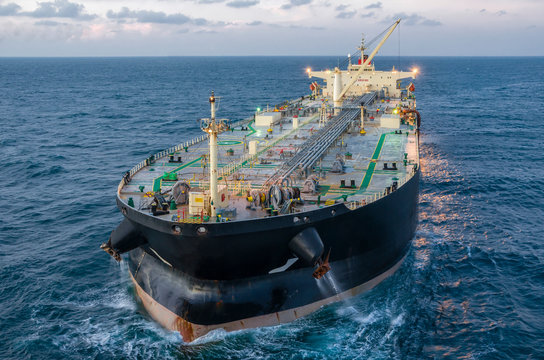
The forecast comes at a difficult time for the market. The closure of the Strait of Hormuz, a key shipping route for a large share of global energy trade, has removed about one fifth of normal monthly LNG supply from the market since the conflict in the Middle East began in late February 2026.
Global LNG trade could remain flat in 2026 compared with 2025 before resuming growth in 2027, the Anglo-Dutch company said. “The conflict has created a systemic shock with cascading disruptions across all segments of the economy, but the LNG industry has proven resilient and capable of adapting to changing market conditions,” Cederic Cremers, president of Shell Integrated Gas, said in the report.
The projected growth is based on trends already underway in several regions. South and Southeast Asia are expected to account for about 40 per cent of global LNG imports over the period as countries seek to replace coal with a cleaner fuel for power generation. In more mature Asian markets such as Japan, data centers are emerging as a new source of energy demand.
LNG use as a marine fuel is also expected to increase sevenfold to 27 million metric tons a year by 2035. In addition, about 180 million metric tons of new LNG production capacity is expected to come online by 2030, improving fuel availability and affordability for new importing countries.
The projections represent an upward revision from Shell’s previous report. As reported by Ecofin Agency in March, the company had previously forecast global LNG demand would increase by at least 54 per cent by 2040.
The outlook has direct implications for several African countries expanding LNG production capacity. Mozambique is the most advanced. It has been producing LNG from Coral Sul since 2022 and is preparing to bring Coral Norte online in 2028. A tender is also underway for a third floating facility with a record production capacity of 6 million metric tons a year.
Farther north, Nigeria has been exporting LNG for more than two decades through Nigeria LNG (NLNG), in which Shell is one of the shareholders. Algeria, Africa’s second-largest LNG exporter after Nigeria, has a liquefaction capacity of 25.3 million metric tons a year across four terminals in Arzew and Skikda, according to data from the U.S. Energy Information Administration.
After exports fell to 9.54 million metric tons in 2025 from 11.62 million metric tons in 2024, shipments rebounded in 2026, according to the Washington-based Energy Research Unit.
Shell also estimates that an additional 200 million metric tons of production capacity will be needed in the 2030s and 2040s beyond projects already under construction. Africa has already attracted more than $50 billion in LNG investment in 2026, according to the African Energy Chamber (AEC).
We’ve got the edge. Get real-time reports, breaking scoops, and exclusive angles delivered straight to your phone. Don’t settle for stale news. Join LEADERSHIP NEWS on WhatsApp for 24/7 updates →