

The challenge now is to transform the crisis that the protests have created into a serious discussion among ourselves and with our African neighbours about how to confront the challenges of migration and find solutions together. If we are to have an honest conversation about immigration, we must ask why so many Africans leave their homes in the first place.
Over the past few months, South Africans have witnessed scenes that would trouble the conscience of any nation.
Vigilante groups have hunted down immigrants in their homes and in the streets. Spaza shops have been looted and burnt. Families who came here seeking opportunity and safety have been herded into makeshift encampments, while African governments have had to hire buses and charter special flights to evacuate their citizens from a country they once regarded as a beacon of hope.
Men and women who share our continent, our history and, in many cases, our struggle for freedom, have been made to feel like strangers, intruders and outcasts. They have been told that they do not belong.
Those who are behind the protests say that unchecked immigration has brought more people into our country than we can cope with, that they have taken our jobs and our houses, and brought crime to our neighbourhoods. We are told that we do not have the space or the resources to offer refuge to people fleeing the failures in their own societies.

In contrast, many Africans see what is happening as primarily a human rights matter in which their fellow citizens, undocumented or not, are being dehumanised and mistreated.
What is abundantly clear is that there are no easy answers, no simplistic solutions to what is an economic, a moral and a political challenge; one that touches on people’s fears and their deepest senses of identity and belonging. South Africa is not alone in dealing with these challenges. Across the world, societies are wrestling with who belongs, how newcomers can be accommodated, and how nations can reconcile compassion with social cohesion.
In After Europe, the Bulgarian political scientist, Ivan Krastev, argued that the 2015 refugee crisis in Europe – triggered by the Syrian civil war and the influx of Africans crossing the Mediterranean – marked a turning point in Western politics. Large-scale migration, he contended, triggered fears that were not merely economic but existential.
Anti-immigrant sentiment fuelled the rise of illiberal and often anti-democratic parties. Frank Furedi calls the new populism that emerged the “politics of fear.” Fear, says Furedi, weakens social trust. When people see others primarily as threats — whether criminals, extremists, foreigners, disease carriers or sources of offence — social solidarity declines.
The result has been a profound turn toward identity politics, in which tribe, religion, race, language and birthplace have become the boundaries of belonging. It is a politics that sorts people into competing camps of insiders and outsiders, and in so doing redefines the nation and challenges the democratic ideals of diversity, inclusiveness and egalitarian societies.
For three decades, South Africa has largely resisted the pull of exclusionary nationalism. The idea that citizenship should transcend ethnicity and that belonging should not be determined by tribe or origin lies at the heart of the democratic settlement forged in 1994.
In South Africa we need to be alert to the dangers of a politics of ethnic and group division, in which political identity is bound up with economic aspirations.
The protestors claim that they have public support for their valid complaints – about overcrowded hospitals, unscrupulous employers hiring low wage foreigners, and an immigration system that often functions to put money in the back pockets of officials. But those same polls do not show support for the mob justice, looting, shop burnings and dehumanisation that have accompanied some of these protests.
The protestors insist that they are only targeting undocumented migrants. But on the street, the targets are black African foreigners as a group. The Somali trader, the Zimbabwean worker, the Ethiopian shopkeeper, the Nigerian entrepreneur, and the Congolese mechanic, are seldom judged according to their legal status. Even South Africans have been harassed because they speak a different language, come from another province or are mistakenly assumed to be foreign.
Africa knows what happens when political leaders begin defining who truly belongs. The experience of identity politics goes back to the darkest days of our history when colonialists divided us into tribes to better control and rule over the people they conquered.
The mass expulsion of immigrants, and sometimes citizens of the wrong ethnicity, is not new in Africa. Uganda, Ghana, Nigeria and Côte d’Ivoire all have their history in this regard. The critical difference is that these expulsions were directed by governments. What we are witnessing in South Africa is more dangerous: a populist movement emerging from the streets that, in some places, has assumed the power to enforce its own version of the law.
…we are witnessing the operation of malign outside networks of funders, organisers and social media operators of bot farms. They bus protesters across provinces. They amplify outrage online. They manufacture narratives designed to pit neighbours against neighbours, communities against communities, and countries against countries.
When the state loses its monopoly on the legitimate use of force, it loses more than control of the streets. It loses the authority to decide who is protected by the law and who is not. That authority passes instead to whoever can assemble the largest mob or wield the biggest stick. No democracy can survive that for long.
We should drop the pretence that this is somehow organic. The protests have been driven, first, by opportunistic politicians who are manipulating people’s fears and anxieties for electoral advantage, with the November local government elections in mind. Secondly, criminal syndicates and hooligans see an opportunity to expropriate people’s businesses and loot the possessions of those who are driven out.
Thirdly, we are witnessing the operation of malign outside networks of funders, organisers and social media operators of bot farms. They bus protesters across provinces. They amplify outrage online. They manufacture narratives designed to pit neighbours against neighbours, communities against communities, and countries against countries.
One way to think of this is through Ivan Krastev’s observation that in the twenty-first century, foreign intelligence agencies are becoming the most important authors of national histories. In this instance, we do not know whether their agenda is to boost the prospects of local political groups or just to destabilise South Africa and isolate us from our neighbours.
What we can say is that these attempts to direct the blame for South Africa’s problems at foreign nationals are fundamentally mistaken.
The deterioration of parts of our cities, collapse of public services, persistent unemployment and an economy that has failed to generate enough opportunities, are the result of policy failures accumulated over many years. They were not created by migrants.
South Africa’s economic crisis is the product of weak growth, poor governance, inadequate education outcomes, infrastructure failures and structural inequality. If every foreign national left the country tomorrow, those problems would remain. In many respects they would become worse.
This does not mean we should ignore the governance failures relating to migration. Citizens of a sovereign nation are entitled to expect that their borders will be managed competently and fairly. The blame for failures in migration management should not fall only on those who have migrated to South Africa seeking opportunity, safety or a better future. The real blame should fall on institutions that have failed to enforce the law, secure borders and administer immigration systems effectively.
There is no evidence that criminality would disappear if every foreign national left the country. Drug trafficking, organised crime, corruption and violence are deeply rooted problems involving South Africans and foreigners alike.
Immigration, properly managed, makes a significant contribution to economic activity, especially in the poorest communities. Immigrants come as entrepreneurs, traders, professionals and service providers. They create businesses, generate demand, rent homes, use transport networks, purchase goods and services, and contribute to the tax base, directly and indirectly.
The economist, Alan Hirsch, has consistently argued that South Africa should view immigration as a developmental asset, rather than a security problem. South Africa’s challenge is not too many migrants but too little growth and, I might add, high levels of economic exclusion.
Hirsch has pointed out that South Africa loses many skilled citizens through emigration, while simultaneously making it difficult for skilled foreigners to enter and remain. The result is a net loss of talent. Migrants are often disproportionately represented among entrepreneurs and small business owners. They take risks, establish enterprises and create commercial networks that contribute to economic dynamism.
Hirsch places migration within a broader historical framework. South Africa’s mining industry, agriculture, commerce and cities were all built on migration. Mobility has long been a feature of economic development, rather than an exception to it.
Across Africa, commerce has long travelled alongside human movement. The great trading cultures of the continent understood this centuries before economists developed theories of regional integration. The Mende traders of West Africa, the Somali merchant networks that stretch across continents and the Ethiopian commercial communities that connect distant markets, all demonstrate how migration and enterprise reinforce one another.
Research conducted over many years by the urban planner, Tanya Zack, on Ethiopian traders in Johannesburg, demonstrates how migrant entrepreneurs revitalise neglected commercial areas, create supply chains, lower consumer prices and generate economic activity in poor communities. Their success is built on business networks, long trading traditions, collective purchasing arrangements, and extraordinary levels of hard work, rather than on taking opportunities away from South Africans.
The task before us is therefore larger than restoring order. We must reinvent not only an economics of inclusion, but a politics of inclusion: a democracy strong enough to defeat those who traffic in anger and fragmentation. That is the South Africa our children deserve. And that is the future we must have the courage to build together.
Her work shows how migrant trading networks have helped rewire the economic geography of a city that long ago exhausted the gold from the mines on which it was built. Through connections stretching from China to East Africa and across Southern Africa, migrant entrepreneurs have helped transform Johannesburg into a regional commercial hub.
In other words, they create growth. And growth is precisely what South Africa desperately needs. Left to flourish, and in fact encouraged by good regulation, these networks have the potential to turn Johannesburg, and Durban into trading gateways for the region: African commercial crossroads connecting producers, wholesalers, transporters and consumers across multiple countries.
Instead, we sit at a different and more dangerous crossroads. The protestors, and the shadowy forces propelling them forward, are attempting to undermine our democracy, stability, and jeopardising our future. The images of the protests, augmented by fake or recycled images falsely depicting attacks on other Africans, have ricocheted across social media, creating the false impression that the whole of South Africa is marching against its neighbours to the north.
Most South Africans abhor the violence and dehumanisation of fellow Africans. Trade unions, churches, civil society groups and communities across the country have all spoken up. The voices of division and ethnicity are loud, but they are not the only voices in South Africa.
And yet from Lagos, Nairobi, Accra, Addis Ababa and Harare, Africans have watched the protests with a mixture of sadness, disbelief and anger. The danger is not simply to our reputation. South Africa’s prosperity is increasingly tied to the rest of the continent. South African banks, retailers, telecommunications companies, logistics firms and manufacturers are expanding across Africa because that is where many of the fastest-growing opportunities and markets are to be found.
At precisely the moment when the African Continental Free Trade Area seeks to deepen integration and reduce barriers between African economies, South Africa is sending the opposite message — that Africans are welcome as customers, investors and consumers, but not as people.
We do not have the luxury of turning our backs on Africa. We must abandon the illusion that we stand apart from Africa. We are not a European country at the southern tip of Africa. We are an African country, bound by geography, history, commerce and destiny to the continent around us.
The challenge now is to transform the crisis that the protests have created into a serious discussion among ourselves and with our African neighbours about how to confront the challenges of migration and find solutions together. If we are to have an honest conversation about immigration, we must ask why so many Africans leave their homes in the first place.
As long as states remain weak, institutions are captured, and public office is used for extraction, rather than service, millions of Africans will continue to seek opportunities elsewhere. Restoring institutional capacity and capable governance means building states that uphold the rule of law, provide security to ordinary citizens, create economic opportunity and earn the confidence of their citizens. Building the credibility and the stability of the state institutions is important.
The second challenge is conflict. In the age of drones and AI wars, conflicts are becoming easier to start and almost impossible to end. Every war without end, from the Sahel to Sudan to Eastern Congo, creates waves of refugees and migrants forced to seek safety beyond their borders.
The third challenge is economic. Africa needs a continental growth strategy equal to the scale of the crisis we face. We need a joint plan of action in which South Africa and the bigger African economies need to play the leading role. We must exploit our advantages – the youth dividend and the digitisation that is both connecting people and growing economies.
Our future prosperity will only be ensured by helping build an Africa that prospers together with us. Our markets are in Africa. Our opportunities are in Africa. Our future is in Africa.
For now, we appear to have staunched the bleeding. The South African government’s response to the events of 30 June showed that by asserting the rule of law and refusing to surrender the streets to vigilantism and intimidation, violence is not an inevitable consequence of populist provocation.
However, we should not lose sight of the fact the state was responding to a call made by non-state actors. For me, that is the indictment. We cannot allow bad non-state actors to interfere with the state’s agenda and decision-making, especially on social security and national security.
The task before us is therefore larger than restoring order. We must reinvent not only an economics of inclusion, but a politics of inclusion: a democracy strong enough to defeat those who traffic in anger and fragmentation. That is the South Africa our children deserve. And that is the future we must have the courage to build together.
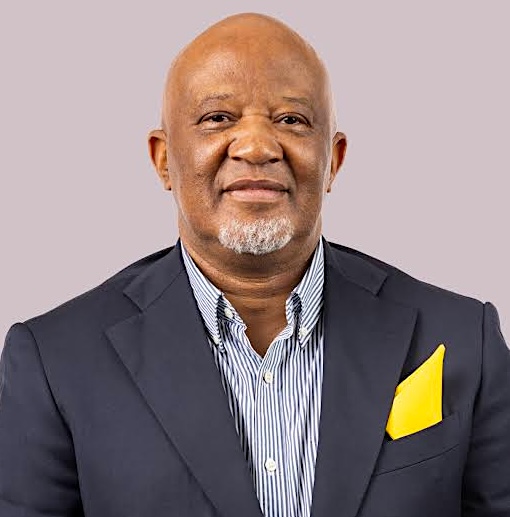
Mcebisi Jonas is a South African politician and businessman who served as Deputy Minister of Finance under the Jacob Zuma presidency in South Africa. He is the chairman of the MTN Group.