Stakeholders in the health sector have called for urgent reforms in Nigeria’s health financing system, warning that inadequate funding, poor budget implementation and weak accountability continue to drive the country’s high maternal mortality rate.
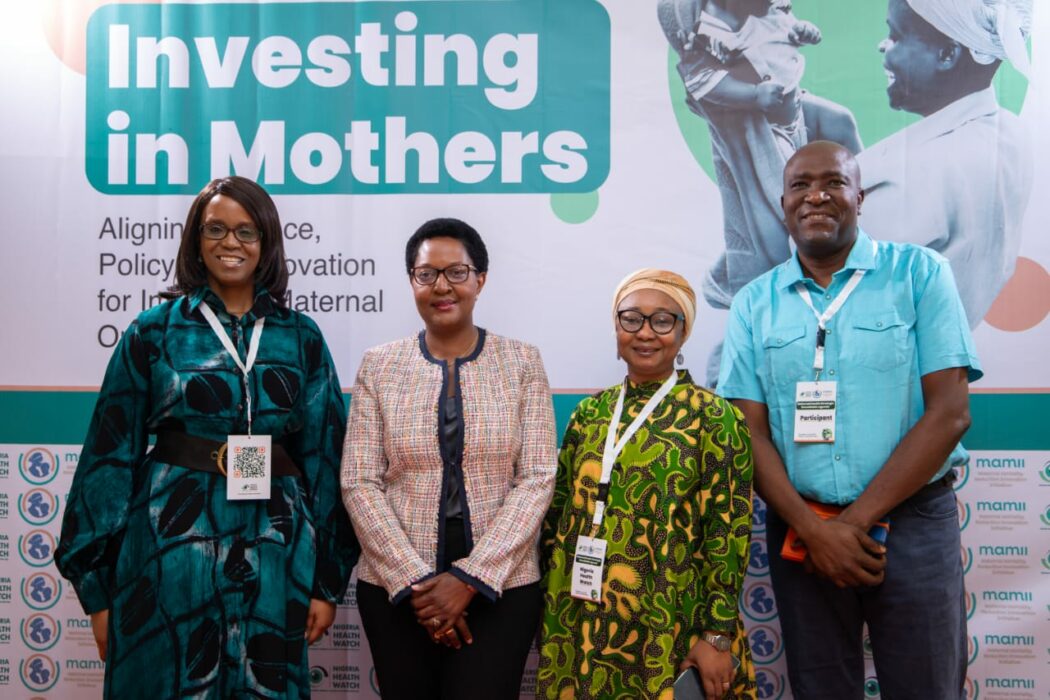
The call was made during a performance dialogue on maternal health financing in Abuja, where the National Lead of the Maternal Mortality Reduction Innovation Initiative (MAMII), Dr. Dayo Adeyanju, presented the initiative’s implementation progress, while the Strengthening Health Systems Lead at BudgIT Foundation, Dr. Biobele Davidson, examined Nigeria’s maternal health financing landscape and accountability gaps.
Davidson said the country’s maternal health crisis goes beyond policy commitments, stressing that inadequate financing and weak budget execution remain major obstacles to reducing preventable maternal deaths.
He noted that Nigeria’s maternal mortality ratio is estimated at about 993 deaths per 100,000 live births, accounting for nearly one-fifth of global maternal deaths despite the country representing only about two per cent of the world’s population.
Approximately 82,000 Nigerian women die annually from pregnancy-related complications, many of which are preventable through adequate financing and a functional primary healthcare system, he said.
Davidson expressed concern that public investment in health remains far below the Abuja Declaration target of allocating 15 per cent of national budgets to the sector.
“The 2026 federal government health budget stands at ₦2.51 trillion, representing only 3.67 per cent of the national budget. At the same time, between 69 and 77 per cent of health financing comes directly from patients through out-of-pocket spending, creating major barriers to maternal healthcare,” he said.
He further revealed that budget implementation remains poor across many states, with actual health expenditure often falling between 30 and 50 per cent below approved allocations.
“As a result, funds meant for emergency obstetric care, skilled birth attendance and referral services frequently do not reach frontline health facilities,” Davidson said.
He also cited BudgIT’s assessment of 5,099 primary healthcare centres, which found that only 13.89 per cent have ambulances, nearly half lack nurses or midwives, 40 per cent have no laboratory facilities, while more than half are not physically secure enough to provide round-the-clock emergency services.
Davidson identified poor transparency in budget implementation, diversion of local government health funds, weak enforcement of accountability mechanisms under the Basic Health Care Provision Fund, and inadequate use of digital budget tracking tools as key barriers to improving maternal health outcomes.
He urged governments at all levels to increase health budget allocations towards the 15 per cent Abuja Declaration target, strengthen implementation of the Basic Health Care Provision Fund, expand health insurance coverage for women in the informal sector, improve financing for essential obstetric medicines and emergency transport, and institutionalise transparent budget reporting.
“Financing decisions must translate into better maternal survival outcomes for the approximately 82,000 Nigerian women who die annually from pregnancy-related complications,” he said.
Earlier, Adeyanju said the federal government, through the Maternal Mortality Reduction Innovation Initiative, is intensifying efforts to improve maternal and newborn survival by mobilising greater domestic resources for healthcare.
He said Nigeria continues to bear one of the world’s highest maternal and neonatal mortality burdens, with a maternal mortality ratio exceeding 572 deaths per 100,000 live births and a neonatal mortality rate of 41 deaths per 1,000 live births.
According to him, MAMII, launched during the 2024 Joint Annual Review, aims to reduce maternal mortality by 30 per cent and neonatal mortality by 20 per cent by 2027, while increasing health facility utilisation by 60 per cent by 2030.
Adeyanju disclosed that the initiative is currently being implemented in 172 priority Local Government Areas, which account for about half of Nigeria’s maternal mortality burden.
He also revealed that the 2025 National Annual Operational Plan requires an estimated ₦3.68 trillion to implement planned health interventions, with government expected to provide ₦1.70 trillion and development partners ₦1.25 trillion, leaving a funding gap of about ₦720 billion.
He said addressing the financing gap is critical to achieving the country’s maternal and neonatal mortality reduction targets.
We’ve got the edge. Get real-time reports, breaking scoops, and exclusive angles delivered straight to your phone. Don’t settle for stale news. Join LEADERSHIP NEWS on WhatsApp for 24/7 updates →