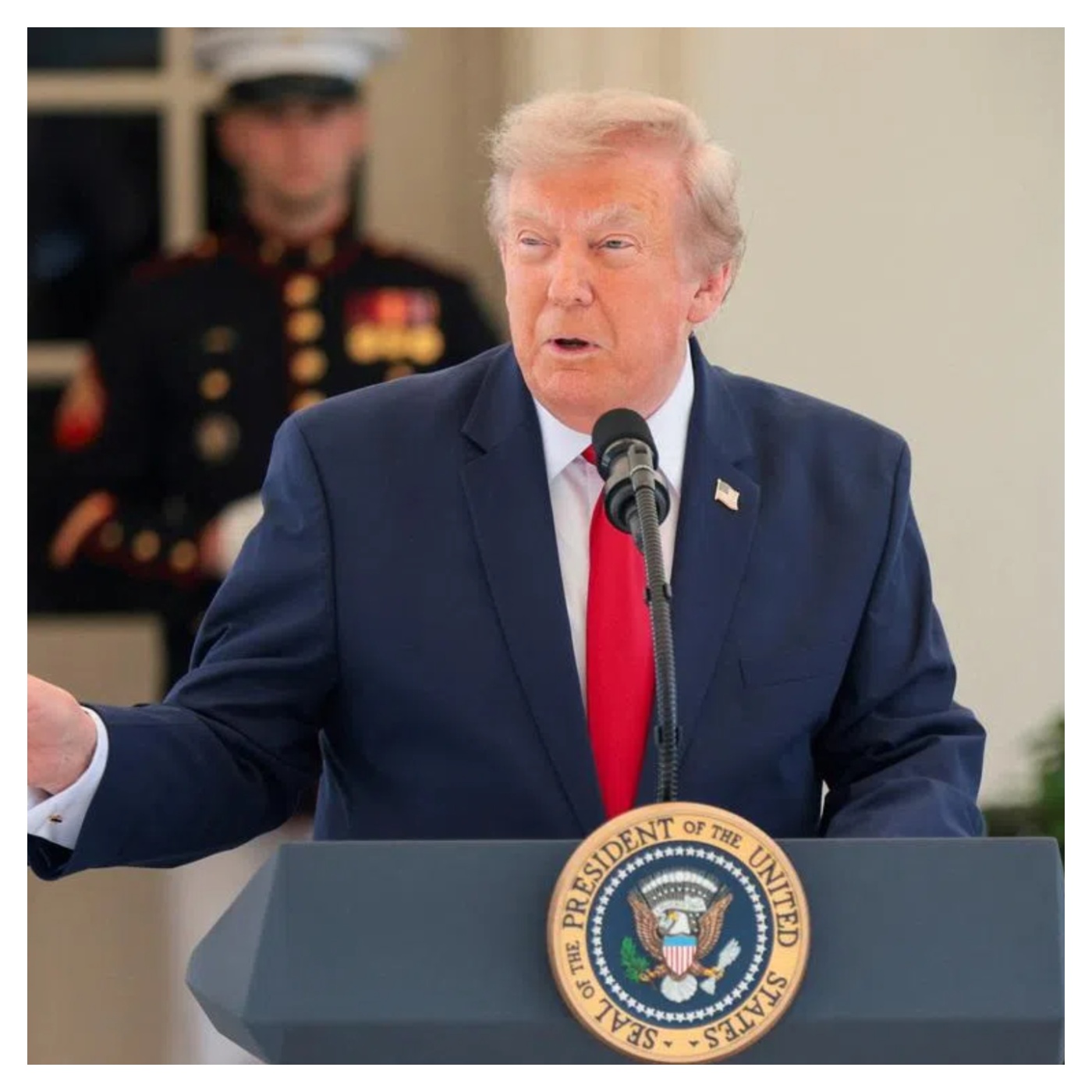
US President Donald Trump has threatened to increase tariffs on Canada, saying the additional charges could be used to offset the cost of wildfire-related pollution affecting large parts of the United States.
Smoke from widespread wildfires in Canada and northern Minnesota has drifted into several parts of the US, triggering air quality warnings and raising concerns over public health in affected areas.
According to the Canadian Wildland Fire Information System, Canada had 937 active wildfires as of Saturday, with many of the blazes still burning out of control.
In a post on Truth Social, Trump accused Canada of failing to properly manage its forests and described the situation as “willful negligence” that had become an annual problem, costing the United States billions of dollars.
He argued that the financial impact of the smoke pollution should be included in the tariffs imposed on Canadian imports.
Trump also criticised Canada’s forest management practices, alleging that authorities had neglected basic measures such as forest maintenance and debris removal.
He said he planned to contact Canadian Prime Minister Mark Carney to discuss the issue and seek clarification on what measures the country intends to take.
Responding to the remarks, Canada’s Emergency Management Minister Eleanor Olszewski said both countries remained in close communication and highlighted their long-standing cooperation in responding to wildfire emergencies.
She noted that Canada has committed about $12 billion since 2020 toward forest sustainability initiatives and wildfire prevention efforts.
Meanwhile, the effects of the smoke continued to impact air quality across several US cities. Detroit was ranked the world’s most polluted city on Friday by air quality monitoring platform IQAir, while Washington, D.C. and Chicago also recorded high pollution levels.
Health officials advised residents in affected areas to limit unnecessary outdoor activities due to the poor air conditions.
The wildfire smoke has also raised concerns over the upcoming World Cup final scheduled to take place in an open-air stadium in New Jersey.
Authorities in New Jersey and New York reported some improvement in air quality compared with Thursday, when heavy haze significantly reduced visibility across Manhattan. However, the National Weather Service, NWS, warned that smoke levels could increase again overnight into Saturday morning.
Andrew Giuliani, executive director of the White House World Cup task force, said tournament organisers were closely monitoring the situation.