The United Nations Development Programme (UNDP) and the European Union (EU) have urged the federal government to sustain ongoing economic reforms, strengthen institutions and improve data transparency if Nigeria is to attain an investment-grade sovereign credit rating and significantly reduce its cost of borrowing.
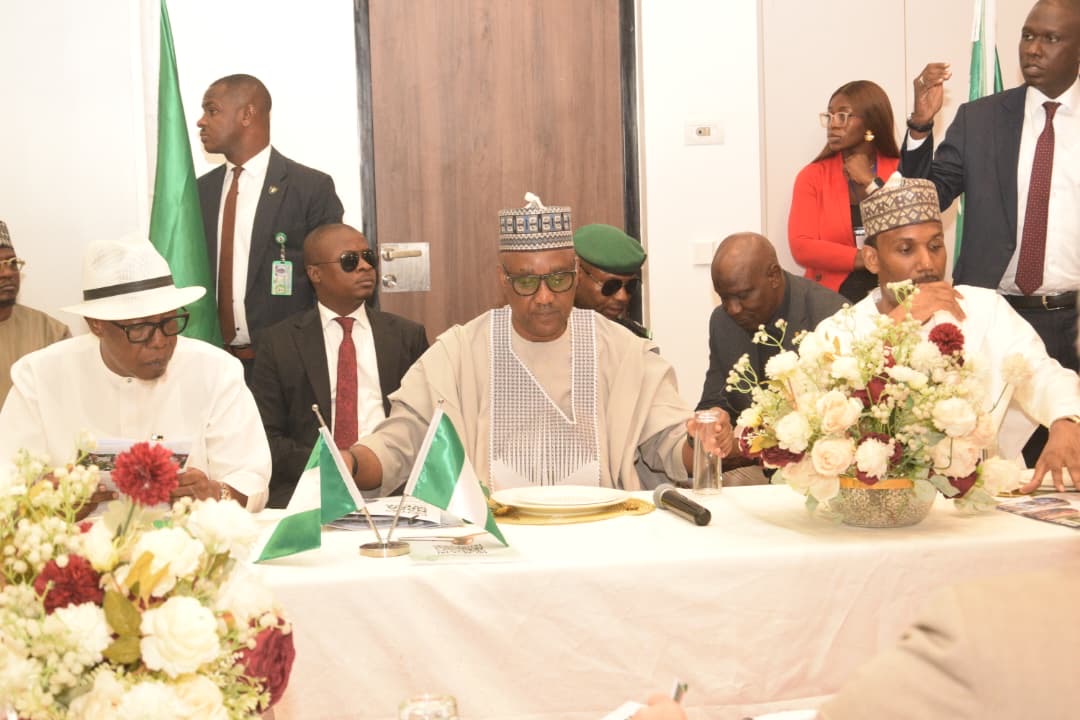
The call was made on Thursday at the high-level debriefing meeting on the Credit Ratings Needs Assessment Mission for Nigeria, jointly organised by the Federal Ministry of Finance in collaboration with the UNDP under the Africa Credit Ratings Initiative (ACRI), with support from the European Union Delegation to Nigeria and ECOWAS, and the Government of Canada through the Integrated National Financing Framework (INFF).
The meeting reviewed preliminary findings from the four-day mission, which assessed Nigeria’s institutional readiness to strengthen its sovereign credit profile and develop a roadmap towards improved ratings and greater access to affordable long-term financing.
Speaking at the event, Chief Economist for the UNDP Africa Bureau and ACRI Lead, Raymond Gilpin, described sovereign credit ratings as fundamental to Nigeria’s economic ambitions, stressing that stronger ratings would translate into lower borrowing costs and increased investment in infrastructure and human capital.
“Better credit ratings reduce the cost of borrowing, and a reduction in borrowing costs increases the government’s ability to invest in infrastructure and also in human capital,” Gilpin said.
According to him, Nigeria’s recent upgrades by international credit rating agencies demonstrate that reforms implemented over the past two years are beginning to yield positive results.
“There have been significant policy developments over the last two years, which have resulted in Nigeria being upgraded by rating agencies, and all of them have a positive outlook. That’s the good news.”
However, he cautioned that substantial work remains if the country is to move from its current non-investment-grade status to investment grade.
Gilpin identified three broad priorities for achieving that goal.
The first, he said, is sustaining macroeconomic stabilisation through continued improvements in foreign exchange market reforms, public finance management and policy coordination.
“It’s important over the next 24 months for Nigeria to continue pursuing those goals and to strengthen performance, particularly on revenue mobilisation, but also on expenditures.”
Secondly, he said Nigeria must pursue structural economic transformation by accelerating growth across both the oil and non-oil sectors.
“That would then put Nigeria on the path for another upgrade in the near term, but to be on the trajectory to become investment grade in the longer term.”
The third priority, according to him, involves strengthening governance, institutions and security.
“Institutional issues and the regulatory and governance and security challenges remain. Over the longer term, having consistency and consistent progress in those areas would eventually get Nigeria there.”
Gilpin also outlined three immediate actions needed to support Nigeria’s journey towards investment-grade status.
He said improving the quality, consistency, credibility and timeliness of government data would be critical, adding that the UNDP would continue working with the Ministry of Finance, the Central Bank of Nigeria (CBN) and the National Bureau of Statistics to strengthen national data systems.
“We want to prepare systems that will allow the data to be anticipatory and also accessible and transparent.”
He also advocated stronger coordination among government agencies through the establishment of an inter-agency committee with clearly defined responsibilities.
“We are proposing the establishment of an inter-agency committee that will have the lead in ensuring that macroeconomic stabilisation, structural reform and institutional robustness are advanced.”
Beyond that, Gilpin urged Nigeria to adopt a long-term national strategy aimed specifically at attaining investment-grade status.
“Countries that have moved from non-investment grade to investment grade have put in place robust multi-year strategies that guide consistent efforts. We hope to work with Nigeria to develop such a strategy and provide the technical support required.”
Responding to questions on whether the UNDP was still seeking government support for the initiative, Gilpin said the partnership was already fully underway.
“No, we already have support. We already have the Nigerian government embracing this initiative, and we are here to work with Nigeria in this regard.
“We came with two world-class experts in credit ratings who will be visiting quite frequently to provide the support. We’re not pushing for support—we’re already providing it.”
Also speaking, Head of Cooperation at the European Union Delegation to Nigeria and ECOWAS, Massimo De Luca, described the initiative as timely, saying it would strengthen investor confidence and improve Nigeria’s access to international finance.
“I’m personally delighted to see this happening in Abuja. UNDP, with our support and support from Canada, is reviving the debate on the way we think in Nigeria about our credit rating.”
He noted that sovereign ratings directly influence investment flows, infrastructure financing and government borrowing costs.
“This is very important for investments into Nigeria and the ability of Nigeria to provide infrastructure, services and borrow at acceptable rates.”
De Luca said many investors believe Nigeria deserves stronger credit ratings but stressed that reforms in public finance, revenue generation and transparency remain essential.
“There is a general perception that Nigeria deserves better, that we just need to put the house in order, particularly when it comes to revenue and data.”
He commended the emphasis placed on improving transparency in public revenue management during the mission.
“It was very important… the reminder about bringing more transparency in the way revenue accrues to the country and how it is spent.”
According to him, Nigeria must also continue reforms that reduce debt servicing pressures by improving the ratio between interest payments and government revenues.
Despite existing challenges, De Luca expressed optimism that Nigeria could regain its previous standing among international investors.
“I think this is a task that Nigeria can successfully achieve.”
Recalling Nigeria’s stronger global financial standing two decades ago, he added:
“Nigeria was a much better place 20 years ago. The situation today, in terms of attractiveness, is not that different from what we used to have. We need to reclaim our place as a country in the financial community.”
The Credit Ratings Needs Assessment Mission, held from July 13 to 16, forms part of the Federal Government’s broader strategy to strengthen macroeconomic stability, improve fiscal credibility and reinforce investor confidence.
The initiative, undertaken in partnership with the UNDP’s Africa Credit Ratings Initiative, the European Union and the Government of Canada, seeks to identify institutional gaps, strengthen coordination across public institutions and develop a comprehensive sovereign credit ratings roadmap that will enhance Nigeria’s creditworthiness and improve access to affordable long-term financing.
We’ve got the edge. Get real-time reports, breaking scoops, and exclusive angles delivered straight to your phone. Don’t settle for stale news. Join LEADERSHIP NEWS on WhatsApp for 24/7 updates →