The United States has launched a fresh round of military strikes on Iran in retaliation for attacks on commercial vessels in the Strait of Hormuz, marking a sharp escalation in tensions and further straining a fragile ceasefire between the two countries.
The US Central Command (CENTCOM) said the operation targeted Iran’s military capabilities after three commercial ships transiting the strategic waterway came under attack.
In a statement, CENTCOM said the strikes were intended to “impose heavy costs” on Iran for targeting commercial shipping and civilian crews in an international waterway, describing Tehran’s actions as “unwarranted, dangerous and a clear violation of the ceasefire.”
The latest military action came hours after the US Treasury revoked a licence that had allowed Iran to export oil under a temporary agreement reached during earlier negotiations. Washington said the move reflected Tehran’s failure to uphold its commitments under the interim ceasefire.
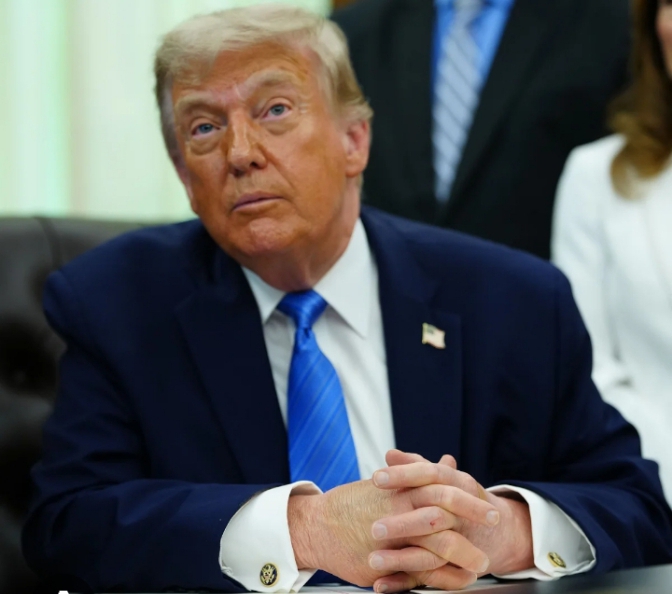
President Donald Trump, speaking at the NATO summit in Ankara, Turkey, said the ceasefire had effectively collapsed and warned that further military action could follow if Iran continued its attacks.
According to US officials, the strikes focused on Iranian air defence systems, coastal surveillance facilities, anti-ship missile sites, drone launch locations and other military infrastructure designed to threaten navigation through the Strait of Hormuz. Explosions were reported in the southern Iranian port cities of Bandar Abbas and Sirik, as well as on Qeshm Island.
Iran responded by launching missile and drone attacks against US military facilities in Bahrain and Kuwait. The Islamic Revolutionary Guard Corps (IRGC) claimed it had struck dozens of American military sites in what it described as an initial response to the US offensive. Authorities in Kuwait confirmed that air defence systems had been activated to intercept incoming missiles and drones.
Iran’s Foreign Ministry condemned the US operation, accusing Washington of violating the memorandum of understanding that underpinned the ceasefire. Deputy Foreign Minister Kazem Gharibabadi warned that Tehran would take decisive measures to safeguard its national security and cautioned the United States about the consequences of breaching the agreement.
The renewed hostilities follow attacks on three commercial vessels in the Strait of Hormuz, one of the world’s busiest oil shipping routes. British maritime authorities said one tanker caught fire after being struck, while two others sustained damage but continued their voyages.
The escalating conflict has renewed concerns over global energy supplies. Brent crude oil climbed above $75 a barrel while US crude futures also advanced as traders reacted to fears of prolonged disruption in the Gulf. Shipping through the Strait of Hormuz, through which roughly one-fifth of the world’s oil and gas supplies normally pass, remains significantly below pre-conflict levels.
Despite the latest exchange of attacks, US officials said negotiations aimed at reaching a permanent agreement with Iran remain ongoing, although the renewed violence has cast fresh doubt over prospects for a lasting settlement.
We’ve got the edge. Get real-time reports, breaking scoops, and exclusive angles delivered straight to your phone. Don’t settle for stale news. Join LEADERSHIP NEWS on WhatsApp for 24/7 updates →