
Why does economic growth and development on the African continent continue to underperform growth and development across the globe? Ignore the twin presumptions that it is important for Africa to grow and develop at all and that the continent’s ruling elite are alive to this task, and the answers you get will depend. On how far your history reaches. In which case, both slavery and colonialism took considerable tolls on the continent’s resources, either by shipping manpower out, or by organising colonial economies to extract and export resources. And this set the continent back a lot. Or, on your ideological take. In this reading, capitalist solutions continued to subordinate post-independent states to the needs of their previous home countries. Or attempts at socialising production robbed young states of the animal spirits that drive innovation and increases in productivity, and that may only have been set free by relatively free, but properly regulated markets.
Whichever answer you prefer to the question with which this piece opens, one thread runs through these antipodean explanations. It is that before, and after independence, African societies were some of the most unequal anywhere in the world. The causes of this were numerous. Colonial rule was far from invested in questions of general economic efficiency. It not only created exclaves of the economy where participating natives were richer than excluded ones. It also created educational divides. The local elite bred from these processes inherited the new states. And from the collectivisation of rural agriculture, through the expropriation of smallholder farmers’ profits by state-controlled marketing boards, to the prioritisation of cash crops production over subsistence farms’ output, the policies of the newly independent states simply exacerbated their societies’ existing cleavages.
The costs were high. In Nigeria, these have shown up in weak consumer demand, underinvestment in human capital, lower productivity growth, greater political instability, fiscal pressure on the state, reduction in social mobility, and a general trust deficit that has increased domestic transaction costs. And despite efforts since the 1970s to close the yawning gaps, especially through democratising access to education, these costs have remained exorbitant. Essentially, the economic burden of inequality is that it turns a large share of the population from a potential source of productivity, and demand into a spring of unrealised capacity, and increased social cost.
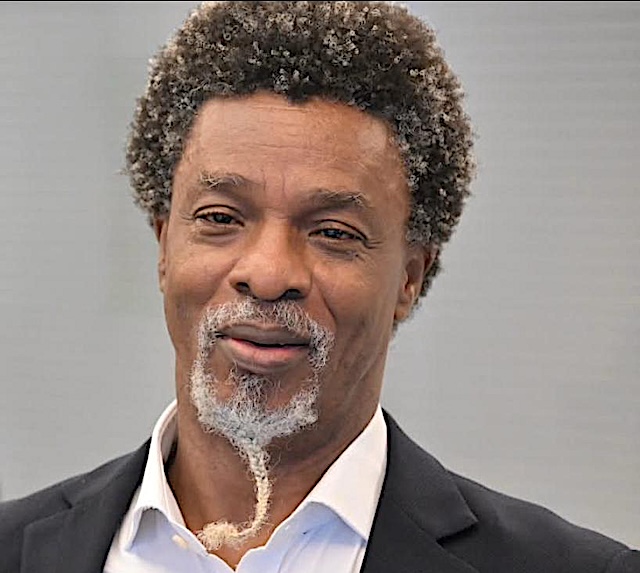
This is why ‘Doyin Salami’s recent observations on the wealth makeup of the country matters a lot. Dr. Salami, a teacher at the Lagos Business School and Chief Executive Officer of KAINOS Edge Consulting Ltd., reportedly warned, last week, of the threat to the economy’s outlook from the rising inequality in how income and wealth are distributed in the country. According to him, “I was astonished to discover that the top 1%, almost 20 years ago, controlled about 25% of total wealth. Today it’s 44%”. He further added that “the first thing that has happened over the last two decades or thereabout is an upward concentration of wealth”.
As it was in the beginning, when, in an economy, a large share of income/wealth goes to a small group of people, total spending tends to be lower. So, it is today. And this is because, whereas high-income households save and invest more of their income/wealth, low-income households usually spend most of what they earn. The implications of this dynamic for businesses are grim. On one hand, the market for mass-market goods and services shrinks on the back of insufficient domestic demand. Human capital is likewise misallocated. With poor families unable to pay for good schools, good healthcare, and adequate nutrition for their children/wards, talented people may never develop their full abilities.

Again, businesses suffer. On the other hand, the workforce that results from an uneven distribution of education, health and training Is always going to be less skilled than it could be. Society vegetates: labour productivity is low, the pace of new technology adoption is slow, fewer firms may successfully spend on research and development, etc. As a rule, society is least healthy. Crime rises, true. As does the cost to society of maintaining security. But by far the biggest burden from rising income/wealth inequality is the threat of political instability.
Any of this feel familiar? The point that ought not to be missed is that for an economy such as ours, the biggest crisis point is often not that some people are rich, but that millions of people cannot become productive enough. If then, government’s policies are to achieve longer growth spells through increased social mobility and greater macroeconomic stability, then they must support both equity and growth, by expanding opportunity for all through education, health, infrastructure, and fair competition.
Uddin Ifeanyi, a journalist manqué and retired civil servant, can be reached @IfeanyiUddin.