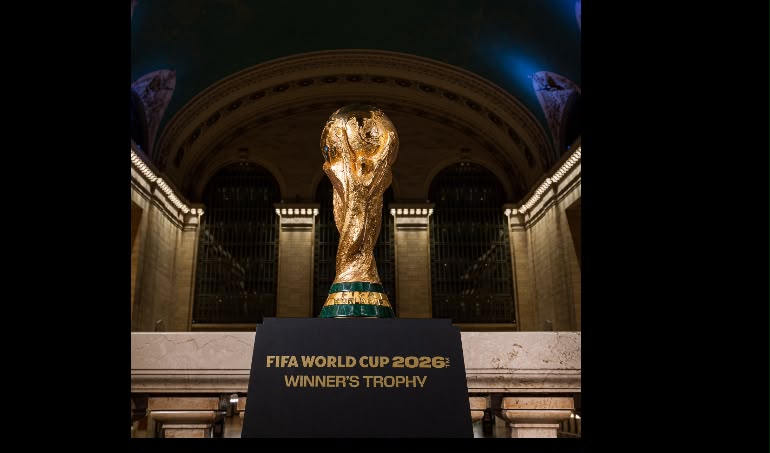

After 103 matches across three nations, countless unforgettable moments, and the first-ever 48-team FIFA World Cup, only two teams remain. On Sunday at the iconic New York-New Jersey Stadium, Spain and Argentina will contest the biggest match in world football, with history, legacy, and immortality hanging in the balance.
For Spain, victory would secure a second FIFA World Cup crown and cement a remarkable new golden generation led by teenage sensation Lamine Yamal and midfield general Rodri.
For Argentina, the stakes are arguably higher. Lionel Scaloni’s side stands on the brink of successfully defending the title won in Qatar four years ago. At the same time, Lionel Messi has the opportunity to add one final masterpiece to the greatest international career football has ever witnessed.
Both teams have earned their place in the final in contrasting fashion. While Spain have overwhelmed opponents with structure, discipline, and defensive perfection—conceding just one goal all tournament—Argentina have thrilled the world with relentless attacking football, spectacular comebacks, and a frightening ability to score from almost any situation.
Sunday promises to be far more than a football match; it is a clash between Europe’s most organised side and South America’s most ruthless champions.

Spain’s wall meets Argentina’s firepower
Statistics suggest this will be one of the most fascinating tactical battles in World Cup history. Spain have conceded just one goal in seven matches, making them arguably the tournament’s most dominant defensive side.
Athletic Bilbao goalkeeper Unai Simón, De la Fuente’s trusted choice between the sticks, has started every game and rewritten the record books, keeping six clean sheets—the most ever recorded by a goalkeeper at a single FIFA World Cup. He produced an astonishing 650-minute unbeaten streak before finally being beaten by Belgium’s Charles De Ketelaere in the quarter-finals, eclipsing Walter Zenga’s long-standing record of 517 minutes.
Simón also leads all goalkeepers with an extraordinary 93 per cent save percentage. Should Spain win while conceding only once, they will establish a new defensive benchmark in tournament history, surpassing France (1998), Italy (2006), and Spain (2010), who all lifted the trophy after conceding two goals.
Standing opposite them is arguably the most devastating attack this tournament has witnessed. Argentina have scored 19 goals, averaging 2.71 per game—the highest tally by any World Cup finalist since Brazil’s legendary 1970 side. Even more remarkably, Argentina have scored at least two goals in 13 consecutive World Cup matches, the longest streak ever recorded.

Tactical battles that might decide final
Laporte vs Messi
Every World Cup has its defining duel. At 39, Lionel Messi continues to redefine excellence. The Argentine captain enters the final in contention for the Golden Boot with eight goals, just two shy of becoming the tournament’s all-time leading scorer.
With 12 direct goal contributions, he is having one of the most productive tournaments in history. Stopping him will largely fall to Aymeric Laporte. The Athletic Bilbao defender has been outstanding, forming an exceptional partnership with 19-year-old Pau Cubarsí. Laporte rarely dives into tackles, relying instead on anticipation, positioning, and calm decision-making.
Rodri vs Fernández
The midfield battle may ultimately determine who lifts the trophy. Rodri has enjoyed arguably the finest World Cup ever produced by a defensive midfielder, completing 648 passes—the highest total ever recorded by a player at a FIFA World Cup. His passing accuracy stands at 93 per cent, and he has covered more ground (83,802 metres) than any other player.
Waiting for him is Chelsea’s Enzo Fernández, who influences every phase of Argentina’s play. The winner of the FIFA Young Player Award at Qatar 2022 has forced 43 turnovers—more than any other Argentine—and has produced decisive moments when needed most, including a dramatic stoppage-time winner against Egypt and a sensational equaliser against England. While Rodri controls the rhythm, Fernández creates chaos.
Yamal vs Tagliafico
Football’s brightest teenage star, Lamine Yamal, is one match away from immortality. He has completed 30 successful dribbles; only Diego Maradona (53 in 1986) and Lionel Messi (46 in 2014) have produced more successful take-ons in a World Cup campaign this century.
Standing between him and history is Nicolás Tagliafico. The Argentine left-back is one of the game’s smartest defenders, boasting 82 international caps and 120 minutes in the epic 2022 final. Tagliafico rarely allows excitement to dictate his decisions, and his tactical awareness will be vital against Yamal’s fearless dribbling.

Tactical chess match: De la Fuente vs Scaloni
Luis de la Fuente: Modern master of possession
Spain remain committed to possession football, but this is no longer the sterile *tiki-taka* of old. De la Fuente’s version is vertical, aggressive, and purposeful. With Rodri dictating from deep, Pedri and Gavi (or Olmo) constantly rotating, and full-backs providing width, the press begins almost immediately upon losing possession. La Roja arrived in the final unbeaten in 37 international matches, equalling the longest unbeaten run in men’s international football.
READ ALSO: World Cup Final: Spain coach unveils plan to stop Messi, Argentina
Lionel Scaloni: Master of adaptation
Argentina play differently, as Scaloni does not chase possession for its own sake. His side adapts constantly; sometimes they dominate the ball, at others they sit deep. Messi drops into midfield, Julián Álvarez stretches the defence, and Enzo Fernández often becomes an extra striker. Few coaches adjust within games as effectively as Scaloni, and that flexibility is Argentina’s greatest weapon. Even when behind, panic is absent; Argentina sefuse to believe they are beaten.
History awaits
Argentina have won all seven matches at this World Cup, equalling Brazil’s perfect run in 2002. Victory on Sunday would make Scaloni’s side only the fifth team in history to lift the FIFA World Cup with a 100 per cent winning record, joining Uruguay (1930), Italy (1938), and Brazil (1970 and 2002).
Spain, meanwhile, are chasing history of a different kind: should they triumph while conceding only once, they would become the statistically greatest defensive champions the World Cup has ever seen.
One side brings relentless attacking brilliance; the other arrives armed with defensive perfection. One seeks to defend its crown; the other hopes to begin a new era. By Sunday evening, one nation will climb football’s highest mountain and forever etch its name into the history of the biggest FIFA World Cup ever staged.