
Thirty-one months after Governor Umo Eno pledged to mitigate the impact of fuel subsidy removal through a state-owned mass transit system, the Akwa Ibom State Government has received 50 compressed natural gas (CNG) buses. However, the fleet’s arrival has been overshadowed by the government’s nondisclosure of the critical financial details.
Despite a cumulative budgetary allocation of N42.04 billion for the project, officials have yet to release contract sums, procurement records, or bidding documentation, raising significant concerns about transparency and compliance with the state’s public procurement laws.
Barely three months after Mr Eno assumed office in 2023, he had promised to cushion the impact of petrol subsidy removal by introducing state-owned mass transit buses.
Thirty-one months later, the state has received the first batch of the promised compressed natural gas (CNG) buses.
But while officials describe the acquisition as the beginning of a modern transport system for the state, the government has yet to disclose how much it paid for the buses, how the contract was awarded or why procurement commenced more than two years after the promise.

The lack of disclosure comes despite provisions of the state’s procurement law requiring public access to procurement information.
Officials unveil buses
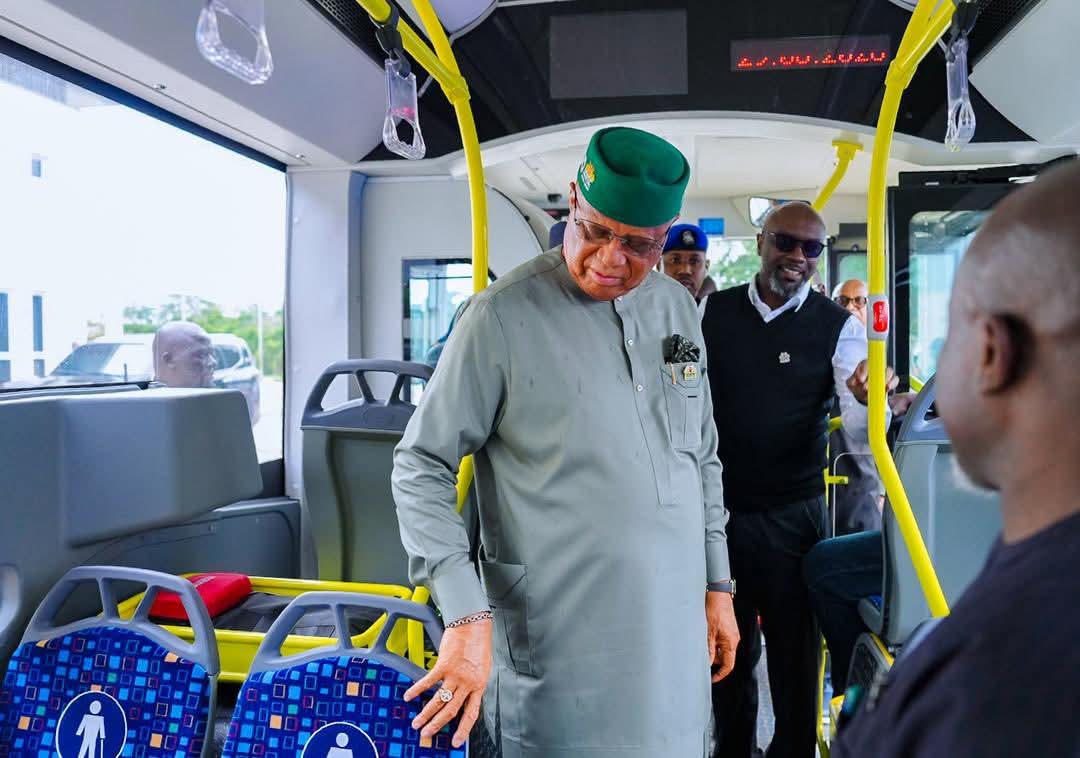
During an inspection of the buses with select journalists on 1 July, Alexandro Selefteriadis, the chief executive officer of Alpha Daiz, the contractor for the Ibom City bus project, said the vehicles are factory-built CNG buses rather than diesel buses converted to run on gas.
“These are original CNG buses. It is very difficult to find original CNG buses. Most buses in Nigeria are converted, but these are original,” he said.
According to him, the buses can operate for about 16 hours before refuelling. Mr Selefteriadis added that the project goes beyond vehicle procurement.
He said the company plans to establish a technical training school where 600 students would receive both theoretical and practical training in bus maintenance.
The representative of the Akwa Ibom Investment Corporation (AKICORP), Ime Uwah, said the state paid the manufacturer directly.
“As of October 2025, payments were made directly to Isuzu,” Mr Uwah said.
He added that the government also procured spare parts capable of supporting maintenance of the buses for between five and 10 years.
The Commissioner for Information, Aniekan Umanah, said supporting infrastructure is already under construction.
“There is ongoing construction of the CNG terminal at Ikot Ekpe community, Offot, in Uyo. There will be an integrated transportation system for Akwa Ibom State, including a driver’s academy, training facilities and a car wash. We are about to enter an era of an efficient transport system in Akwa Ibom State,” he said.
Promise made in 2023, payment in 2025
Governor Eno first announced plans to procure subsidised public buses in August 2023 as part of measures to ease transportation costs following the removal of the petrol subsidy.
However, Mr Uwah’s disclosure that payment was only made in October 2025 raises fresh questions about the implementation timeline.
Akwa Ibom is not a state struggling to fund its projects. Between 2023 and 2025, PREMIUM TIMES’ review of Budget Performance Reports shows that oil-rich Akwa Ibom has exceeded its initial revenue targets for the three fiscal years reviewed.
PREMIUM TIMES recently reported that Mr Eno’s administration achieved an all-time peak revenue of ₦2.53 trillion in 32 months.
Our reporter asked the information commissioner why the buses arrived 31 months after the governor’s promise. He attributed the delay to production schedules.
“The manufacturers started manufacturing ours only in January this year because the company had back orders, so they said even if you pay, we won’t start,” Mr Umanah said.
Asked whether the government only paid for the buses in October 2025 despite announcing the project in 2023, he replied, “I need to check that for you.”
Procurement details remain undisclosed.
Although the buses have arrived, key procurement information remains unavailable.
PREMIUM TIMES on Thursday asked the information commissioner to disclose the total contract value, the unit cost of each bus, logistics costs and the procurement method adopted.
“We have to check the records to let you know that,” Mr Umanah said regarding the cost.
When asked whether the buses were procured through open competitive bidding, selective bidding or direct procurement as provided under the Akwa Ibom State Public Procurement Law, the commissioner said he was attending the state’s Delivery Advisor meeting with the governor and would respond after checking the records.
Mr Umanah had not provided the requested information as of the time of filing this report.
The Commissioner for Transport, Anthony Luke, whose ministry is responsible for implementing the project under the state budget, also did not provide answers.
On Thursday, he initially told PREMIUM TIMES he was attending the same meeting with the governor and promised to respond afterwards. When contacted the following day again, he said the meeting had continued and insisted he wanted to respond personally rather than delegate to ministry officials.
However, no response had been received before publication despite a detailed 10-point media enquiry sent through WhatsApp and text message.
Procurement records missing
The absence of procurement information is inconsistent with the Akwa Ibom State Public Procurement Law.
Section 54(5) of the Akwa Ibom State Public Procurement Law, Volume V, Cap 122, Laws of Akwa Ibom State 2022, requires the Bureau of Public Procurement and procuring entities to routinely publish procurement information on the state’s electronic procurement portal.
However, a search by PREMIUM TIMES found no records relating to the procurement of the buses on the portal.
This newspaper also found that the administration rarely published details of public contracts, including contract sums, implementation schedules and procurement documentation.
PREMIUM TIMES has reported a pattern of procurement secrecy by Mr Eno’s administration, with the latest instance concerning the Akwa Ibom State House of Assembly rehabilitation project.
Budget records
Budget documents reviewed by PREMIUM TIMES show that no allocation existed specifically for CNG buses in the state’s 2023 or 2024 budgets.
The project first appeared in the 2025 revised budget, where ₦40 billion was appropriated for “the purchase of CNG buses and operation of a modern City Bus Transportation System with MOT line and CNG stations in the City of Uyo.”
An additional ₦2.04 billion was approved for the same budget line in the 2026 Appropriation Law.
The combined allocation brings the total budgetary provision for the project to ₦42.04 billion.
Cost questions
Using image analysis conducted independently with three artificial intelligence systems—GPT-4o, Claude 3.5 Sonnet, and Google Cloud Vision—PREMIUM TIMES identified the buses as the Anadolu Isuzu Citiport 12 CNG low-floor city bus.
The systems independently returned the same model specification.
The newspaper subsequently reviewed market prices from automobile dealers and European procurement records. The review indicates that the buses typically sell for between $260,000 and $330,000, depending on configuration and market conditions.
Using the higher estimate of $330,000 and an exchange rate of ₦1,500 to one US dollar, each bus would cost ₦495 million.
At that rate, 50 buses would cost ₦24.75 billion before shipping, customs duties, spare parts and associated infrastructure.
The higher estimate shows that the combined ₦42.04 billion appropriated for the project in two years exceeds the estimated vehicle acquisition cost alone by ₦17.29 billion.
However, the actual contract value cannot be independently verified because the state government has yet to disclose the procurement documents or contract details. The government has also not responded to PREMIUM TIMES’ request for details or the cost of the spare parts reportedly purchased alongside the buses.
READ ALSO: FEC approves N215bn for CNG buses, $900 million agriculture financing Minister
Manufacturing timeline
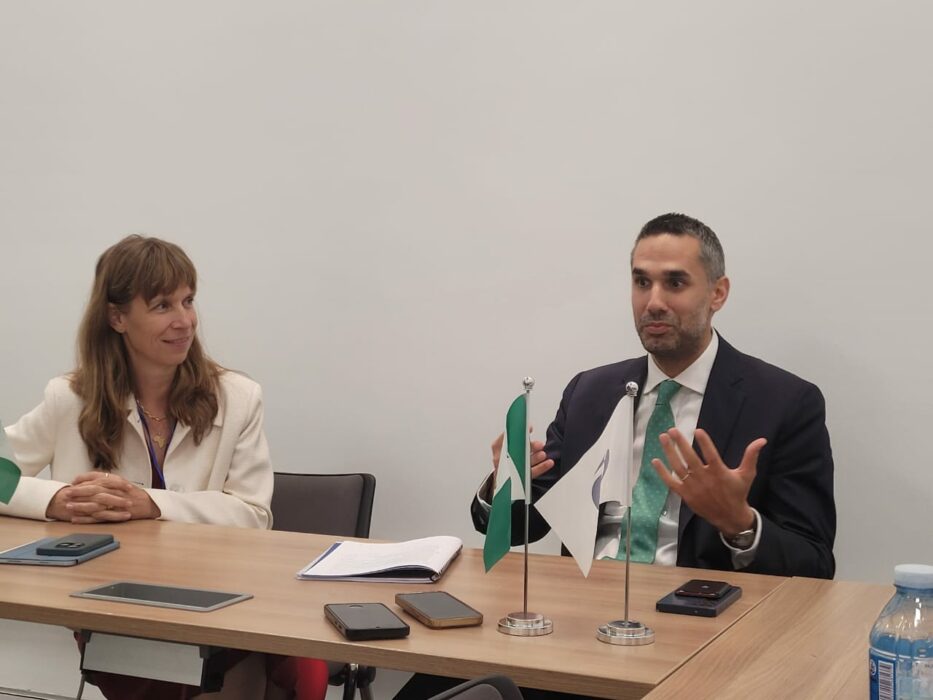
PREMIUM TIMES also contacted the General Manager (Sales) of Isuzu in Nigeria, Kin Juhail, regarding manufacturing timelines.
Mr Juhail said factory production generally begins after customer orders are confirmed and that the company typically requires 70 per cent advance payment before manufacturing commences. He added that manufacturing usually takes about six months after orders are placed.
Mr Juhail’s explanation supports the timeline presented by AKICORP, which indicates that production followed payment in October 2025 and was completed months later. But it leaves unresolved the central question: why did the state wait more than two years after Governor Eno’s August 2023 promise before placing the bus order?
Until the government discloses the procurement records, contract value and bidding details required under state law, the arrival of the buses is unlikely to end questions about transparency and accountability in one of the state’s biggest transport projects.