The governor of the Central Bank of Nigeria (CBN), Olayemi Cardoso, has disclosed that Nigeria’s net foreign exchange (FX) reserves have surged by more than 1,233 per cent from about $3 billion to over $40 billion, attributing the remarkable increase to the apex bank’s foreign exchange reforms aimed at restoring stability and investor confidence.
Cardoso also revealed that the country’s gross external reserves have risen to about $52 billion, providing approximately 10 months of import cover and significantly strengthening Nigeria’s external buffers.
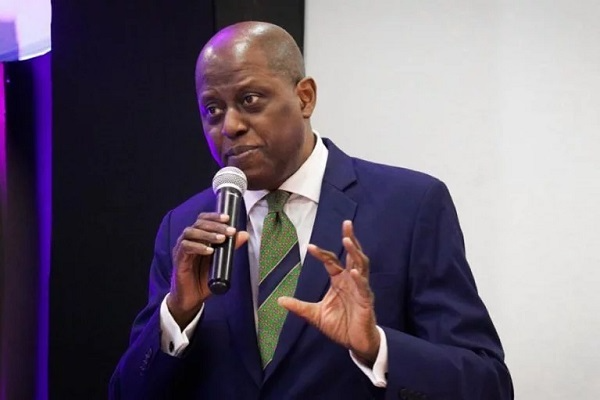
Speaking on Thursday at the BusinessDay CEO Forum in Lagos, the CBN governor said the improved reserve position reflects the success of reforms that have enhanced transparency in the foreign exchange market, improved liquidity and restored confidence among local and foreign investors.
He added that diaspora remittances are on course to reach $1 billion monthly before the end of the year, while noting that the foreign exchange market has become sufficiently liquid to operate with minimal intervention from the CBN.
Cardoso also stressed that bank recapitalisation and regulatory oversight would remain continuous to ensure the resilience and stability of Nigeria’s banking sector.
According to him, the CBN inherited a foreign exchange market characterised by multiple exchange rates, opacity and persistent shortages, but reforms implemented over the past three years have transformed it into a more transparent, market-driven system.
“Anybody who wants to argue about what the impact of these reforms has been, go and look at the results figure. As of yesterday, we were hovering at about $52 billion, I believe. When we started, the net reserves figure was in the region of $3 billion. And if you remember, that figure was published at the time by J.P. Morgan and created a lot of panic in the system. More recently, the net reserves figure is in the 40s. So, it’s a long and difficult journey,” he said.
The CBN governor noted that the stronger reserves position has substantially improved Nigeria’s attractiveness to foreign investors, who closely assess reserve adequacy before committing capital.
“Today’s level of reserves is, I believe, about 10 months of import cover. Anybody coming to invest in Nigeria, these are the things they look at in determining whether it is worth taking a position in your currency. Doing this consistently is what is giving confidence to not just internal stakeholders, but those who also operate internationally,” he stated.
Cardoso further highlighted the restoration of confidence in Nigeria’s payment system, noting that Nigerians can now use their naira debit cards seamlessly for transactions abroad.
He explained that the CBN deliberately diversified sources of foreign exchange inflows, with diaspora remittances emerging as a major contributor to reserve growth.
According to him, the apex bank set a target of doubling remittance inflows and has already made significant progress toward achieving it.
“When we were building these reserves, there was a lot of cynicism. One of the things we decided to pursue was diaspora remittances. We put together teams. We worked very closely with the banks. We went far and wide. We visited different countries.
“At the time, we gave ourselves a goal that we would double the remittance inflows between the time we started and the end of the year, and we did exactly that. That is still work in progress. We are not relenting on that. As at the last time, I believe we were $600 million plus. We are expecting that by the end of the year, we will hit about $1 billion a month from diaspora remittances,” Cardoso said.
He attributed the increase in remittances to policy measures that removed obstacles to foreign exchange inflows, making it easier for investors and Nigerians in the diaspora to move funds in and out of the country.
Cardoso, however, dismissed suggestions that the growing reserves should be aggressively deployed to defend the naira, insisting that they are primarily meant to protect the economy against external shocks.
“Today, the liquidity of our foreign exchange market is such that it is really and truly allowing us to operate a system where buying and selling takes care of itself with minimum interference from the Central Bank,” he said.
He explained that the market has evolved beyond a system in which participants depended almost entirely on the CBN for liquidity, adding that the improved reserve position provides sufficient capacity for the apex bank to intervene only when necessary.
Cardoso also urged Nigerian businesses to take advantage of the country’s improving macroeconomic environment, warning that foreign investors are already positioning to seize emerging opportunities.
“A lot has happened over the course of the past three years with respect to exchange rate policy, monetary policy and financial system stability. Now that we have accomplished these things, and now that the outlook is positive, do we have our local entrepreneurs and CEOs who have confidence in the continuity of this?” he asked.
He said international investors are increasingly showing interest in Nigeria because of the progress made in restoring macroeconomic stability.
“We sit in a particular place where we see an enormous amount of interest from outside. They’ve watched very keenly. They’ve seen the road of travel and they are getting closer. In some cases, investments are being made. You’ll hear of huge investments being made into our economy as a result of the stability that has been accomplished,” Cardoso added.
He urged local investors not to assume the economy would revert to previous conditions, encouraging them to embrace opportunities created by the reforms.
“Where we are now, we’ve achieved that hard-earned stability. With stability comes potential for investment, and with investment comes growth. All our local CEOs should be part and parcel of that train that is moving,” he said.
We’ve got the edge. Get real-time reports, breaking scoops, and exclusive angles delivered straight to your phone. Don’t settle for stale news. Join LEADERSHIP NEWS on WhatsApp for 24/7 updates →