

The familiar claim that we are all God’s children therefore needs to be stated with greater care. We are all God’s creatures, made in His image and dependent upon His goodness. But the New Testament reserves the name children of God for those who receive Christ, are born of God and are led by His Spirit. John did not write that Christ came to confirm a sonship already shared by everyone. He wrote that those who received Him were given the power to become the sons of God.
Few expressions have gained wider acceptance in modern Christianity than the claim that we are all God’s children. It is heard in sermons, eulogies, political speeches and ordinary conversation, usually as an affirmation of our common humanity and the equal worth of every person. The sentiment is generous, but its familiarity has largely spared it from examination. The New Testament does not, in fact, speak of the whole human race as the children of God.
This does not diminish the dignity of any human being. Scripture teaches that God created humanity in His image, that every life proceeds from Him and that all people remain under His providential care. No distinction of race, class, nationality or achievement can remove the worth that belongs to those whom God has made. Yet the Bible distinguishes between being created by God and becoming His child. Creation tells us where we came from; sonship describes a relationship into which we must be received.
John establishes this distinction near the beginning of his Gospel:
“But as many as received him, to them gave he power to become the sons of God, even to them that believe on his name.” — John 1:12

The word become settles much of the question. John does not say that Christ came to reveal a sonship already possessed by everyone or to awaken humanity to an identity it had forgotten. Those who receive Him are given the right to become the children of God. They could not be given the right to become what they already were.
The next verse carries the thought further. These children are born “not of blood, nor of the will of the flesh, nor of the will of man, but of God.” Natural birth brings a person into the human family; it does not, by itself, bring anyone into the family of God. That requires a birth whose source is God Himself.
Nicodemus stood before Jesus as the best possible test of this claim. He was a Pharisee, a ruler of the Jews and a recognised teacher of Israel. He had ancestry, learning, moral discipline and religious standing. Yet Jesus treated none of these as proof that he belonged to the kingdom. “Except a man be born again,” He told him, “he cannot see the kingdom of God.” Nicodemus had been born into Israel and trained in its Scriptures, but he still needed to be born of the Spirit.
Paul writes in the same terms:
“For as many as are led by the Spirit of God, they are the sons of God.” — Romans 8:14
God’s children are not identified simply by the fact that He created them, nor by the religious names they bear. They are known by the Spirit who leads them. Sonship is not a courteous title applied to humanity at large. It is a relationship with God that begins through Christ and comes to expression in a life increasingly governed by His Spirit.
The idea of family likeness runs through this teaching. Children usually acquire more from their parents than a surname or physical resemblance. They learn their language, absorb their habits and come to share many of their loves, prejudices and instincts. In Scripture, spiritual parentage is recognised in much the same way. The father whom a person resembles is the father whose desires he has made his own.
This gives John 8 its severity. Jesus was speaking to men who were confident that their descent from Abraham established their place among the people of God. They knew the Scriptures, observed the Law and regarded themselves as heirs of the covenant. Jesus did not deny their physical ancestry. He denied that ancestry was enough.
“If God were your Father, ye would love me… Ye are of your father the devil, and the lusts of your father ye will do. He was a murderer from the beginning, and abode not in the truth, because there is no truth in him… for he is a liar, and the father of it.” — John 8:42–44
They were arguing from genealogy, while Jesus was judging by resemblance. Abraham had received God’s word and obeyed Him. These men resisted the One who had come from God and were already seeking His death. Their hatred of truth reflected the father of lies; their murderous intention reflected the one who had been a murderer from the beginning. Their claim rested on the bloodline of Abraham, but their conduct revealed another allegiance.
This was not a rebuke directed at people who had abandoned religion. It was spoken to men whose religious confidence had made them incapable of recognising God when He stood before them. Their knowledge of Scripture had not produced love for the One of whom Scripture spoke. Their certainty that God was their Father could not survive the evidence of what they desired and what they were prepared to do.
John later states the matter without qualification:
“In this the children of God are manifest, and the children of the devil: whosoever doeth not righteousness is not of God, neither he that loveth not his brother.” — 1 John 3:10
He places the children of God and the children of the devil side by side, not to divide humanity into respectable people and obvious villains, but to show that spiritual identity becomes visible in character. Righteousness and love do not purchase sonship, but their absence exposes any claim to it. A person may speak correctly about God and still bear little resemblance to Him.
Cain is John’s first example. Genesis records the murder of Abel, but John describes Cain as one “who was of that wicked one.” Cain was not Satan’s child by physical descent. His hatred of his brother disclosed the spirit to which he had yielded. The first murder in Scripture bore the character of the murderer from the beginning.
Paul uses the same language when he confronts Elymas, calling him a “child of the devil” and an “enemy of all righteousness.” Elymas had set himself against the truth and tried to turn another man away from the faith. His spiritual parentage was named according to the character that his actions displayed.
None of this gives Christians grounds for pride. Paul reminds the believers at Ephesus that they too had once walked “according to the prince of the power of the air” and had been “by nature the children of wrath.” The distinction between the Christian and the unbeliever is not that one entered the world naturally fit for God’s household. Every believer was once estranged and in need of mercy. What changed his standing was not superior character but the intervention of grace.
This is why adoption occupies such an important place in Paul’s account of salvation:
“Ye have received the Spirit of adoption, whereby we cry, Abba, Father.” — Romans 8:15
Abba is sometimes reduced to a childish equivalent of “Daddy,” but the word carries greater weight than that. It is the Aramaic address of a child to a father, expressing affection, trust and belonging, without surrendering reverence. Mark preserves it in the prayer of Jesus at Gethsemane: “Abba, Father, all things are possible unto thee.” Paul then places the same word on the lips of those who have received the Spirit of adoption.
The significance lies not only in the meaning of the word, but in the relationship from which it came. Jesus is the Son by nature. He alone could address God as Father by eternal right. Yet through Him, those who were strangers are brought into the household and taught by the Spirit to speak to God in the language of the Son. They do not stand at a distance as pardoned offenders who have merely escaped judgment. They are received as sons and daughters, given a place at the Father’s table and made heirs with Christ.
Such adoption does more than alter a person’s legal standing. It begins the restoration of the family likeness. Those whom God receives, He also conforms to the image of His Son. Their falsehood must give way to truth, hatred to love, pride to humility and self-will to the leading of the Spirit. The change is seldom completed at once, but the direction of the life is no longer the same.
The familiar claim that we are all God’s children therefore needs to be stated with greater care. We are all God’s creatures, made in His image and dependent upon His goodness. But the New Testament reserves the name children of God for those who receive Christ, are born of God and are led by His Spirit. John did not write that Christ came to confirm a sonship already shared by everyone. He wrote that those who received Him were given the power to become the sons of God.
God made us, but in Christ He does something more: He receives us, gives us His Spirit and teaches us to call Him by a name that belongs to the household into which grace has brought us: Abba, Father.
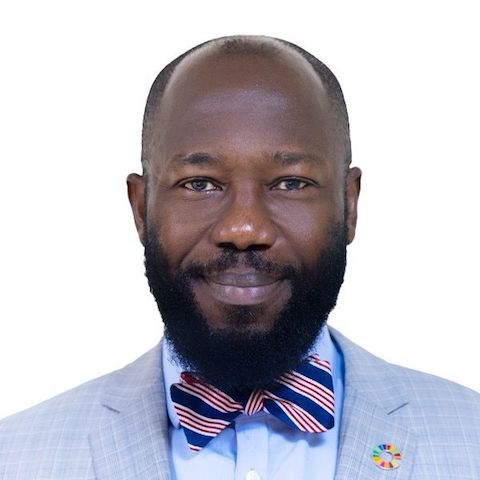
Chinedu Moghalu is a lawyer, strategic communications expert, and public policy adviser with over two decades of leadership across government, international organisations, and development institutions.